Indonesia
Yogyakarta
A city still governed by its sultan, with the largest Buddhist monument in the world on one side of it and a ninth-century Hindu complex on the other.
Yogyakarta
A court city with two temple complexes beside it
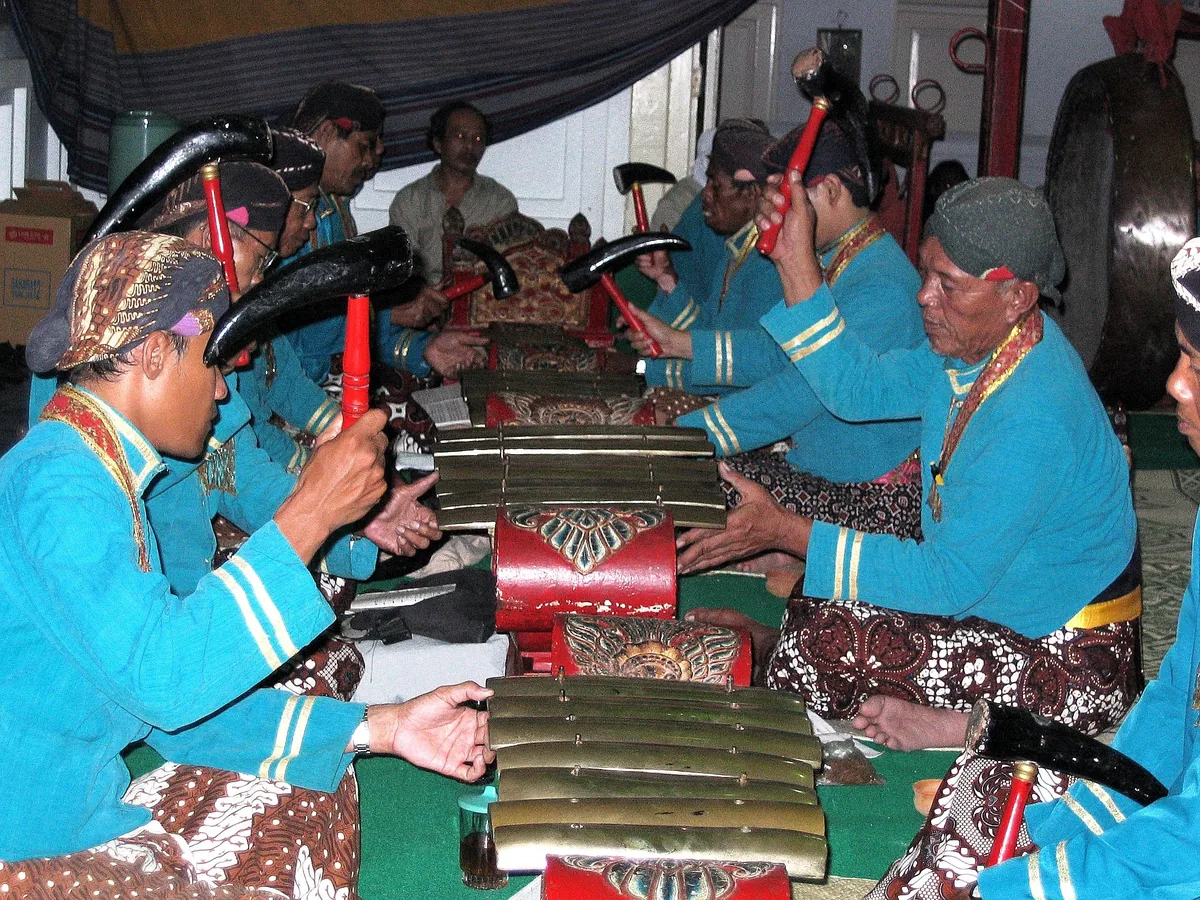
Yogyakarta is the one place in Indonesia where a hereditary monarch is also the provincial governor, and that oddity explains the character of the city. The sultan’s kraton is a working court rather than a museum: gamelan rehearsals on set days, a household of retainers in batik, and a ceremonial axis that runs from the volcano in the north through the palace to the sea in the south. The city around it is flat, low-rise and built for students — there are dozens of universities here — which makes it cheaper, younger and easier to walk than anywhere else on this list.
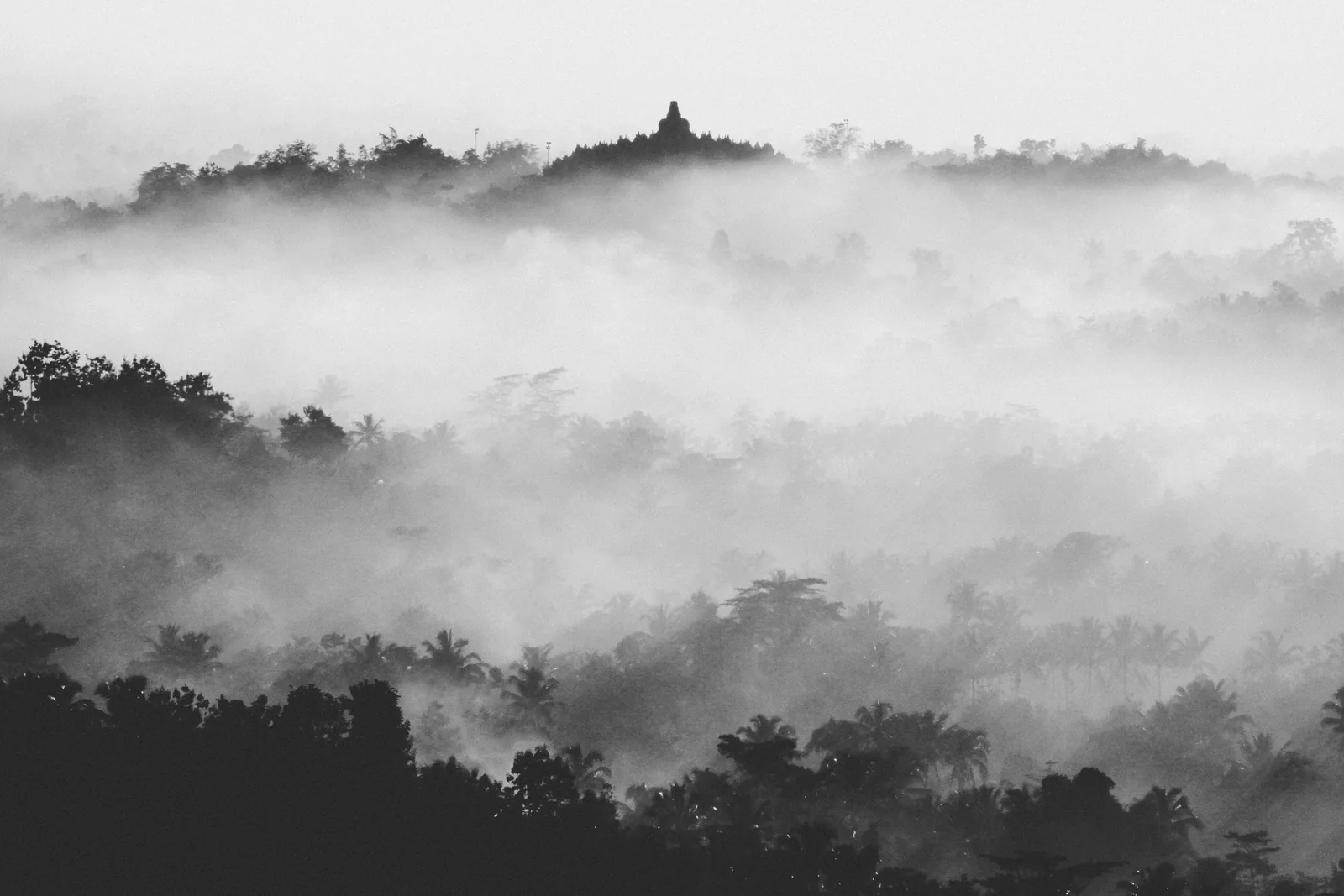
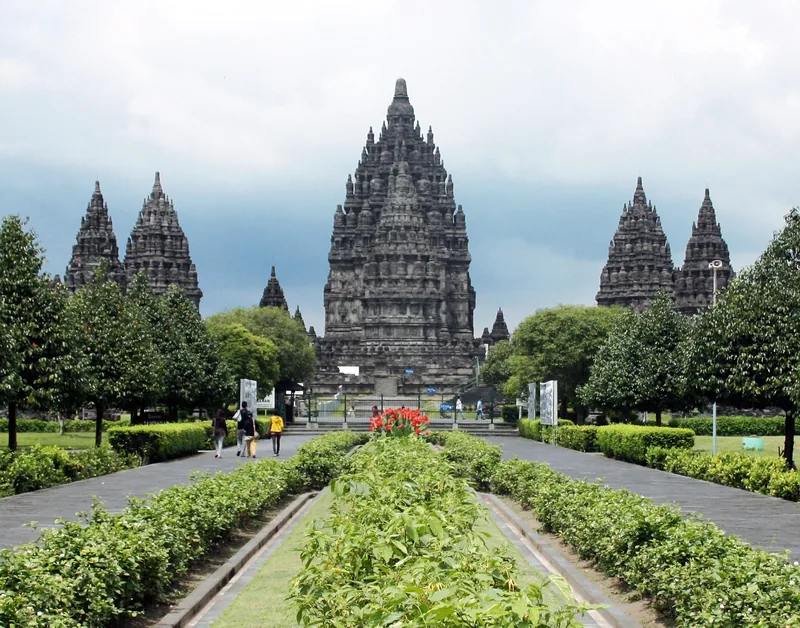
The reason most people come is on either side of it. Forty kilometres northwest, Borobudur is the largest Buddhist monument in the world, built in the ninth century, abandoned, buried under volcanic ash and forest, and dug out again in the nineteenth. Half an hour east, Prambanan is its Hindu counterpart from roughly the same century, a cluster of tall, sharp-edged towers with the Shiva temple at the centre standing about forty-seven metres. Two of the great monuments of Asia, an hour apart, in a country most itineraries visit only for its beaches.
Priorities
The two temples, in the order that works
Borobudur first, at opening, and Prambanan in the late afternoon of the same day or the following one. The reason is heat: Borobudur is a stone mound with no shade anywhere on it, and by ten in the morning the terraces are unpleasant to stand on. Prambanan faces west and looks better as the light drops, so the two fit either end of a single day if you want them to.
What the monuments have in common is that both were left. Borobudur was abandoned within a couple of centuries of being finished and spent most of a millennium under ash and forest; Prambanan was shaken down by earthquakes and rebuilt in the twentieth century from the stones lying where they fell. Neither is a place of continuous worship, which is part of why they feel as they do.
- Numbers on Borobudur’s upper terraces are capped and booked as a timed slot with a guide. Book it before you fly, not on the day.
- The dawn photograph everyone recognises is taken from the hill at Setumbu, across the valley, not from the monument.
- Prambanan is half an hour out on the airport road, so it works as a stop on the way in or out.
- The open-air Ramayana ballet runs on the Prambanan stage in the dry months.

The city
The city the sultan still runs
Give the city half a day and it repays it. The kraton in the morning for the gamelan; Taman Sari, the ruined eighteenth-century bathing complex behind it, for the underground mosque and the tunnels; then the batik workshops, a craft industry here rather than a souvenir trade, and the silversmiths at Kota Gede. In the evening, wayang kulit — shadow puppetry behind a screen with a gamelan orchestra, in a form that is not put on for anyone in particular.
 The kraton
Merapi
Merapi, and what the volcano morning actually is
Merapi stands twenty-five kilometres north and is one of the most active volcanoes on earth; the 2010 eruption killed more than three hundred people and buried villages on the southern flank. What is sold as the Merapi trip is a jeep run across that flank at first light — lava fields, a house left as it was found, a ravine full of ash — with a guide who generally lost something in it. It is not a summit climb and the summit is not open. Treat it as an hour and a half of recent history in a landscape rather than as a hike, and it is worth the early start. Treat it as adventure and it will disappoint.
Planning
Two nights, three with the mountain
Onward
Getting in and out of central Java
The airport is forty-five kilometres west of the city, which surprises people. There is a rail link from the terminal that reaches Yogyakarta station in about forty minutes and is faster than the road at almost any hour. Everything else runs through Denpasar or Jakarta — Java is well connected internally and barely connected internationally, so this is a leg you reach from inside Indonesia rather than from Bangkok or Singapore.
| Next leg | How long | What to know |
|---|---|---|
| Denpasar, Bali | 1 hour 20 by air | Several a day; the usual join between Java and an island week. |
| Jakarta | 1 hour 10 by air, or 7 to 8 hours by train | The train is comfortable and frequent. Take it if you want the country, fly if not. |
| Labuan Bajo for Komodo | About 4 hours, connecting in Denpasar | No direct service, and never on the same day as a boat. |
| Bangkok or Singapore | Via Denpasar or Jakarta, most of a day | Central Java has almost no long-haul lift of its own. |
Put Java before the beach.
Plan My Trip
Tell us your dates
We will tell you which morning Borobudur should be, and whether Merapi earns the third night.
Common questions
Questions travellers ask most
Can I still watch sunrise from the top of Borobudur?
Not in the way the old photographs show. Access to the upper terraces is capped, booked as a timed slot and guided, and the dawn view everyone knows is taken from the Setumbu hill across the valley. Go at opening instead — the stone is empty and the heat has not arrived.
Is two nights enough for Yogyakarta?
Yes, if the temples are the point: one morning at Borobudur, one at Prambanan and the kraton. A third night is for Merapi at dawn and the workshops, and it is the night most people say afterwards that they were glad they kept.
How does Java join the rest of a trip?
Through Bali, almost always. Denpasar to Yogyakarta is an hour and twenty and runs several times a day, so two or three nights of Java slot into an Indonesian week without adding a travel day at either end.
Journey ideas
Where a private route could take you

Indonesia
Bali
Five to seven nights: the interior, the temples, and one coast picked on purpose.
View journey
Destinations
Indonesia
Bali, Java and Flores — the island leg that works when the mainland does not.
View journey
Example itinerary — fully customizable
Bali & Java
Ten days, two islands, one short flight and no land borders.
View journey
Example itinerary — fully customizable
Indonesia highlights
Ten days, three islands, and two flights that decide everything.
View journey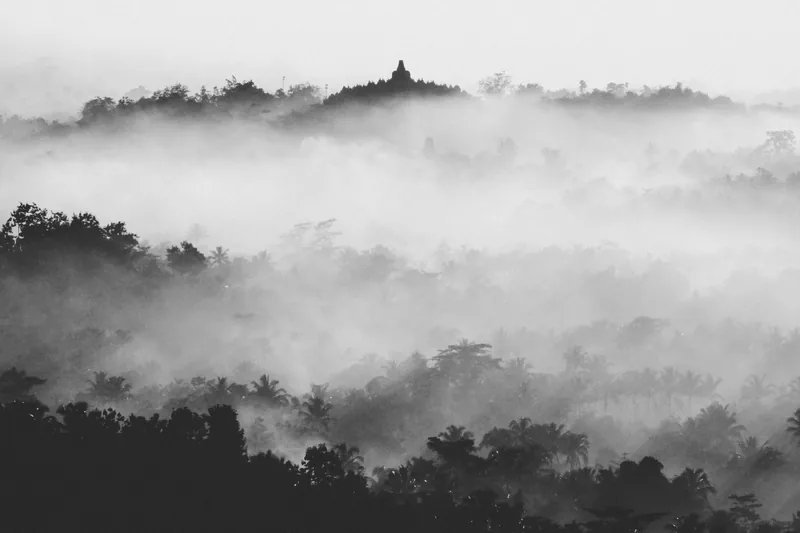
Start planning
Let’s plan your journey
Five quick questions. Your coordinator will take it from there.
Prefer to talk? WhatsApp or call+84 904 511 319