Vietnam
Sa Pa
A former French hill station at 1,500 metres, a valley of rice terraces below it, and a building boom that has changed the town without touching the fields.
Sa Pa
The town and the valley are two separate questions
Sa Pa town is a former French hill station at about 1,500 metres that has spent the last decade building upwards. Concrete hotels, a cable car station, a lake with a promenade around it. Travellers who arrive expecting a mountain village are disappointed within the hour, and they are not wrong to be. The town is a base, and a serviceable one, but it is not the reason to come.
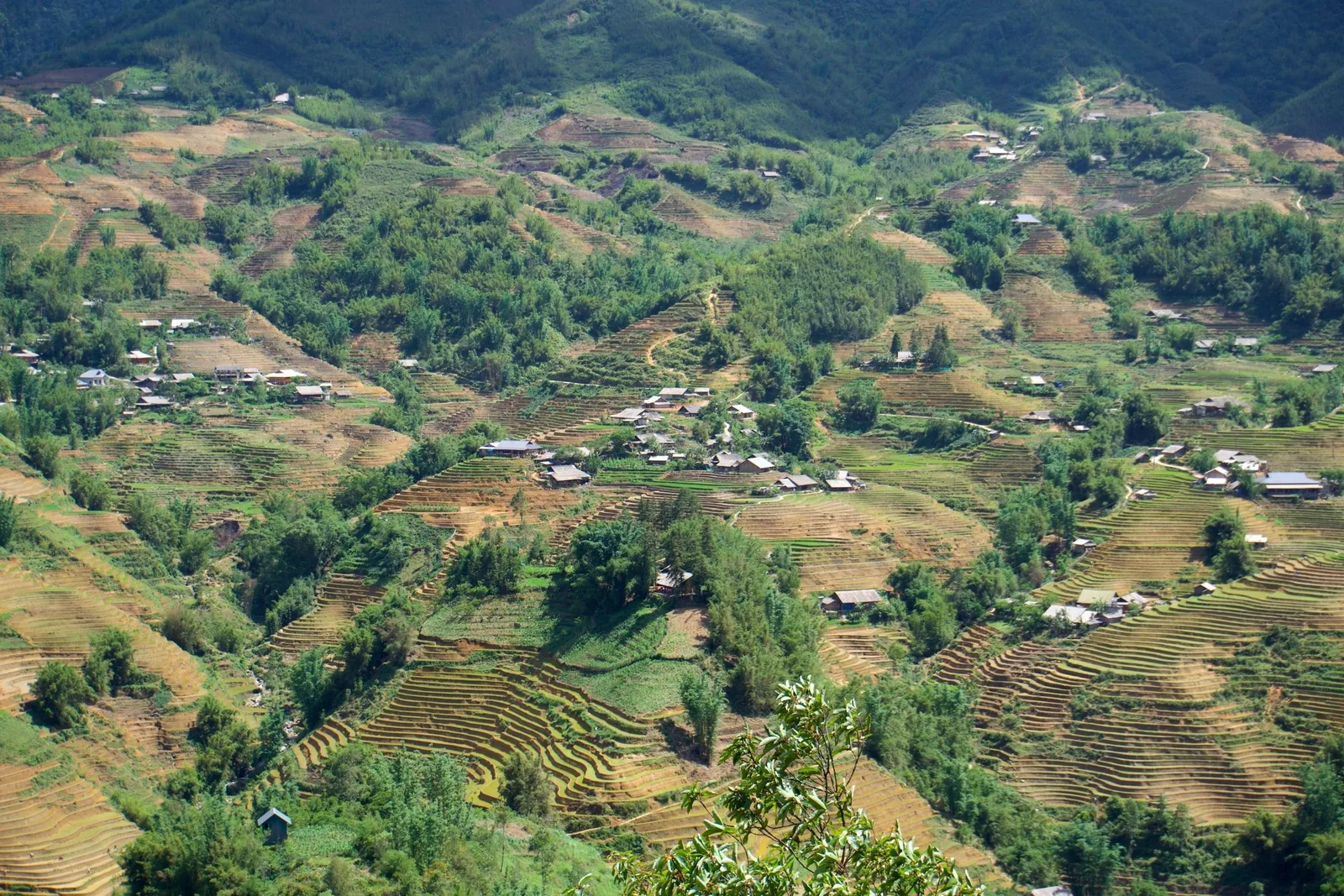
The Muong Hoa valley below it is untouched by any of that, because the terraces are working farmland and cannot be built on. They step down four hundred metres of hillside in curves that follow the contour, cut by hand over generations and still worked by the Hmong and Dao families who own them. Walking down through Lao Chai and Ta Van, or further out to Ta Phin and the valleys beyond, puts you in fields where the only traffic is a buffalo. That contrast — an overbuilt town above a farmed valley — is the accurate picture of Sa Pa, and anyone who tells you otherwise is selling one half of it.
On foot
Walking, and how much of it you want
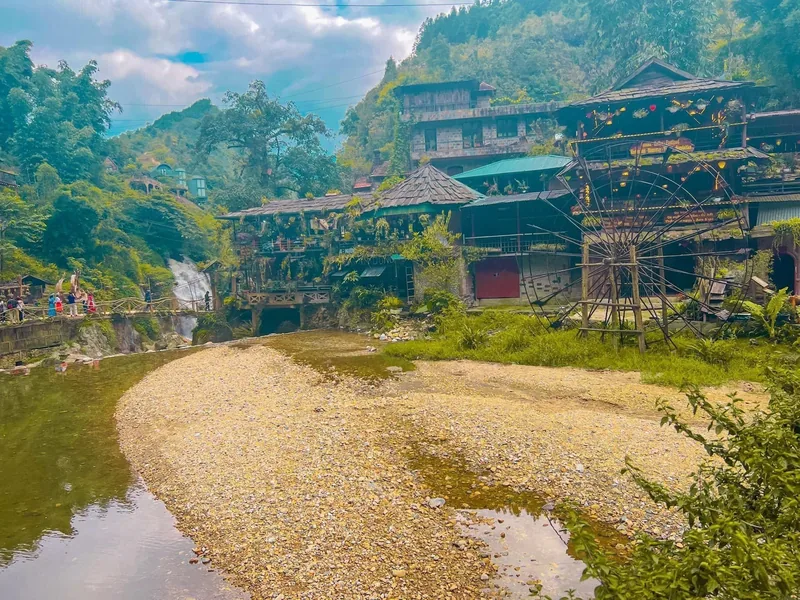
The walking is the point and it is not difficult — descending tracks, field bunds, the occasional stream crossing. What it is, in wet weather, is slippery: the paths turn to red clay and a stick is worth more than expensive boots. Two half-days on foot with a local guide is the right amount for most people. A full traverse over two days with a village homestay in the middle is the better trip if you have the nights.
- Lao Chai and Ta Van — the classic descent, busiest, still beautiful, half a day.
- Ta Phin — a longer loop through Dao villages with far fewer walkers on it.
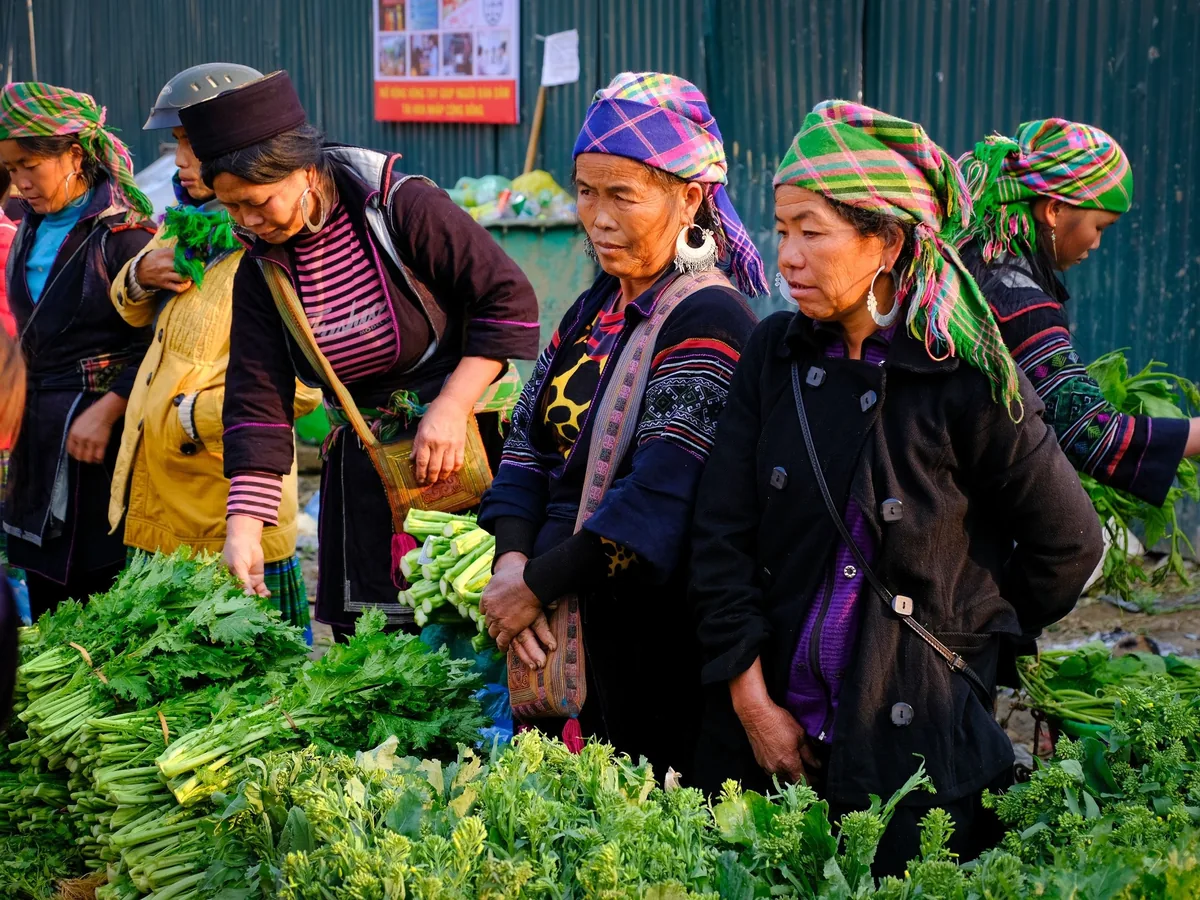
- Bac Ha market — Sundays only, two and a half hours east, the most interesting market in the north and worth rearranging a week for.
- Fansipan by cable car — ten minutes to the highest point in Vietnam, usually inside a cloud. Skip it unless the morning is unmistakably clear.
Seasons
Two months matter more than the rest
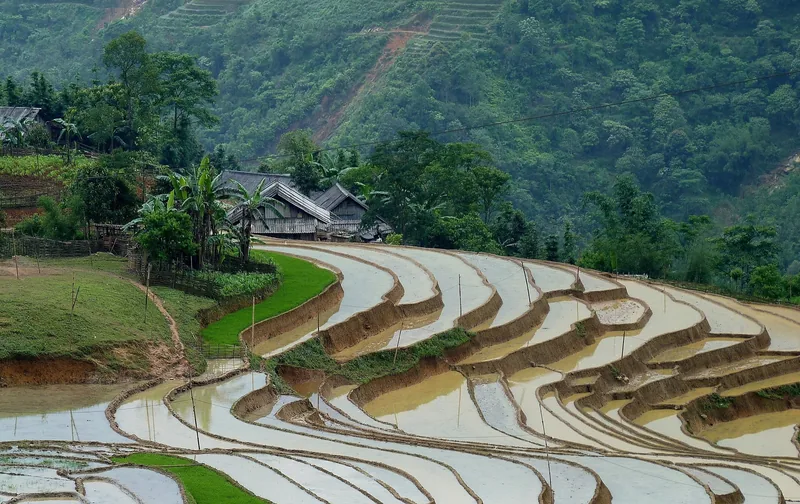
The terraces have two photographs in them and they are five months apart. In May and June the fields are flooded for transplanting and the whole valley becomes a staircase of mirrors. In September and early October the rice is ripe and everything is gold, which is the image that sells the place. Between them, July and August are green and very wet. From December to February the valley is bare, cold and often under thick cloud; frost is not unusual and snow reaches Sa Pa in some years. March and April are unreliable, with mist that can sit for days. Nobody should come to Sa Pa for one night and hope.
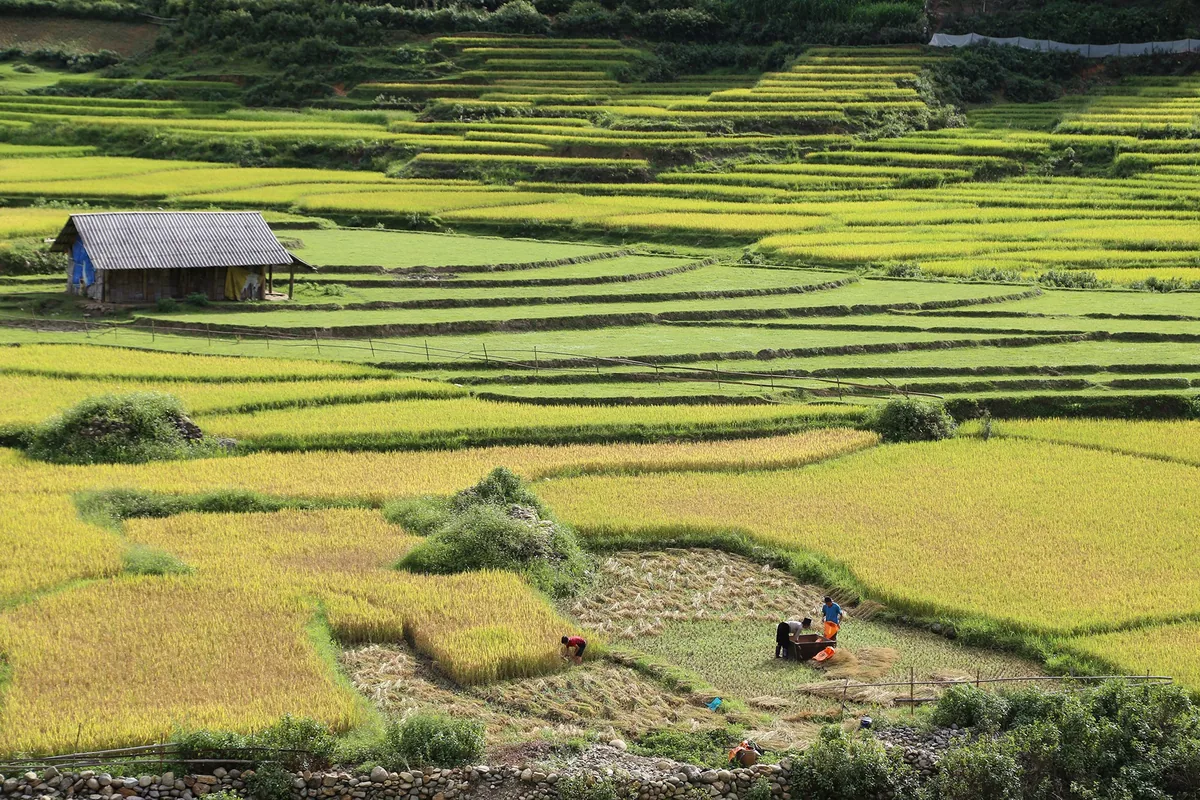 Muong Hoa valley, late September
Transfers
Getting up there and back
The Noi Bai to Lao Cai expressway put Sa Pa within five to six hours of Hanoi by road, which is half what the journey used to take. The alternative is the overnight train to Lao Cai — around eight hours in a soft sleeper, arriving at dawn — followed by an hour of switchbacks up to the town. The train costs you no daylight and is the more comfortable arrival; the road is better if you are stopping on the way.
Onward
How it fits a longer route
Sa Pa sits at the far end of a northern loop and everything returns through Hanoi, so it is a two or three night detour rather than a link in a chain. The exception is the route west into Laos: from Sa Pa you can work across to Dien Bien Phu and cross at Tay Trang towards Muang Khua and the Nam Ou. That is two hard road days and suits a particular kind of traveller. The important detail is that the Lao e-visa is not valid at Tay Trang, or at any Vietnamese land gate — there is a visa on arrival instead, and if you are leaving Vietnam on an e-visa that land gate must be named on your application before you travel.
Lao Cai is also the rail and road gate to China, which is not part of the routes we run. If your trip continues into Laos overland, tell us at the planning stage: the exit gate on a Vietnamese e-visa cannot be changed once the visa is issued.
Walk out of the town.
Plan My Trip
Tell us your dates
We will tell you whether your month gives you mirrors, gold or cloud.
Common questions
Questions travellers ask most
Has Sa Pa been ruined?
The town has been built over and is not what the old photographs show. The valley below it has not, because terraced rice fields are working land. Stay one night in the town if you like, walk out of it on both days, and the question answers itself.
When are the terraces green, and when are they gold?
Flooded and mirror-like in May and June, green through July and August, ripe and gold in September and early October. From November the fields are cut, and by December the valley is bare and cold.
Can I go straight from Sa Pa into Laos?
Yes, by road through Dien Bien Phu and the Tay Trang gate, which takes two long days. The Lao e-visa is not valid there — you buy a visa on arrival — and a Vietnamese e-visa must name that land gate as your exit point when you apply.
Journey ideas
Where a private route could take you

Vietnam
Hanoi
The northern gateway: two or three nights, and everything the north is reached from.
View journey
Vietnam
Ha Long Bay
One night on a boat, usually on the way in or out of Hanoi.
View journey
Destinations
Vietnam
Three regions, three climates, and the border gates that make a two-country trip work.
View journey
Example itinerary — fully customizable
Northern Vietnam
Seven days north of Hanoi, with a night on the water and a night on the train.
View journey
Start planning
Let’s plan your journey
Five quick questions. Your coordinator will take it from there.
Prefer to talk? WhatsApp or call+84 904 511 319