Indonesia
Komodo & Labuan Bajo
A fishing port on the western tip of Flores that has become the harbour for the clearest water in Indonesia — and for the only islands where the dragons live wild.
Labuan Bajo
A port that exists for what leaves it
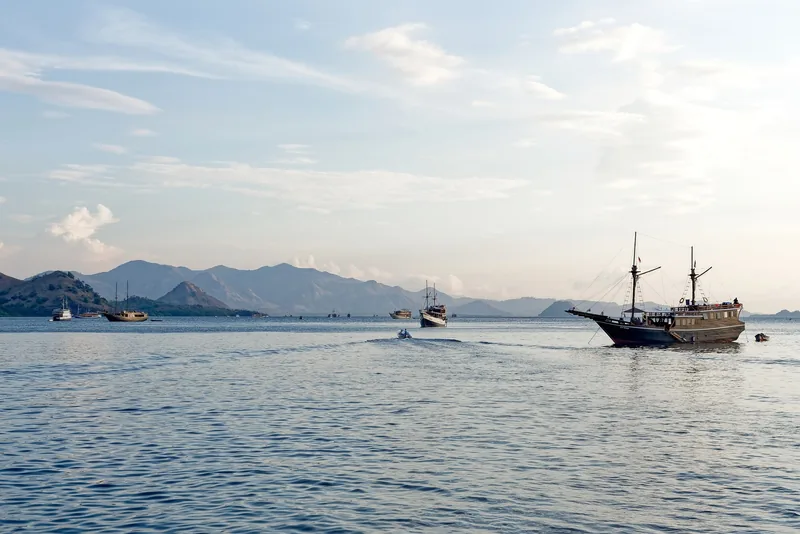
Labuan Bajo is a single road above a harbour on the western end of Flores, and it is not a destination in itself. It is where the boats are. Ten years ago it was a fishing town with a dive shop; it now has jet flights, a row of hotels on the hillside and a harbour full of wooden phinisi, and it has not entirely caught up with any of that. You are there for the evenings and the early starts.
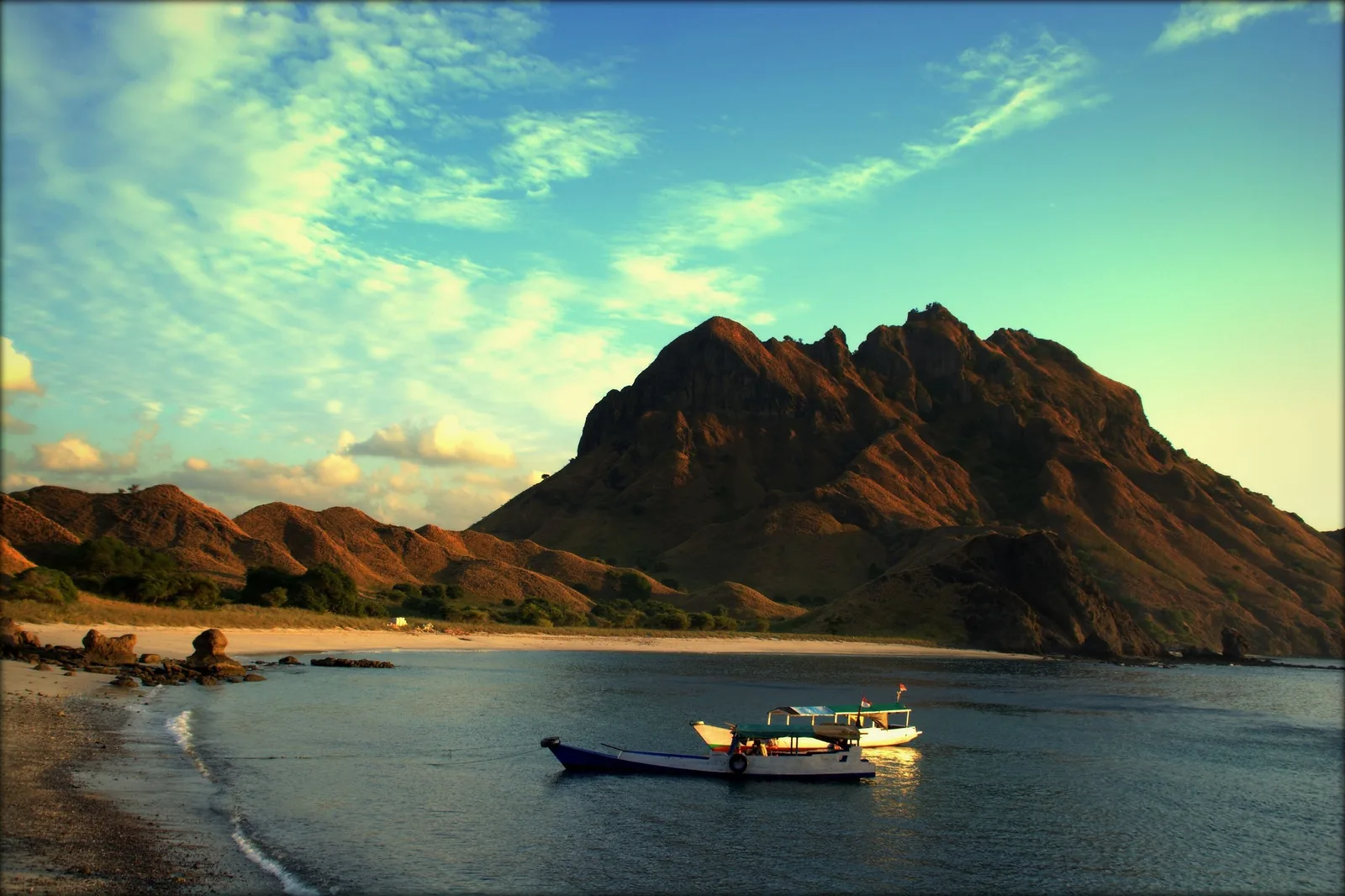
What the boats go to is Komodo National Park — dry, treeless islands with savannah on their backs and water around them that runs a startling blue-green, because this is one of the driest corners of Indonesia and carries very little river silt. Two currents meet here, which is why the marine life is what it is, and why the sea decides your week.
The dragons
The dragons, honestly
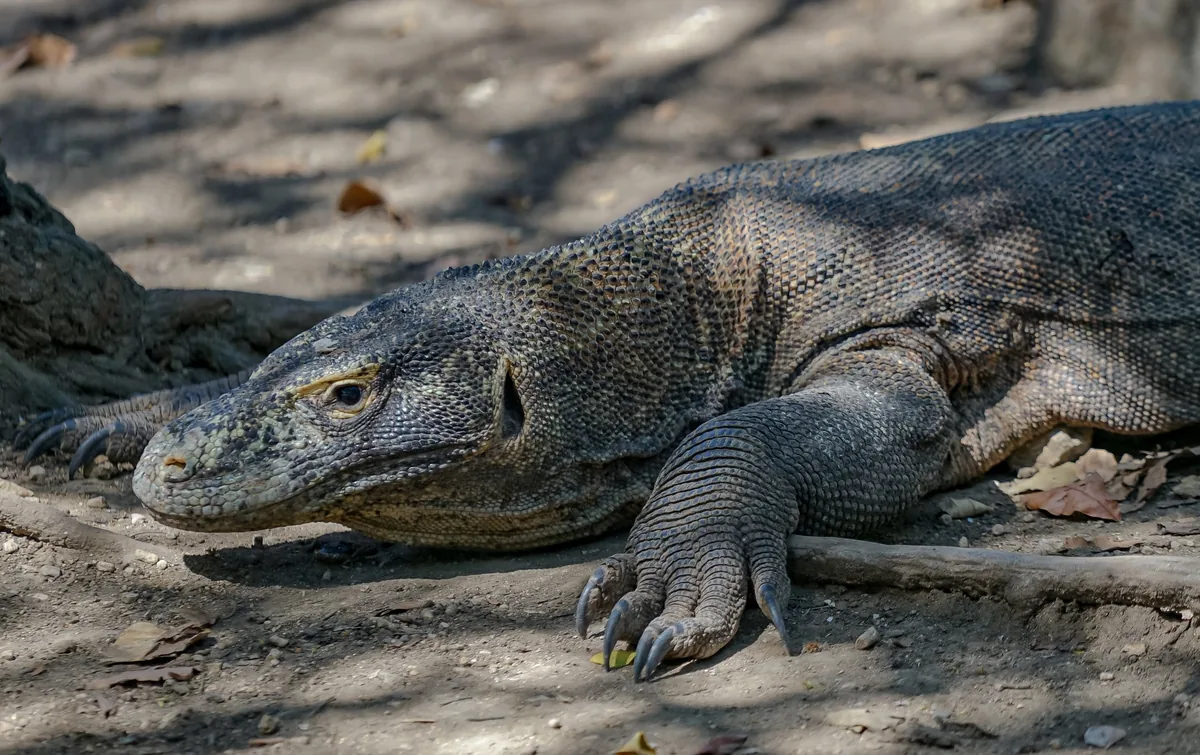
There are somewhere around three thousand Komodo dragons in the wild, almost all on Komodo and Rinca, and seeing them is a short guided walk on flat ground with a ranger carrying a forked stick. They are genuinely large — three metres and seventy kilograms at the top end — and genuinely dangerous, and usually lying still in the shade doing nothing. Most visitors get twenty minutes out of it rather than a day. That is not a criticism of the animal but a correction to the brochures, which sell the dragon as the reason to come when the water is. A park fee is collected per person per day at the gate, with ranger and activity charges on top.
The water
What the water is actually for
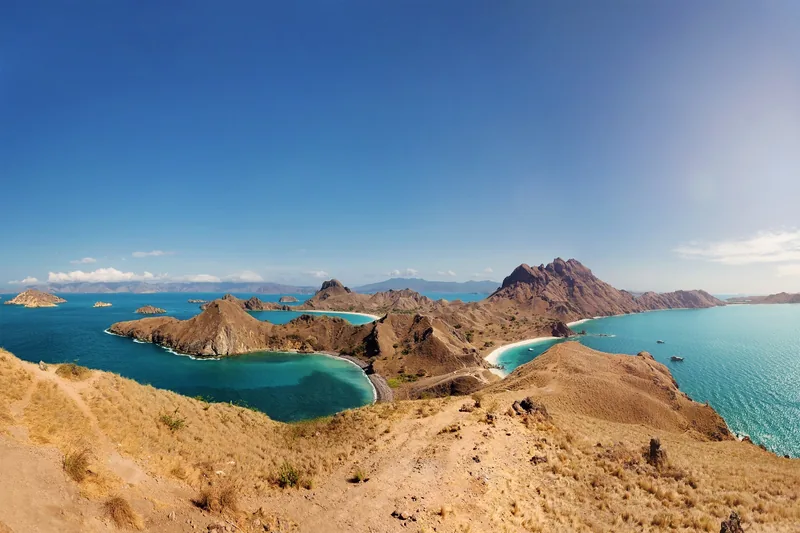
Three things. Snorkelling with manta rays over the shallow reef at Karang Makassar, where they come in to be cleaned and where the current does most of the swimming for you. Drift diving at Batu Bolong, Castle Rock and Crystal Rock, which are among the better sites in Asia and are not beginner dives — the current is strong, the sites are exposed and operators will ask how many dives you have logged. And the climb on Padar, thirty to forty minutes up cut steps at first light, for the view over three bays that has become the image of the whole park.
- Pink Beach and the smaller bays are snorkelling stops rather than beach days — there is no shade and no infrastructure.
- Mantas are resident and can be seen through the year, but the swell in January and February makes the crossing unreliable.
- Bring your own mask if you are particular. Boat kit is variable.
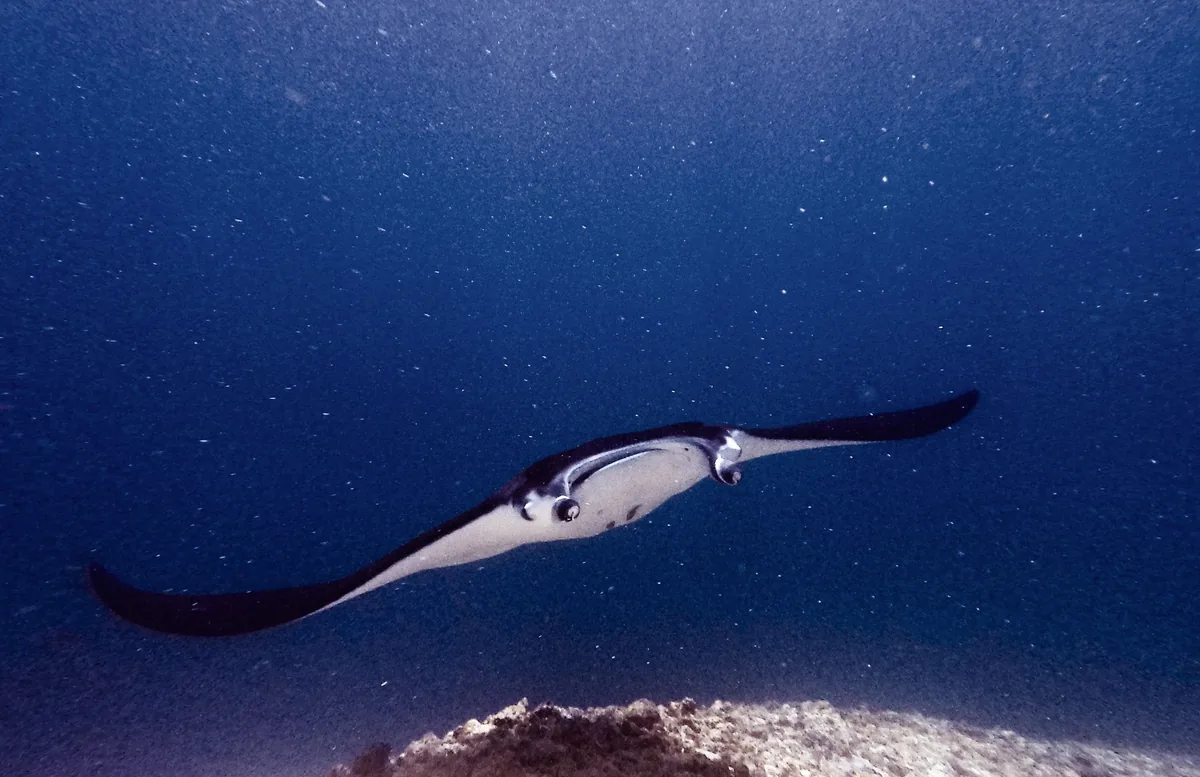 Karang Makassar
Shape of the trip
Day boat, or nights aboard
A day boat leaves before six and is back after dark, covering two or three stops; it is a long day and a lot of transit, but you sleep on land. Two or three nights on a phinisi removes the transit — you wake already at the site, and the park in the hour after sunrise is empty in a way it never is at eleven. The number of cabins matters more than the fittings, because twelve cabins means twelve people on the same ladder.
Seasons
The sea sets the calendar
Rain is barely the issue here — this is dry country. Swell is. April to September is the reliable window, with flat water, steady visibility and boats running as planned; October and November are hot and usually still fine. December to February brings the westerly monsoon and crossings are cancelled often enough that we would rather not sell a boat trip in those weeks. March can go either way. If your dates fall in the wet months we put the Indonesian leg in Bali and Java instead.
Onward
Reaching Flores, and leaving it
There is no international flight into Labuan Bajo and no land route to anywhere on this site, so the leg is reached from inside Indonesia. Denpasar to Labuan Bajo is an hour and twenty to an hour and a half, several times a day; Jakarta is about two and a half hours direct. Everything onward goes back through Bali.
Two rules we apply without exception: no boat day on the same day as the flight in, because the morning departures leave before the first aircraft lands, and no flight out on the day the boat comes back. Indonesian entry — the visa on arrival, the arrival card and the Bali levy — is handled where you land, which is Denpasar.
Three nights, mostly afloat.
Plan My Trip
Tell us your dates
We will tell you whether the sea will let you sail in that month, and whether you want cabins or a hotel.
Common questions
Questions travellers ask most
When can I actually go to Komodo?
April to September is the dependable window, and October and November are usually fine. From December to February the westerly swell cancels crossings regularly, and we would rather move the Indonesian leg to Bali and Java than sell a boat trip we expect to lose.
Are the dragons worth the journey on their own?
No. They are worth the hour they take, and they are remarkable to stand near, but a large lizard asleep under a tree is not the reason to fly to Flores. The water is. Plan the trip around the diving, the snorkelling and Padar, and treat the dragons as one stop on one morning.
Do I have to sleep on a boat?
No — day boats run from Labuan Bajo and you can stay ashore the whole time. Two nights aboard buys you the early mornings, which is when the park is empty, and cuts out four hours of transit a day. It is the difference most divers care about and many other travellers do not.
Journey ideas
Where a private route could take you

Indonesia
Bali
Five to seven nights: the interior, the temples, and one coast picked on purpose.
View journey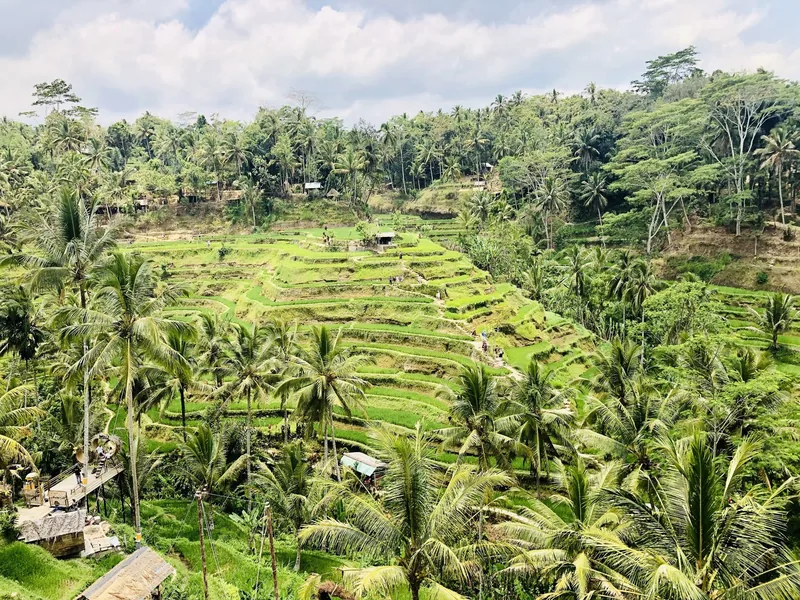
Destinations
Indonesia
Bali, Java and Flores — the island leg that works when the mainland does not.
View journey
Indonesia
Yogyakarta
Two or three nights of Java, an hour and twenty from Bali by air.
View journey
Example itinerary — fully customizable
Indonesia highlights
Ten days, three islands, and two flights that decide everything.
View journey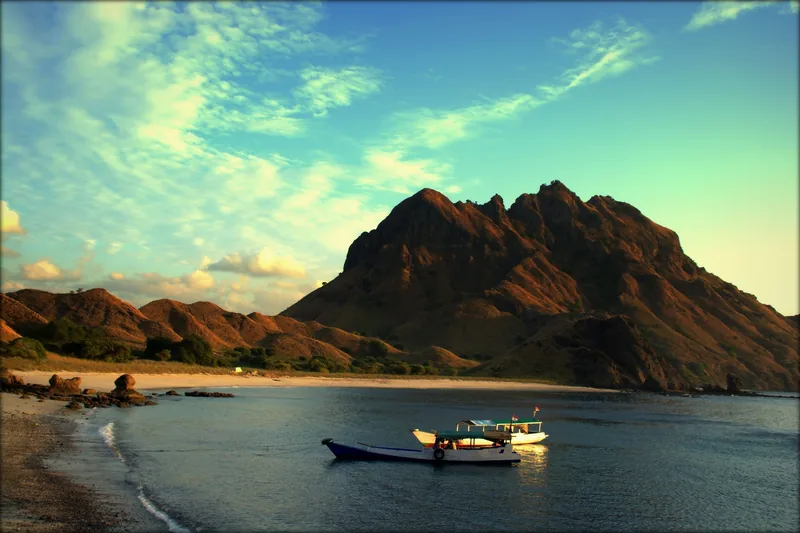
Start planning
Let’s plan your journey
Five quick questions. Your coordinator will take it from there.
Prefer to talk? WhatsApp or call+84 904 511 319