Cambodia
Cambodia in six days
The short Cambodian week, built so that the temples get three mornings rather than two, and so the capital is more than an airport with a memorial attached.
Overview
Six days, and why three of them are at the temples
Most six-day Cambodia itineraries give Angkor two days and spend the rest getting to and from it. That is the wrong division. The park covers four hundred square kilometres, the good light lasts about three hours at each end of the day, and the sandstone holds heat, so two days means two forced marches. Three mornings means three unhurried ones and an afternoon off in the middle of each.
The other half of the week is Phnom Penh, which is on this route for two reasons rather than one. The memorials at Tuol Sleng and Choeung Ek are the obvious one. The less obvious one is the National Museum, which holds the best collection of Khmer sculpture anywhere — the statues that are missing from the temples you have just walked through.
- Length
- 6 days, 5 nights
- Group
- Private, up to 12
- Starts
- Siem Reap
- Ends
- Phnom Penh
- Angkor pass
- Three days, included
- Best months
- November to February
Nights
The nights, in order
Day by day
What happens each day
Day 1
Into Siem Reap
An early night, which is the most useful thing you can do here
The new airport is well east of the town, so the transfer is about an hour rather than the fifteen minutes the older guidebooks describe. Nothing is planned. Eat early and sleep, because the first temple morning starts before six and the park opens at half past five.
Day 2
Angkor Thom first, Angkor Wat last
The Bayon before eight, and Angkor Wat after four
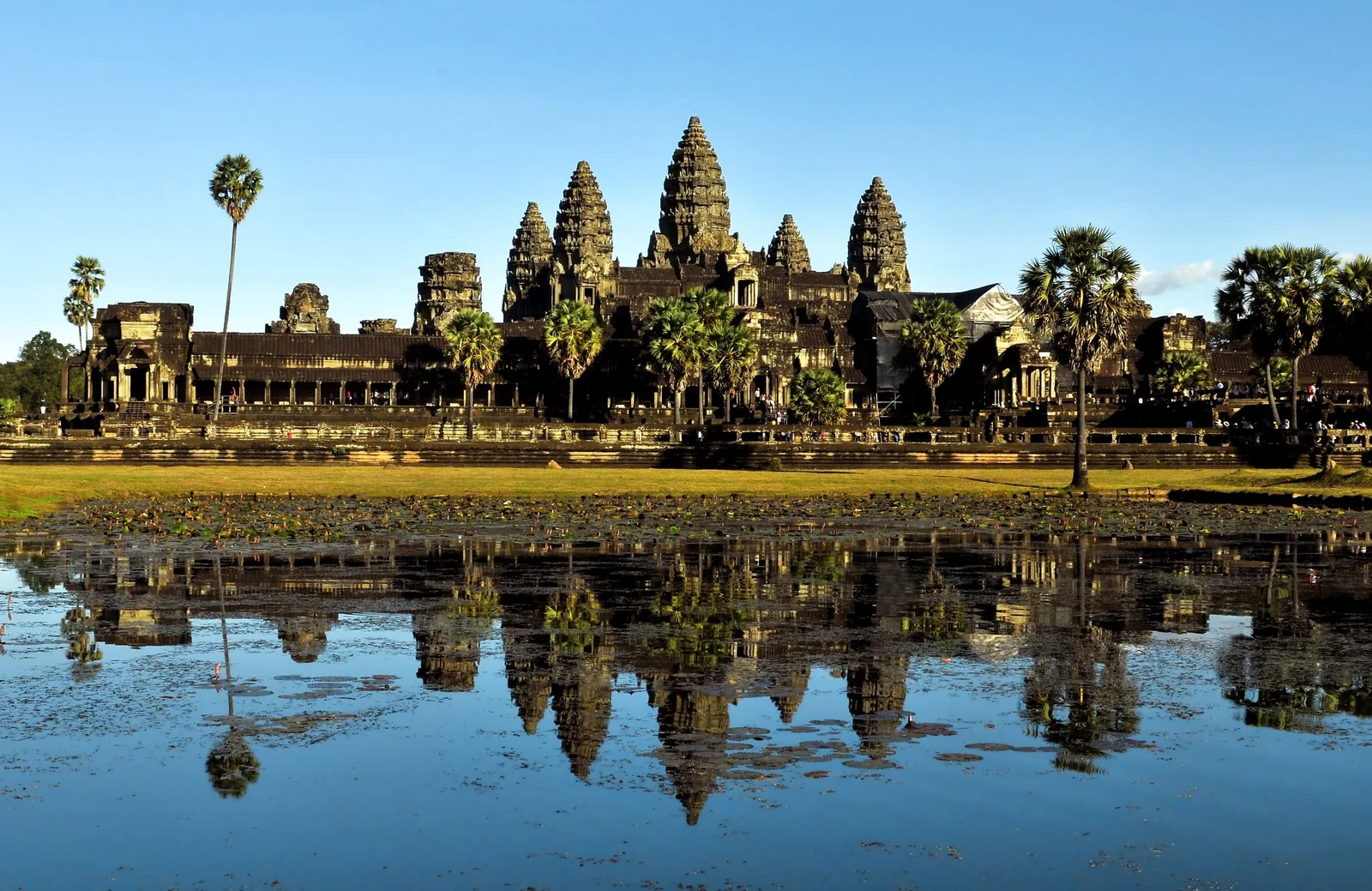
The order is the whole argument. Angkor Thom at opening: the Bayon’s faces are at their best in the first two hours and the walled city absorbs a crowd better than anywhere in the park. Then the terraces, and Ta Prohm for forty minutes while the trees are still quiet. The middle of the day is off. Angkor Wat comes late in the afternoon, approached from the west, which is the direction it was built to be seen from.
Day 3
Banteay Srei, and a temple nobody has rebuilt
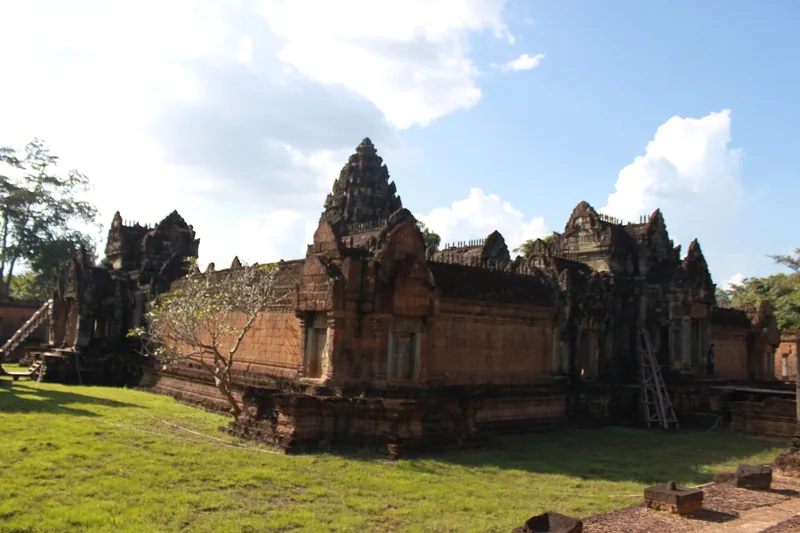
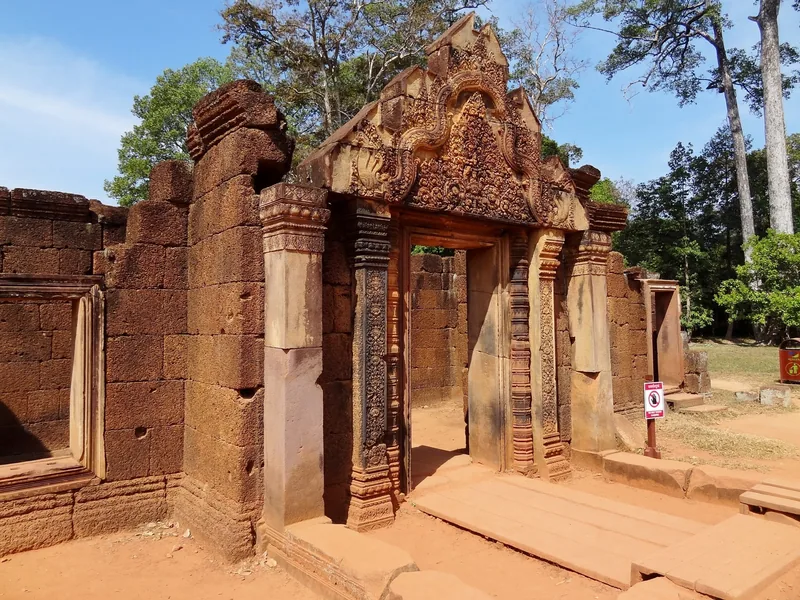
The carved lintels at Banteay Srei, which repay the early start
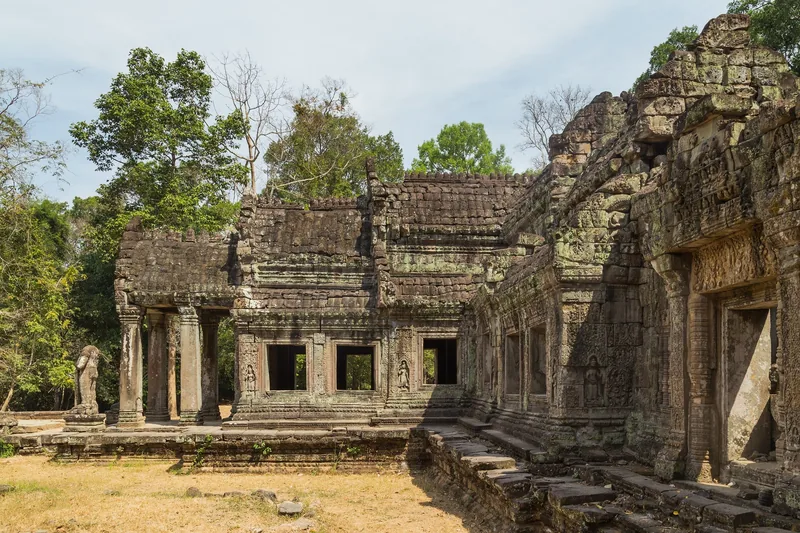
Thirty-seven kilometres northeast, Banteay Srei is small, pink and carved more finely than anything else in Cambodia; go at opening and take an hour over the lintels. On the way back, Preah Khan and Neak Pean are quiet at midday when the central temples are not. Or trade both for Beng Mealea — collapsed, unrestored, largely empty, and the half-day that separates a good Angkor visit from a standard one.
Day 4
The lake, and the last temple morning
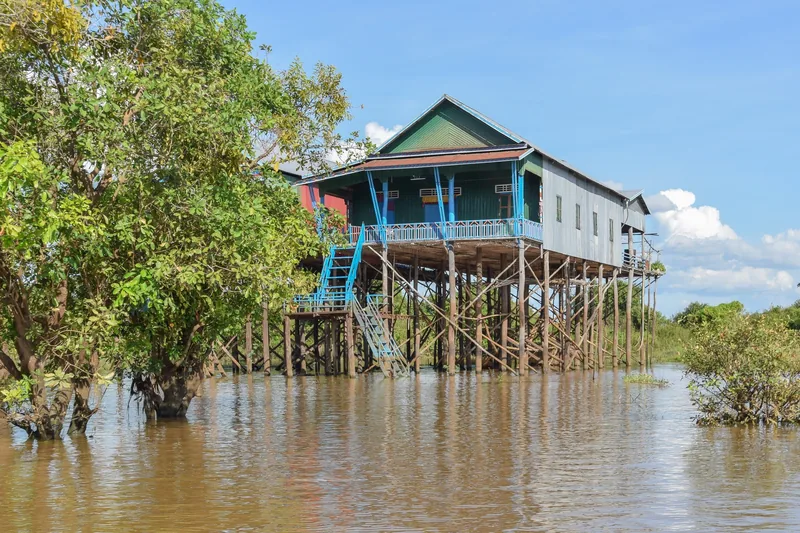
Houses on six-metre stilts, in the months the water reaches them
Tonle Sap changes size several times over across the year because the river feeding it reverses when the Mekong floods, and the villages are built for that. We use Kampong Phluk, an hour out, which is a working stilt village, or Kampong Khleang, which is further and where you are not the main event. From September to November the boats reach the flooded forest; by April they land a long way from the houses, and in those months we would rather give you another temple morning instead and we will say so when you book. The afternoon is free, and the evening can be the circus at Phare if you want it.
Day 5
South to the capital, and the two hours that are difficult
The audio guide at Choeung Ek, which is the reason to go with one
A morning flight, forty-five minutes, rather than five and a half hours of flat, straight road. From late morning: Tuol Sleng, a secondary school until 1975, and Choeung Ek fifteen kilometres south, where most of its prisoners were taken. Take the audio guide at both — it is narrated in part by survivors and it is the difference between horror and understanding. Allow half a day and plan nothing afterwards that needs concentration.
Day 6
The museum, the palace, and out
The pre-Angkorian galleries at the National Museum
Early, because the Royal Palace closes over the middle of the day and the dress code is covered shoulders and knees. Then the National Museum for an hour and a half, which is where the Angkorian sculpture that is not at Angkor has ended up. It would ideally come before the temples rather than after, and on a six-day route it cannot — worth knowing rather than worth rearranging. The airport is thirty to forty-five minutes out.
Paperwork
Entry, and the border that is not an option
Cambodia charges every traveller on this route, and one land route people still plan around has been shut for more than a year.
- There is no visa exemption for European, North American, Australian or Northeast Asian passports. Everybody pays.
- The e-visa is 30 days, single entry, and takes about a week to be safe. Visa on arrival is available at the three international airports and at the main land gates, in US dollars cash with a passport photo — carry both.
- An e-arrival card is required for flights only, filed within seven days of arrival. Your hotel registers you with the foreigner registration system.
- The Thailand – Cambodia land border has been closed to tourists since 23 June 2025, at Aranyaprathet – Poipet and at Hat Lek – Cham Yeam. Bangkok to Siem Reap is a one-hour flight and there is no road version at present.
- The Cambodian e-visa is accepted at only two land gates: Bavet, from Vietnam, and Trapeang Kriel, from Laos. Everywhere else it is a visa on arrival.
We do not publish visa fees. The current figure is on the official Cambodian portal, and your coordinator confirms it in writing, with the week to apply and the documents your nationality needs.
Pictures
What the six days look like
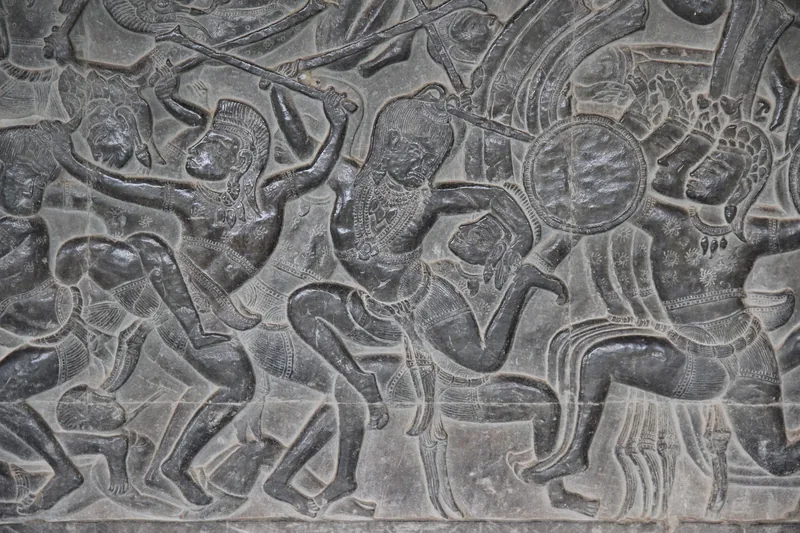
 AngkorAngkor Wat reliefsPreah Khan
 Banteay Srei
 Kampong Phluk
 Phnom Penh
Cost
How we quote it
| Travellers | Comfortable hotels | Boutique and luxury |
|---|---|---|
| 2 travellers | On request | On request |
| 4 – 6 travellers | On request | On request |
Siem Reap has more good hotels than the town can fill and the range is wide in both columns; Phnom Penh is narrower. The three-day Angkor pass, the guide and the private vehicle are the same in either case, which is why the gap between the columns here is smaller than on the island routes. Ask and the figure comes back within a working day, itemised, with both hotels named.
Included
What the quote covers
What the price includes
- Private air-conditioned car and driver in Siem Reap and in Phnom Penh, with all transfers including the hour from the new airport.
- An English-speaking licensed Cambodian guide for all three temple mornings, the lake day and the Phnom Penh sites. The same guide stays with you at Siem Reap for the whole temple block.
- The three-day Angkor pass, valid on any three days within ten, bought at the official ticket office with your photograph taken.
- The flight from Siem Reap to Phnom Penh in economy with checked baggage.
- Five nights with breakfast: four in Siem Reap and one in Phnom Penh.
- Lunch on every full day at Siem Reap, chosen near the temples rather than back in town so the middle of the day is not wasted driving.
- The Tonle Sap boat with village fees paid, or a fourth temple morning instead when the water is too low for it.
- Entrance fees to everything named above, including Beng Mealea if you take it, Tuol Sleng, Choeung Ek, the Royal Palace and the National Museum, and the audio guides at both memorial sites.
- A coordinator on a Cambodian number for the whole trip, and a written note of the visa route with the week to apply.
What it does not include
- International flights into the first city and out of the last.
- Visa fees and entry charges. We do not publish these figures — the current ones are on the government’s official portal, and your coordinator confirms them in writing before you travel.
- Travel insurance, which we ask every traveller to hold.
- Meals not named in the day-by-day, and all drinks.
- Tips for guides, drivers and boat crew.
- Personal expenses: laundry, telephone, spa treatments, anything bought.
Straight talk
Who should not book this route
Six days is short, the temples are hot and the capital contains two of the hardest places to visit in Asia. Five travellers should take a different trip.
- Families with young children. We do not recommend Tuol Sleng or Choeung Ek for young children and we say so at the planning stage rather than at the gate. The temples themselves are fine; the Phnom Penh day is not, and there is no polite way to split the party for half of it.
- Travellers with a wheelchair or serious mobility limits. Angkor is uneven stone with steep stairs and long distances between the standing parts, Beng Mealea is a collapsed ruin crossed on a timber walkway, and the stilt villages are boarded from a small boat.
- Anyone travelling in March, April or May who cannot start early. Angkor in those months is punishing by eleven and there is very little shade. We put you at the gate when it opens and stop by ten, and if that pattern does not suit you, come between November and February instead.
- Anyone who wants the lake and is travelling between February and May. The water retreats and the boats land a long way from the houses. We will swap the day rather than sell you a disappointing one.
- Anyone who wants Thailand in the same week by road. The land border has been closed to tourists since June 2025 and shows no sign of reopening. It is a flight or it is a separate trip.
Three mornings at the temples, not two.
Plan My Trip
Start from this route
Tell us your dates and whether the coast should follow. We will send a quote and an amended day-by-day within a working day.
Common questions
Questions travellers ask most
Is the Angkor sunrise worth it?
Several thousand people stand at the northern pond from half past five, and both the reflection and the crowd are real. We put it on your last temple morning rather than your first, when you know the site well enough to walk away as soon as the sky has done its work.
Could we drive to Phnom Penh instead of flying?
You can — five and a half to six hours, flat and straight. It only makes sense if you break it at Battambang for a night, which turns this into the eight-day route. Otherwise the forty-five minute flight buys you the memorials on the same day.
Is one night enough in Phnom Penh?
It is enough for the memorials on one afternoon and the museum and palace on the next morning, and it means choosing nothing else. Two nights adds the markets and an hour on the river at dusk, which is the one thing here that is purely pleasant.
Which months?
November to February: dry, 25 to 30°C and low humidity, and also the busiest. June to August is green, cooler after the rain breaks and much quieter. September and October are the wettest months, the emptiest temples, and the only time the lake villages look as they are sold.
Journey ideas
Where a private route could take you
Example itinerary — fully customizable
Angkor to the coast
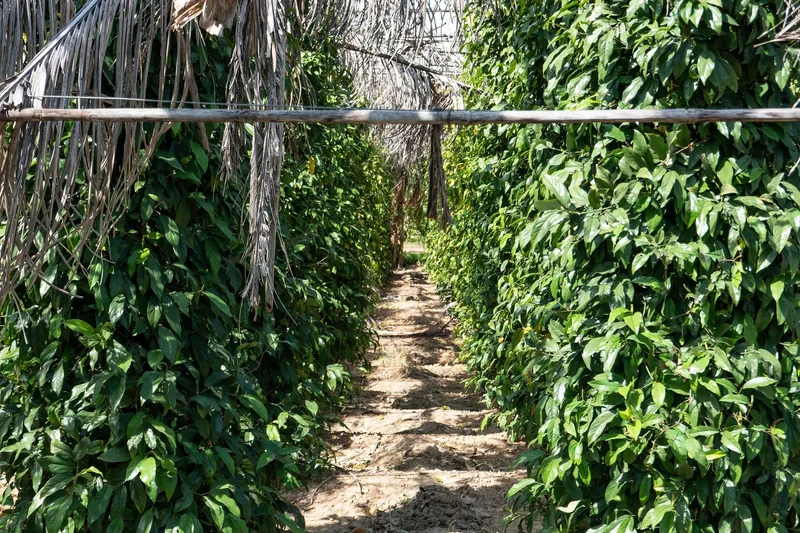
Eight days from the temples to the pepper farms, all of it by road.
View journey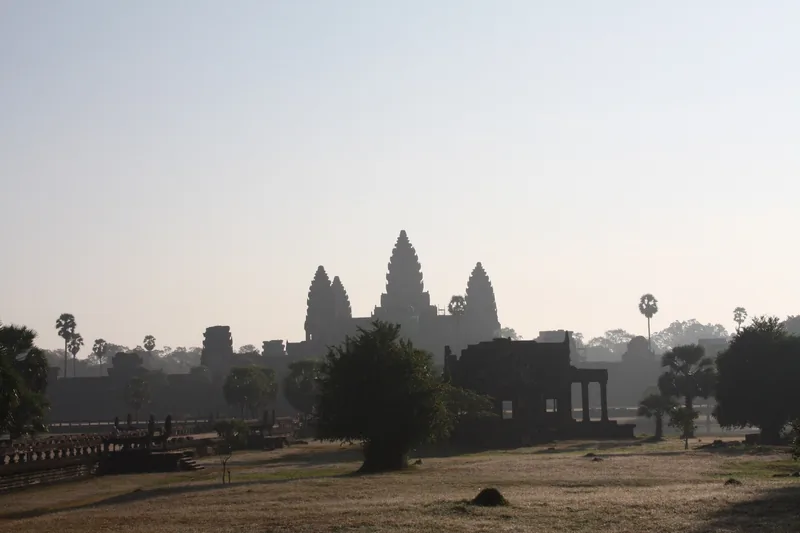
Cambodia
Siem Reap
Three or four mornings at Angkor, and the town you sleep in between them.
View journey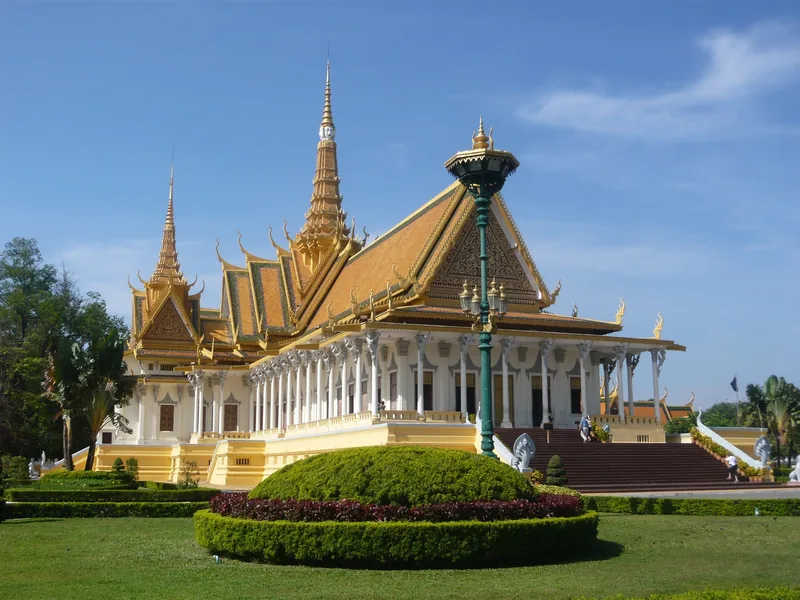
Cambodia
Phnom Penh
Two nights on the river, and the gate to southern Vietnam.
View journey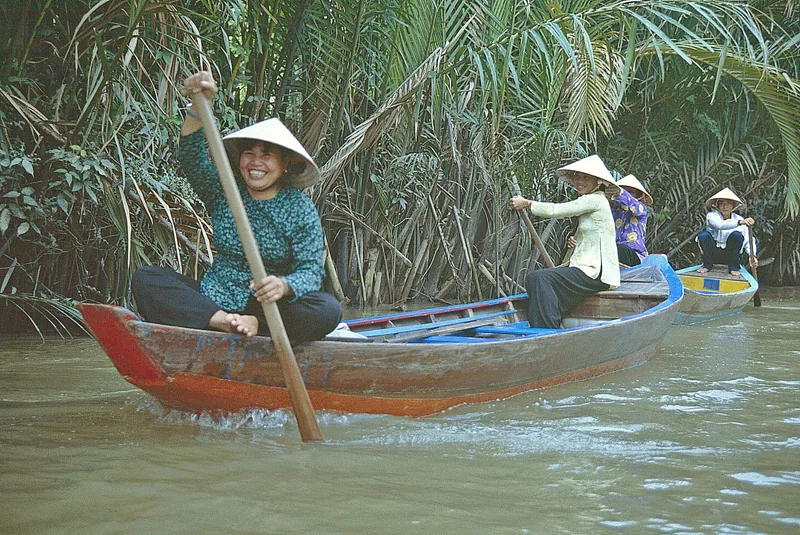
Example itinerary — fully customizable
Vietnam & Cambodia
Fourteen days, two countries, one land border — Hanoi to Angkor.
View journey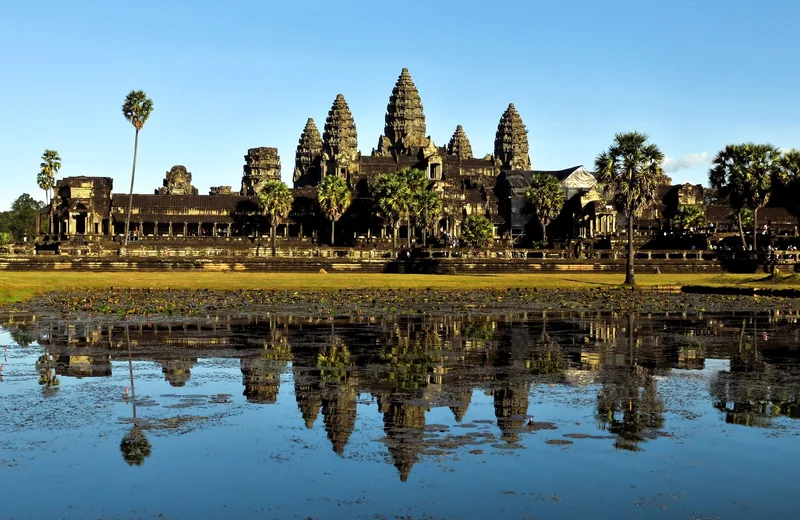
Start planning
Let’s plan your journey
Five quick questions. Your coordinator will take it from there.
Prefer to talk? WhatsApp or call+84 904 511 319