Multi-country
Vietnam and Laos in twelve days
The overland pairing almost nobody sells, because it costs a long road day and a visa on arrival — and the reason to do it is exactly that nobody else is on it.
The route
The pairing that costs a day and repays it
Most Vietnam and Laos itineraries are two separate holidays joined by an hour in the air from Hanoi to Luang Prabang. This one is not. It runs down the centre of Vietnam to Hue, crosses the Annamite range at Lao Bao into Savannakhet, and then follows the Mekong south before turning north to finish in Luang Prabang. The road day is seven to eight hours and it is the part people remember.
The trade is honest: you give up a second Vietnamese beach and you accept a Lao visa on arrival paid in cash, and in exchange you get southern Laos, which almost no fortnight itinerary includes, and a Wat Phou morning with about eleven other people in it.

- Length
- 12 days, 11 nights
- Group
- Private, up to 12
- Starts
- Hanoi
- Ends
- Luang Prabang
- Borders
- One, by road at Lao Bao
- Best months
- November to March
Stops
Where you stop
Itinerary
Day by day
Day 1
Arrive in Hanoi
Met at Noi Bai and driven into the Old Quarter, about 45 minutes. Nothing is scheduled. One loop of Hoan Kiem lake at dusk and an early dinner is the best use of the evening.
Day 2
Hanoi on foot
Cha ca, which is one dish and one menu
The Temple of Literature early, the Museum of Ethnology mid-morning, and the afternoon free. An eating walk in the evening through four or five pavement kitchens, which is the piece of hand-holding we recommend without embarrassment because it teaches you how to order for the next eleven days.
Day 3
South to Ninh Binh
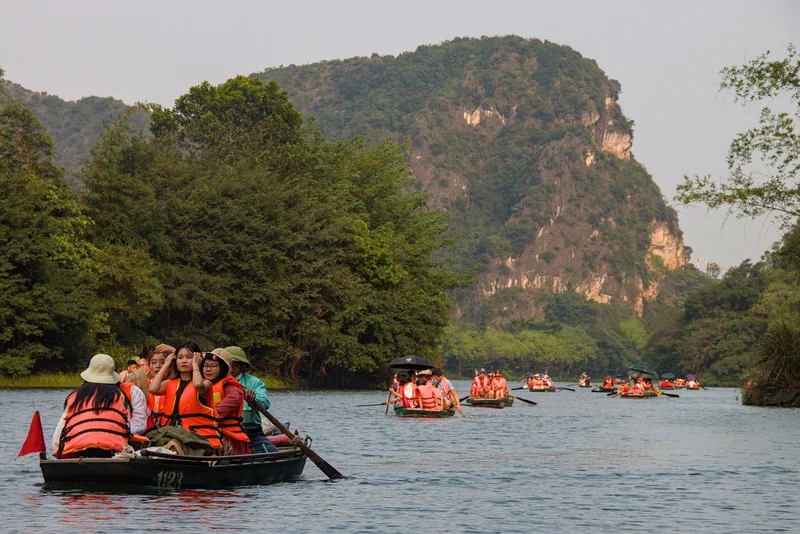
The Trang An boat, taken after three in the afternoon when the groups have gone
Two hours south of Hanoi the same limestone that makes Ha Long Bay comes out of flooded rice fields instead of the sea. A rowing boat through the caves at Trang An takes two hours and is worked by foot rather than by hand; Hang Mua is 500 steps for the view over the whole basin. If you would rather have the bay, say so and we will put you on an overnight boat instead and pick the route up again on day four.
Day 4
Ninh Binh to Hue
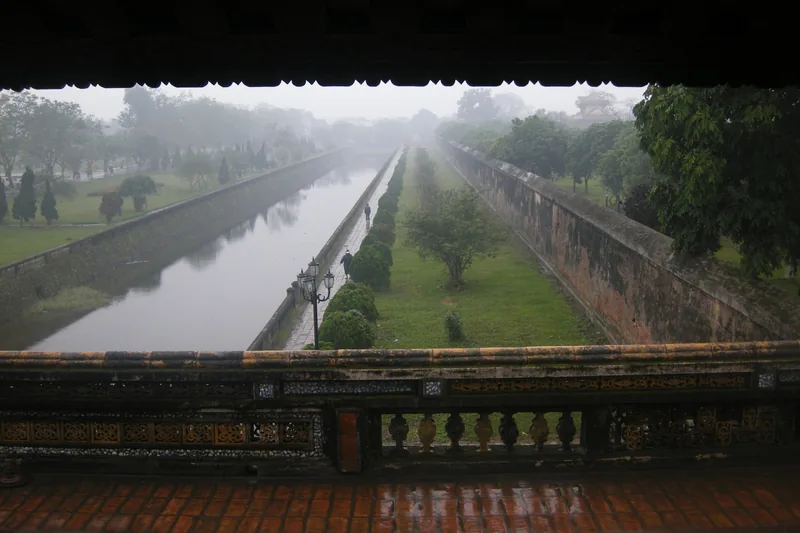
The citadel walls from across the river at dusk
A slow morning and an early boat, then back to Hanoi airport in the middle of the day and an hour and fifteen in the air to Hue. You are in the imperial city by late afternoon, and the walk along the Perfume river is the right way to end the day.
Day 5
The citadel and two tombs
The Reading Pavilion at Tu Duc, which is the quietest place in Hue
The Imperial City in the morning — much of it was destroyed in 1968 and what has been rebuilt is honest about being rebuilt, which is more interesting than a complete palace would be. In the afternoon two royal tombs rather than five: Minh Mang for its axis and its water, and Tu Duc for the fact that the emperor who built it used it as a garden retreat for sixteen years before he was buried in it.
Day 6
Over the pass at Lao Bao into Laos
The change of country at the top of the pass, which happens within a kilometre
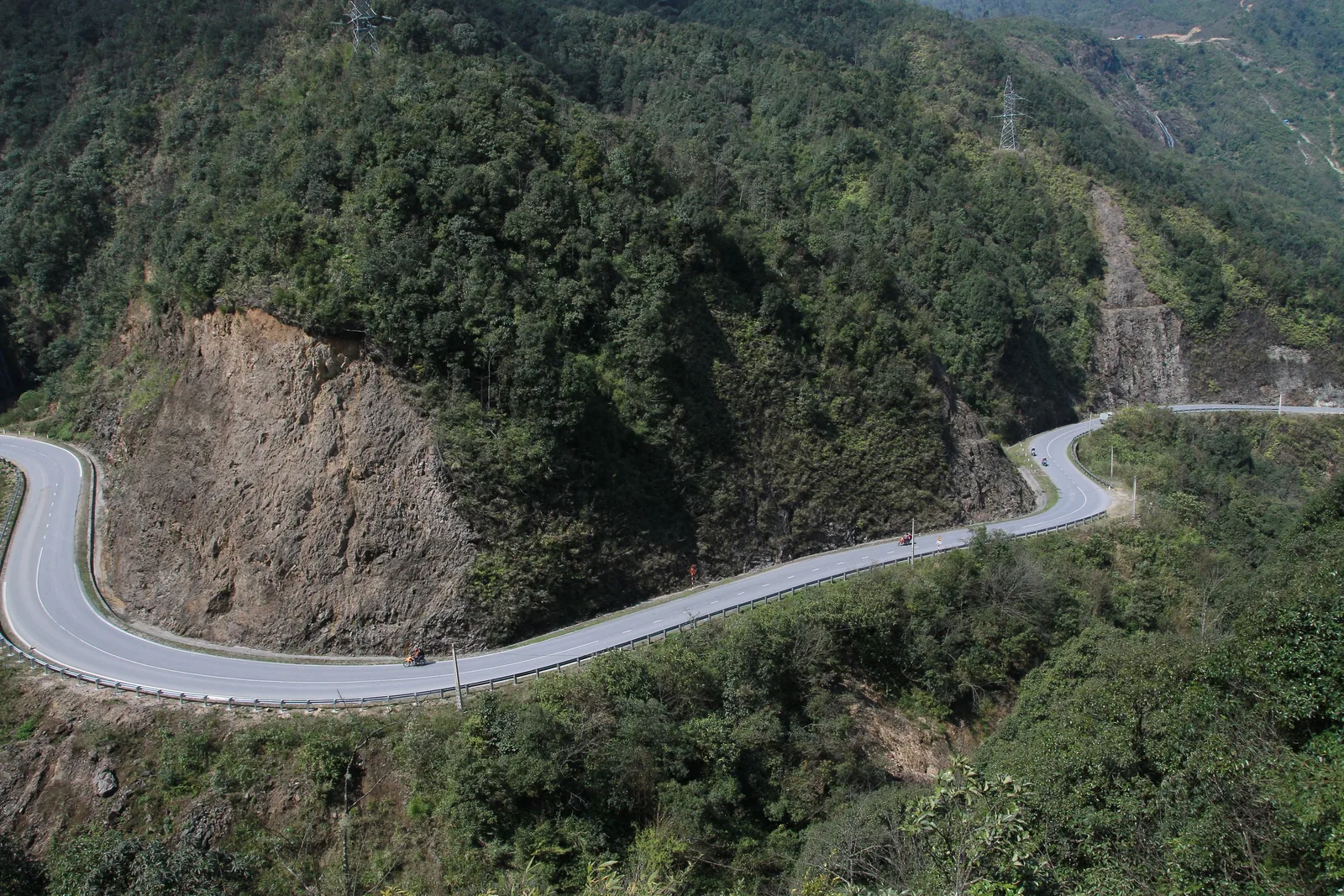
The border day, and the long one. It is about three hours west from Hue to the gate through the Annamite foothills, climbing all the way. At Lao Bao you clear Vietnamese exit control on foot, walk across to Dansavanh and take a Lao visa on arrival at the window — cash in US dollars, one passport photograph, filled in there and then. The Lao e-visa is not valid at this gate or at any other Vietnamese land crossing, so do not buy one. A Lao car and guide meet you and Savannakhet is four to five hours further on the far side. Seven to eight hours door to door.
Day 7
Savannakhet, then south to Pakse
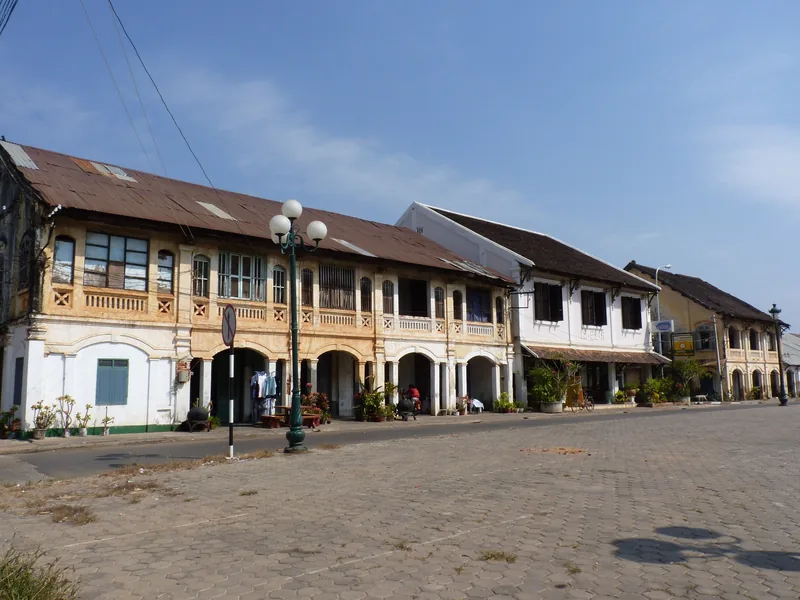
An hour in the morning walking Savannakhet’s French quarter — a square of shuttered two-storey houses, a 1930s church and a town square nobody is using — which is the whole of the sightseeing here and is enough. Then four to five hours south along the Mekong to Pakse, arriving mid-afternoon.
Day 8
Wat Phou and Champasak
The upper terrace at Wat Phou before nine, with the plain below still in haze
An hour south of Pakse, Wat Phou climbs a hillside below a spring and a mountain the Khmer took for a lingam. It is older than Angkor Wat — the earliest stonework here is seventh century — and the axis runs up six terraces to a sanctuary with a view back over the whole Mekong plain. Go at opening. The afternoon is free in Champasak or back in Pakse.
Day 9
The Bolaven plateau
Swimming below Tad Yuang in the middle of the afternoon
East of Pakse the land rises to between a thousand and thirteen hundred metres and drops about ten degrees. Coffee has been grown up here since the French period, arabica in the highest parts and robusta everywhere else, and the smallholder farms will show you the whole process from cherry to cup. The waterfalls are the best in Laos: Tad Fane falls 120 metres in twin streams into a gorge, and Tad Yuang five minutes away you can walk down to and swim below.
Day 10
North to Luang Prabang
The view from Mount Phousi at sunset, if you can face 328 steps
A flight north — direct when Lao Airlines schedules it and otherwise connecting in Vientiane, which costs the middle of the day either way. We hold the afternoon free rather than promising it. Luang Prabang in the late afternoon is the town at its best: the peninsula between two rivers, low tiled roofs, and the light going gold off the Mekong.
Day 11
Luang Prabang and Kuang Si
The lower pools at Kuang Si before the minibuses
The alms round happens at dawn whether or not anyone watches it, and our position is that you watch from a distance or not at all — a guide will explain what the rules actually are before you decide. Then the royal palace museum and Wat Xieng Thong. Kuang Si is twenty-nine kilometres out, about forty-five minutes, and the pools are the best half-day in northern Laos if you go at eight. Swim in the lower ones.
Day 12
Luang Prabang, and home
The airport is close, which is unusual in this region — fifteen minutes. If your flight is in the afternoon there is time for the morning market and the weaving villages across the river.
Borders
The border, in detail
Lao Bao – Dansavanh is the busiest of the three Vietnam – Laos gates and it operates reliably, but neither government publishes a status page for it, so we check it against operators on both sides before every departure. Two documents decide the day.
- Your Vietnamese e-visa names the entry and exit gates when you apply and they cannot be changed afterwards. This route flies into Hanoi and leaves by road at Lao Bao, and both have to be on the application.
- The Lao e-visa is NOT valid at Lao Bao, or at Nam Can, or at Tay Trang. It is valid at nine named ports only, and none of them is a Vietnamese land gate. At Dansavanh you take a visa on arrival: US dollars in cash, one passport photograph, filled in at the window. Bring both; there is no machine.
- If you have already bought a Lao e-visa for some other reason, it must be carried printed on paper — a phone screen is refused — and it will not help you here.
- Allow 45 minutes to an hour and a half at the gate. The Vietnamese driver does not cross; a Lao vehicle and guide meet you on the far side.
We do not publish visa fees. The current figures are on the Vietnamese and Lao government portals, and your coordinator confirms them in writing before you travel — including how many US dollars in cash to carry to the window at Dansavanh, and in what denominations.
Photographs
What the days look like
 Ninh BinhHue
 Lao Bao
 SavannakhetWat Phou
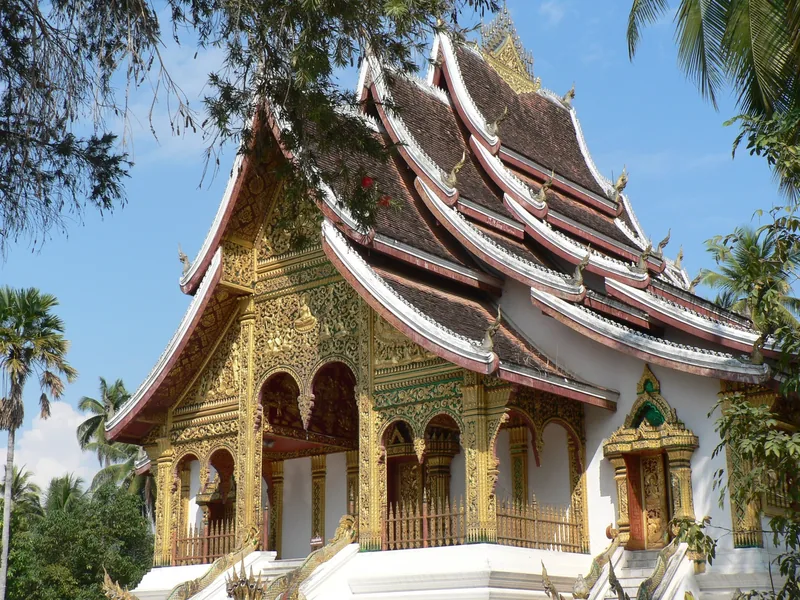 Luang Prabang
Price
What it costs
| Travellers | Comfortable hotels | Boutique and luxury |
|---|---|---|
| 2 travellers | On request | On request |
| 4 – 6 travellers | On request | On request |
Southern Laos has fewer hotels than anywhere else on this site, and the gap between the best room in Pakse and the best room in Luang Prabang is wider than the gap between three and five stars anywhere in Vietnam. We will tell you plainly which nights are the modest ones before you book, rather than after.
Included
What is included
What the price includes
- Private air-conditioned car and driver throughout, with a separate Lao vehicle from Dansavanh onwards.
- English-speaking local guides: one in Vietnam, one in Laos. Guides are licensed in their own country and change at the border.
- Internal flights as listed — Hanoi to Hue, and Pakse to Luang Prabang, direct or via Vientiane — in economy with checked baggage.
- Eleven nights of accommodation with breakfast.
- Lunches on the Ninh Binh day, the border day, and at Wat Phou and on the Bolaven plateau; dinner on the Hanoi eating walk.
- Entrance fees to everything named in the day-by-day: Trang An, the Hue citadel and two royal tombs, Wat Phou, the Bolaven farms, the Luang Prabang royal palace museum and Kuang Si.
- Boat trips: the rowing boat at Trang An, and a Mekong crossing at Champasak.
- All airport and border transfers, including the handover of vehicles at Lao Bao.
- A coordinator on a local number for the whole trip, and a written note of which visa documents your nationality needs, in what form, and how much cash to carry to the Lao window.
What it does not include
- International flights into the first city and out of the last.
- Visa fees for every country on the route. We do not publish these figures — the current ones are on each government’s official portal, and your coordinator confirms them in writing before you travel.
- Travel insurance, which we ask every traveller to hold.
- Meals not named in the day-by-day, and all drinks.
- Tips for guides, drivers and boat crew.
- Personal expenses: laundry, telephone, spa treatments, anything bought.
Honesty
Who this route is not for
This is the least comfortable itinerary on the site and we would rather lose the booking than have you find that out in Savannakhet.
- Anyone who wants a short travel day every day. Day six is seven to eight hours with a border in the middle, day seven is another four to five, and neither can be shortened. If that reads badly, take the Hanoi to Luang Prabang flight and spend the saved days in the north.
- Travellers who will not carry cash. The Lao visa on arrival is paid in US dollars at a window, with a passport photograph, and there is no card machine and no cashpoint you should rely on.
- Anyone expecting Luang Prabang-standard hotels the whole way. Savannakhet and Pakse have decent, plain places to stay and nothing more; the good rooms are at the two ends of the trip.
- March and April travellers who care about views. The burning season covers northern and southern Laos in haze for weeks, the Bolaven waterfalls run thin, and the plain below Wat Phou disappears. We will say so when you ask for those dates.
- Anyone who needs a beach. There is not one on this route at all.
The overland version, done properly.
Plan My Trip
Start from this route
Tell us your dates. We will confirm the Lao Bao gate against both sides before we quote it.
Common questions
Questions travellers ask most
Why not just fly Hanoi to Luang Prabang?
Because it is an hour and ten in the air and you see nothing, and because southern Laos — Wat Phou, the Bolaven plateau, the Mekong at its widest — is not on any flight-based itinerary. If the road day is the problem rather than the point, fly it: we will build the eleven remaining days around the north instead.
Do I need a Lao visa before I go?
Not for this route, and you should not buy the e-visa: it is not valid at Lao Bao or at any Vietnamese land gate. You take a visa on arrival at Dansavanh, in US dollars cash with a passport photograph. Your coordinator tells you the current fee and the denominations to bring.
Can we swap Ninh Binh for Ha Long Bay?
Yes, and it costs nothing in days — an overnight boat instead of a night among the karsts, with the flight south picked up on day four either way. Take Ha Long if you want to be on water, Ninh Binh if you would rather not spend five hours in a car to get there.
Is the road from Savannakhet to Pakse difficult?
No. It is flat, sealed and dull, four to five hours along the Mekong with one or two places worth stopping. The difficult driving on this route is on day six, on the Vietnamese side of the pass.
Journey ideas
Where a private route could take you
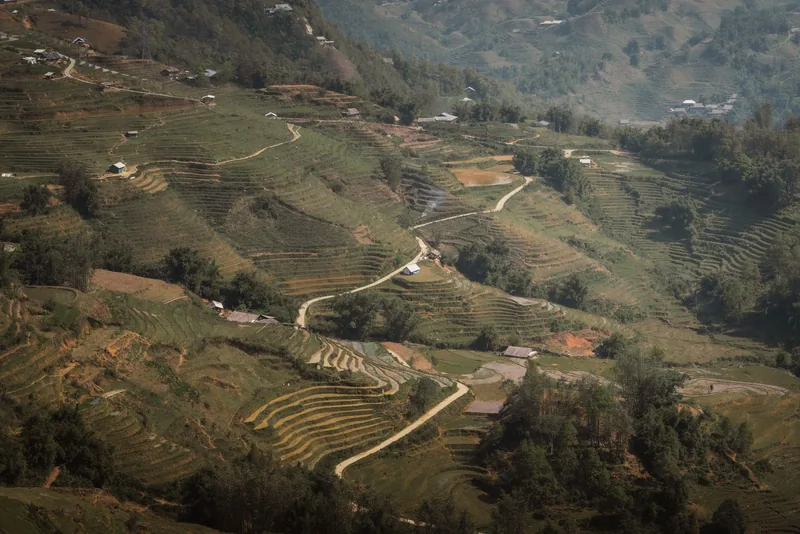
Example itinerary — fully customizable
Indochina, 21 days
Twenty-one days, three countries, two land crossings and one flight.
View journey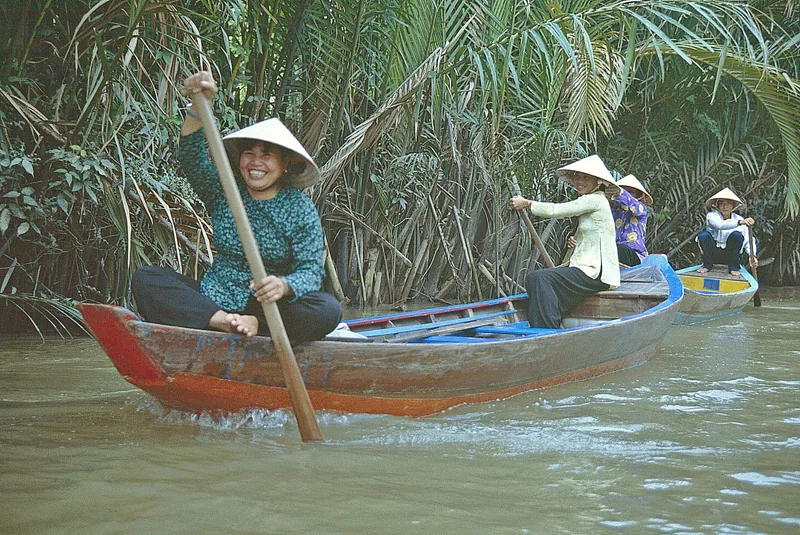
Example itinerary — fully customizable
Vietnam & Cambodia
Fourteen days, two countries, one land border — Hanoi to Angkor.
View journey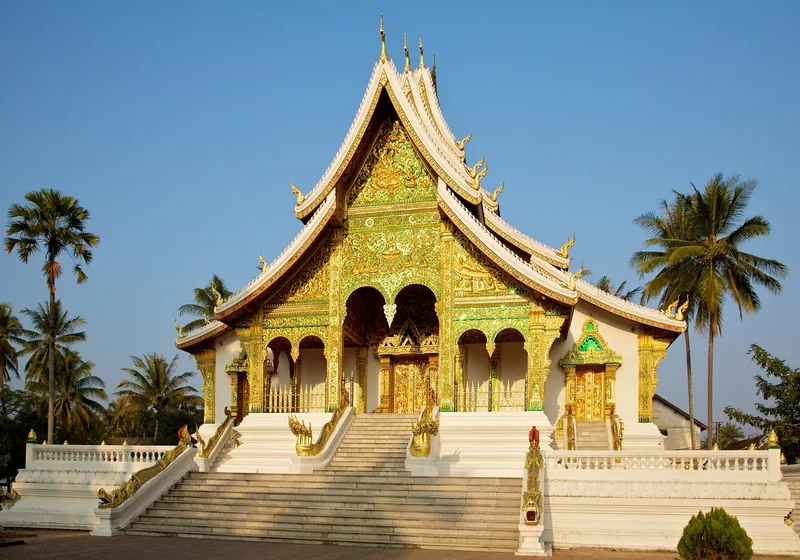
Laos
Luang Prabang
Three nights at the end of the river, and the start of the railway south.
View journey
Laos
Pakse
Three nights in the south, and the only overland link to Cambodia.
View journey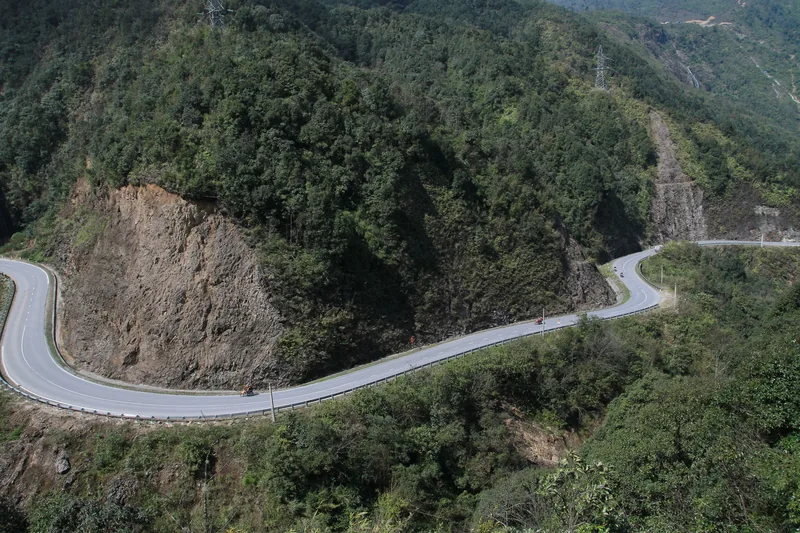
Start planning
Let’s plan your journey
Five quick questions. Your coordinator will take it from there.
Prefer to talk? WhatsApp or call+84 904 511 319