Laos
Luang Prabang
A town of fifty thousand people and some thirty monasteries on a spit of land between two rivers — and the place the Mekong slow boat finally stops.
Luang Prabang
Thirty monasteries on a spit of land
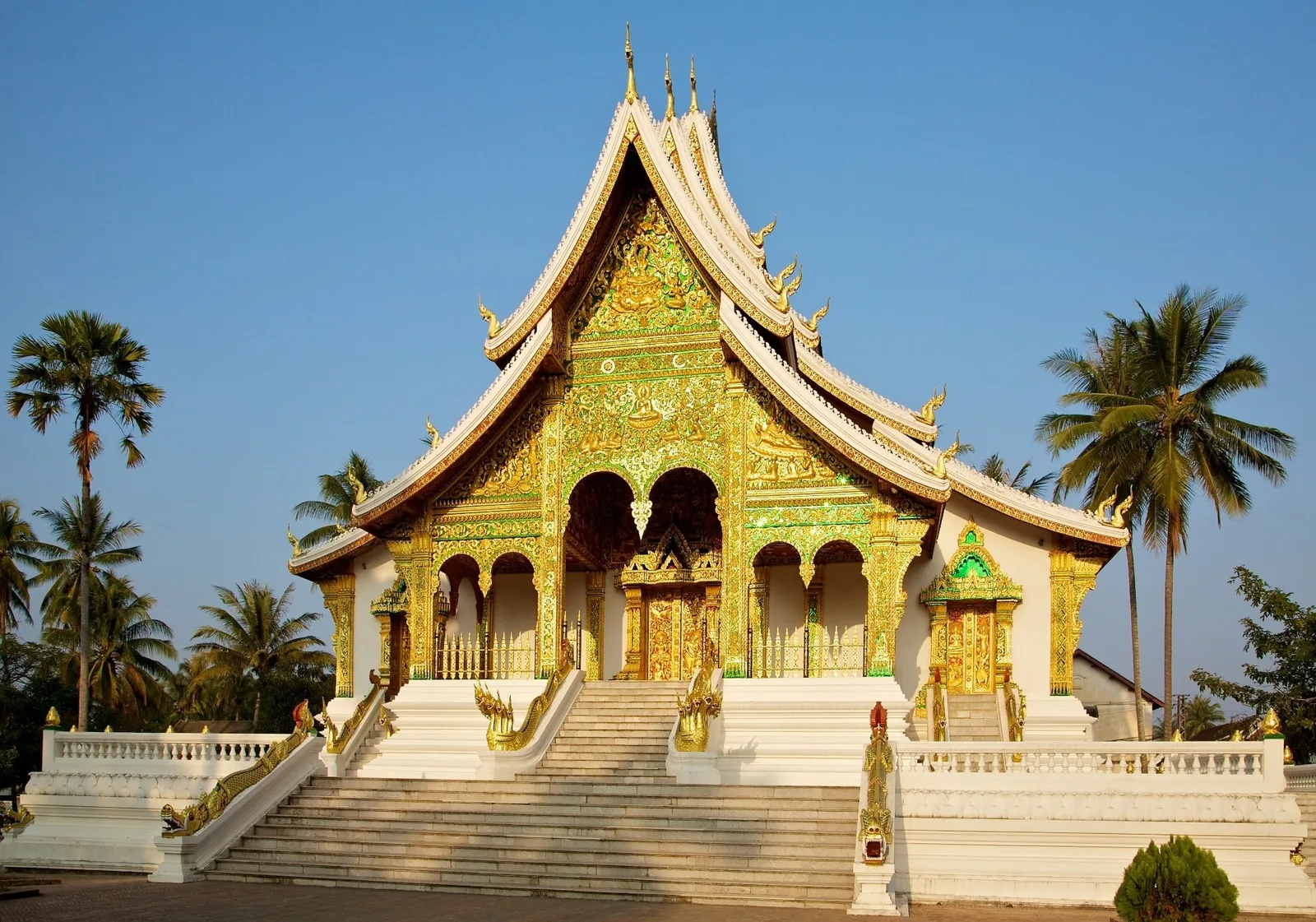
Luang Prabang occupies a peninsula where the Nam Khan runs into the Mekong, and the old town fits into about a kilometre and a half of it. Inside that space are over thirty working monasteries, several hundred French and Lao timber buildings, one hill, and a population small enough that you recognise people by the third day. It has been protected as a whole since the mid-1990s, which is why the main street has no high buildings and no traffic.
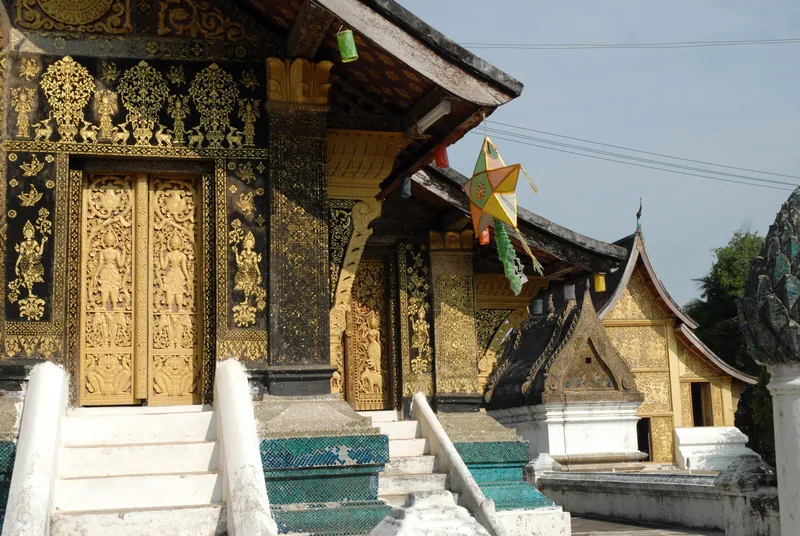
The result is a town that rewards walking rather than itineraries. Wat Xieng Thong, at the tip of the peninsula, is the one temple we would insist on — a mid-sixteenth-century hall with a roof sweeping almost to the ground and a mosaic tree of life on the rear wall. After that choose two or three more and stop; temple fatigue arrives faster here than anywhere in the region. Mount Phousi is worth climbing early for the view over both rivers. At sunset it is a queue on a staircase.
Custom
The dawn alms round, and how to behave at it
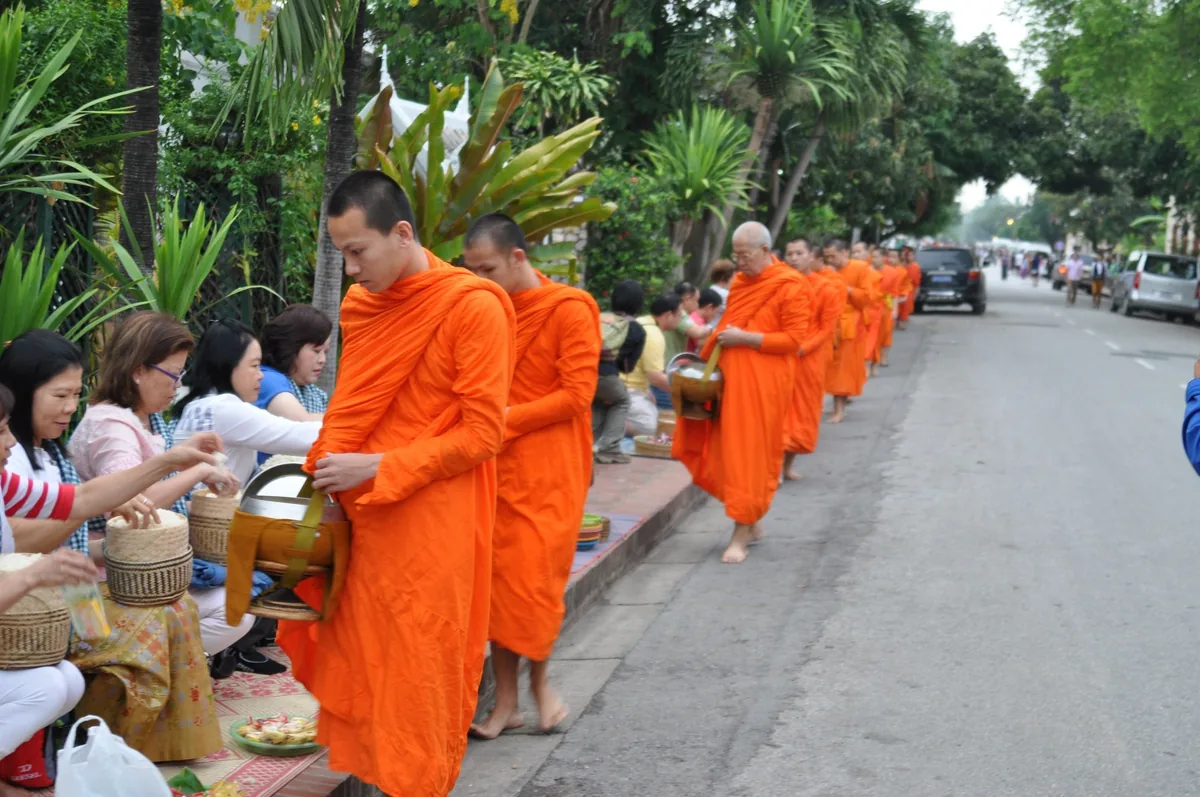
Shortly after five, several hundred monks leave the monasteries in single file and walk the main streets collecting rice from residents kneeling along the route. It is a daily religious observance, not a performance, although much visitor behaviour treats it as one. Watch from across the street, stay back rather than kneeling in the line, use no flash, and keep the camera out of people’s faces. If you want to give rice, arrange it through your guesthouse the day before; the rice sold from buckets on the pavement is not suitable, and the monasteries have repeatedly asked that people stop buying it.
A quieter alternative: the same round happens in the villages across the Mekong with no audience at all, five minutes away by boat.
Out of town
Waterfalls, caves and the river
Kuang Si is twenty-nine kilometres out, about forty-five minutes, and it is the best half-day in northern Laos: limestone pools in a milky turquoise nobody believes in photographs, stepping down through forest from a fall at the top. Go at eight, before the minibuses, and swim in the lower pools. The bear sanctuary at the entrance is a genuine rescue operation. Tad Sae dries up for much of the year and is not a substitute.
- Kuang Si early, with a picnic. Half a day, and the thing most people rate first.
- The Pak Ou caves, two hours upriver — the river journey is the better half.
- A cooking class, or a working rice farm outside town.
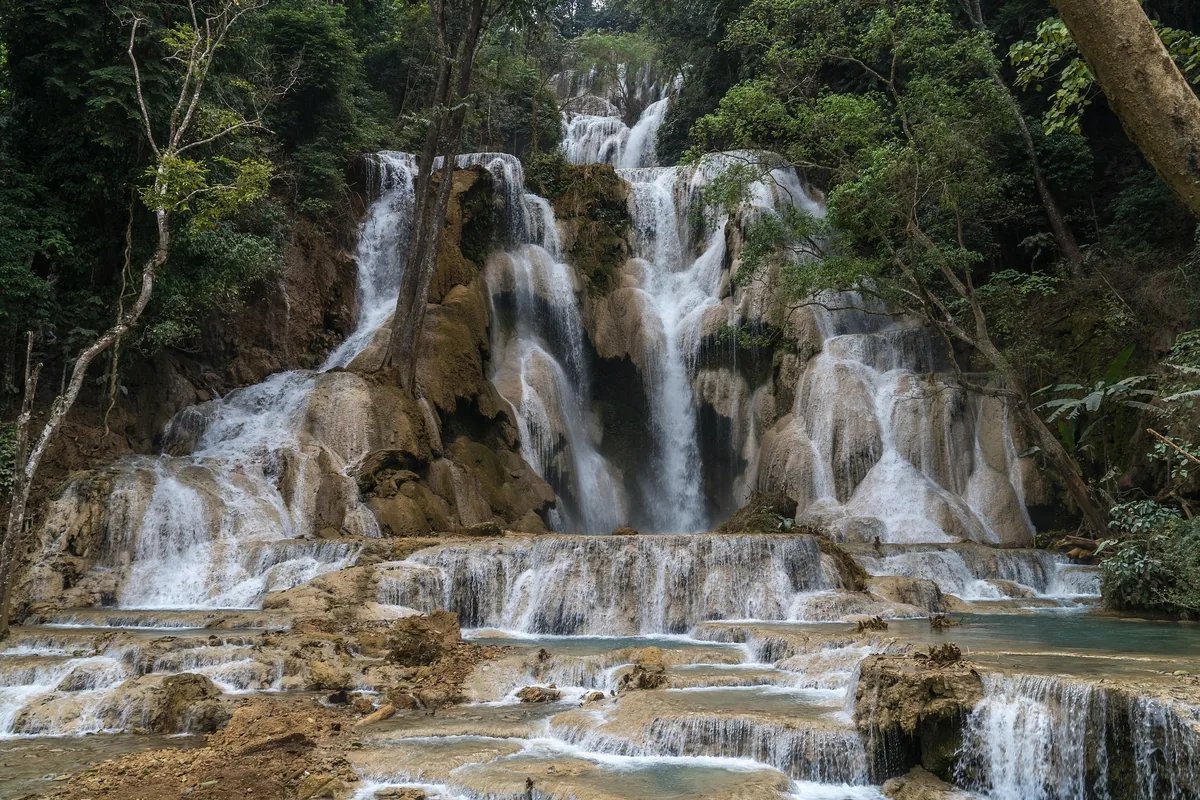 Kuang Si
How long
Three nights, and the two months to avoid
Three nights is right: one for the town, one for Kuang Si and the river, and one you will be glad of. November to February is dry, clear and cool enough to want a jacket before dawn. March and April are the months to avoid outright — agricultural burning hazes the northern valleys and no planning works around it. The rains from June make the countryside green and the waterfall spectacular, and the light after a September storm is the best of the year.
Arriving
Arriving by boat, by rail and by air
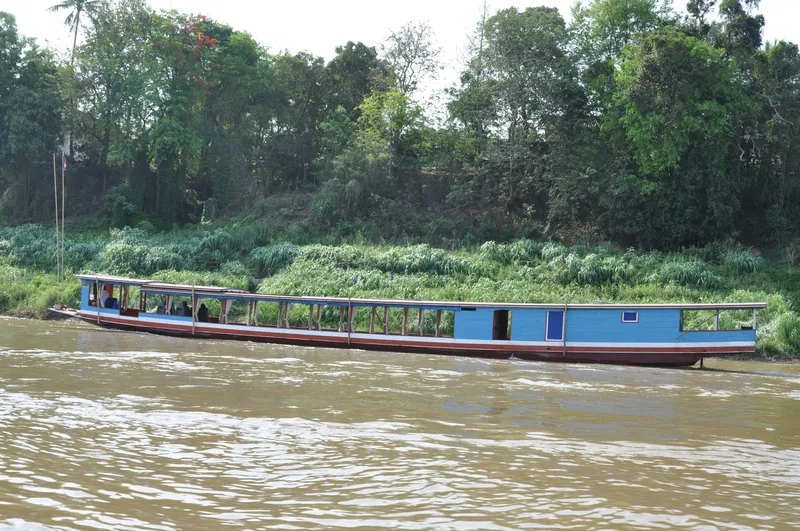
This is where the Mekong slow boat from the Thai border finishes, the best way to arrive anywhere in the region. It is also on the Laos–China railway, which has changed Lao itineraries more than anything else in a decade: the trains link Vientiane, Vang Vieng and Luang Prabang in about two hours a leg, against seven or more on the mountain road. The station is some way out of town, and seats sell out days ahead in the high season.
| Leg | How long | What to know |
|---|---|---|
| Huay Xai by slow boat | 2 days, overnight at Pak Beng | Morning departures. The fast boat exists; we do not use it. |
| Vang Vieng and Vientiane by rail | About 2 hours a leg | Book several days ahead from November to February. |
| Hanoi or Bangkok | About 1 hour by air | The airport is one of the nine Lao e-visa ports. |
| Nong Khiaw and the Nam Ou | 3 to 4 hours by road | For travellers adding the northern valleys. |
Japanese passports hold 30 days visa-free in Laos; British, EU, American, Australian and Canadian passports need a visa. The Lao e-visa is single entry, 30 days, and must be carried printed — a phone screen is refused. It is valid at nine ports only, of which Luang Prabang airport is one, and at no Vietnamese land gate, so a road route in from Vietnam means a visa on arrival. The digital immigration form is filed twice. We do not publish fees: your coordinator confirms the current figure.
Three nights at the end of the river.
Plan My Trip
Tell us your dates
We will tell you whether the slow boat fits your week, and whether your month has haze in it.
Common questions
Questions travellers ask most
Is three nights enough in Luang Prabang?
Three is the right allowance for most routes: the old town and its temples, half a day at Kuang Si, and a morning on the river. A fourth night is easy to fill and hard to justify unless you are adding the northern valleys.
Should I watch the alms round?
You can, quietly and from a distance, standing back from the line and without a flash. It is a religious observance rather than an attraction, and the monasteries have repeatedly asked visitors not to buy rice from pavement sellers in order to join in.
Is the train better than the road?
Considerably. The railway covers each leg between Luang Prabang, Vang Vieng and Vientiane in around two hours, against seven or more on the mountain road. Tickets sell out several days ahead in the high season, which is a good reason to have someone booking them in advance.
Journey ideas
Where a private route could take you
Laos
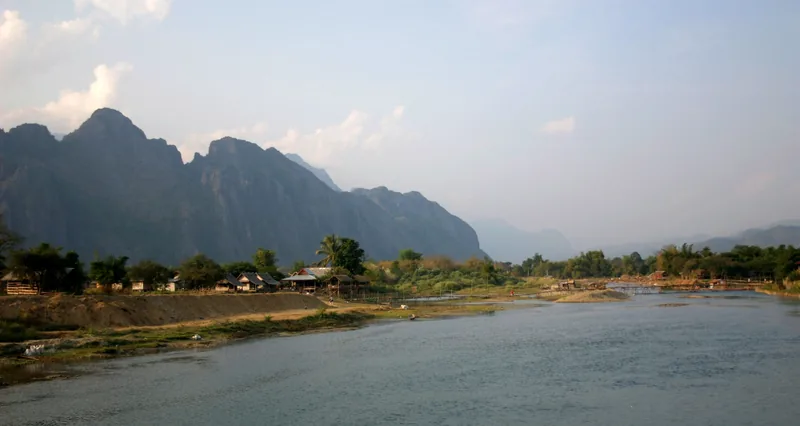
Vang Vieng
One night, two at most, between the two Lao cities.
View journey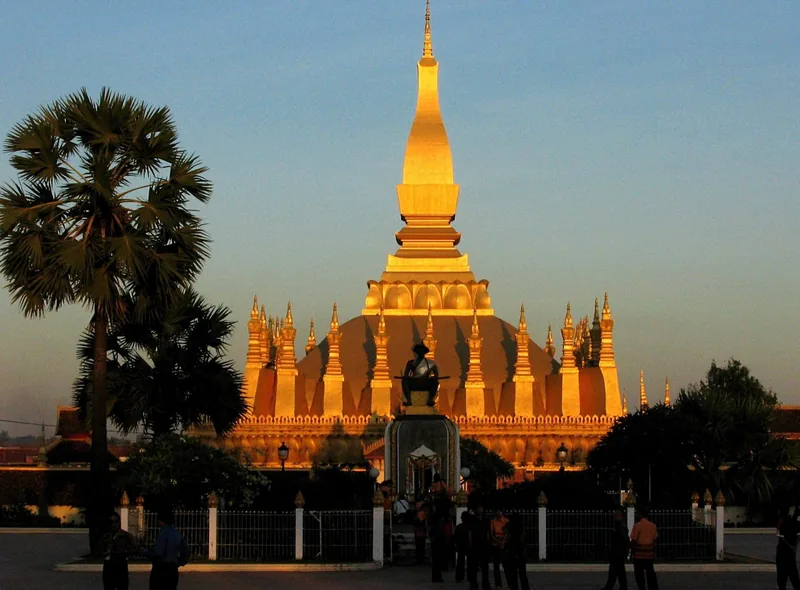
Laos
Vientiane
A night or two, and two different ways out of the country.
View journey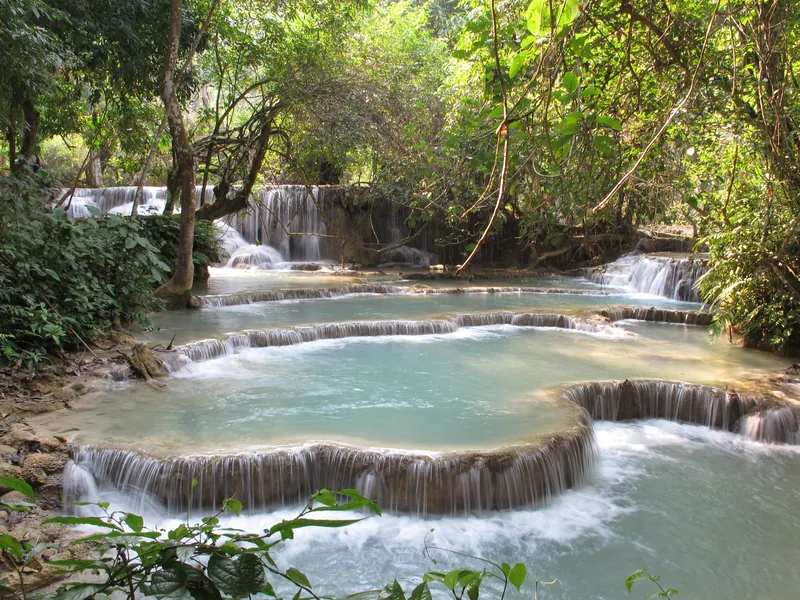
Destinations
Laos
The slow boat, the northern valleys, and the nine ports the e-visa covers.
View journey
Example itinerary — fully customizable
The Lao slow boat
Eight days: Huay Xai to Vientiane, by river and by train.
View journey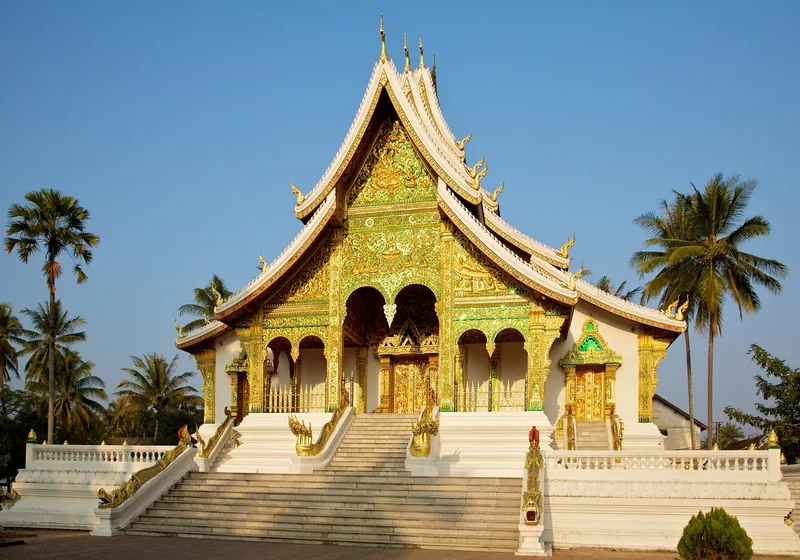
Start planning
Let’s plan your journey
Five quick questions. Your coordinator will take it from there.
Prefer to talk? WhatsApp or call+84 904 511 319