Laos
Vang Vieng
A wall of limestone towers along the Nam Song, a town that has changed its character twice in fifteen years, and a railway station that made it a comfortable stop.
Vang Vieng
The valley, not the town
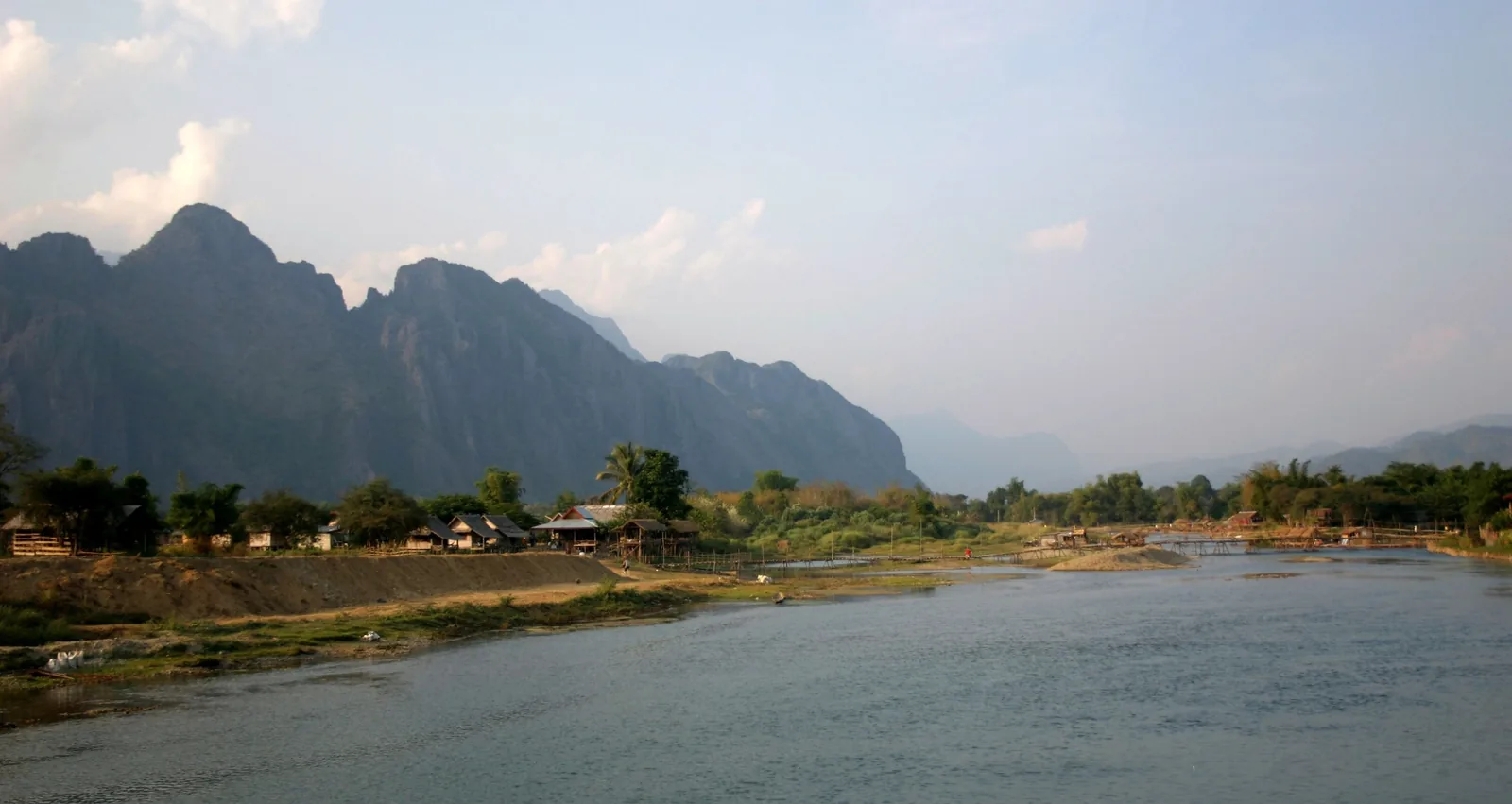
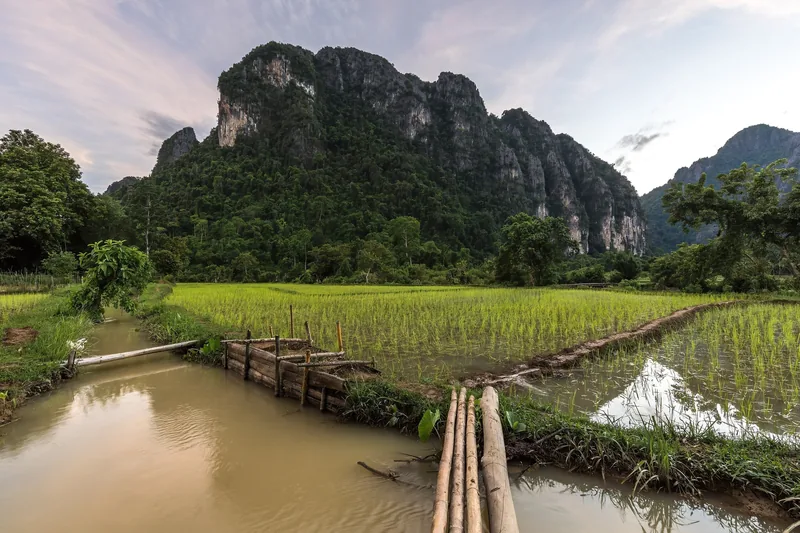
Vang Vieng sits in a flat river valley with a wall of limestone towers directly behind it — three hundred metres of grey rock rising out of rice fields, caves at the foot of them and cloud caught around the tops most mornings. It is the most immediately striking landscape in Laos, and it is visible from the middle of a town that is entirely ordinary: low concrete buildings, guesthouses, a strip of restaurants and an airstrip that has not seen a scheduled flight in years.
That gap between the setting and the settlement is the whole of Vang Vieng. Nobody stays for the streets. They stay to get on the river, into a cave, up a viewpoint or into a balloon basket at six in the morning, and then they move on. One night does that; two does it without rushing.
One correction
What the place stopped being
For about a decade Vang Vieng was known for river tubing between bars built on the banks, an arrangement that killed a number of travellers and that the government closed down in 2012. Almost nothing of it remains. What replaced it is an outdoor-activity town with a largely Korean and Chinese clientele, better organised and duller in reputation than in fact; tubing survives as a straightforward float down a pretty river. We mention it because older accounts online are still built on that era, so travellers either arrive expecting something gone or avoid the place for something that no longer happens.

Out of town
Caves, lagoons and a climb before breakfast
The valley has dozens of caves and a handful of spring-fed pools, and the difference between a good day and a crowded one is how far out you will drive. Blue Lagoon 1, closest to town, is busy from ten. The lagoons further out are twenty to forty minutes down dirt roads and quiet all day.
- A dawn balloon or paramotor flight — twenty minutes over the towers with mist still in the valley. Dry season only, and the best thing here.
- Tham Nam, the water cave, floated through on an inner tube by headtorch. Cold, dark, forty minutes.
- Tham Phu Kham above Blue Lagoon 1, a short steep scramble to a cave with a reclining Buddha in it.
- The Nam Xay or Pha Ngeun viewpoints — forty minutes of steep loose rock, best before eight.
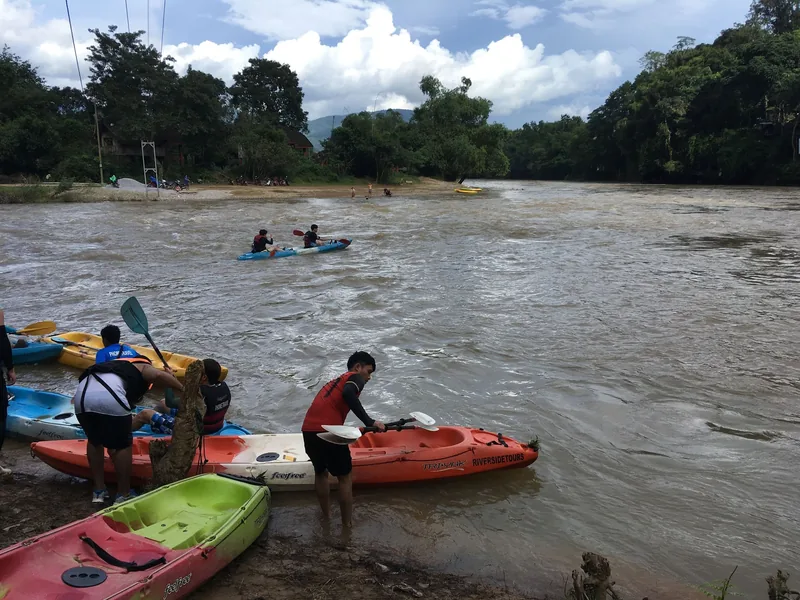
- Kayaking the Nam Song back into town late in the afternoon, the calmest hour of the day.
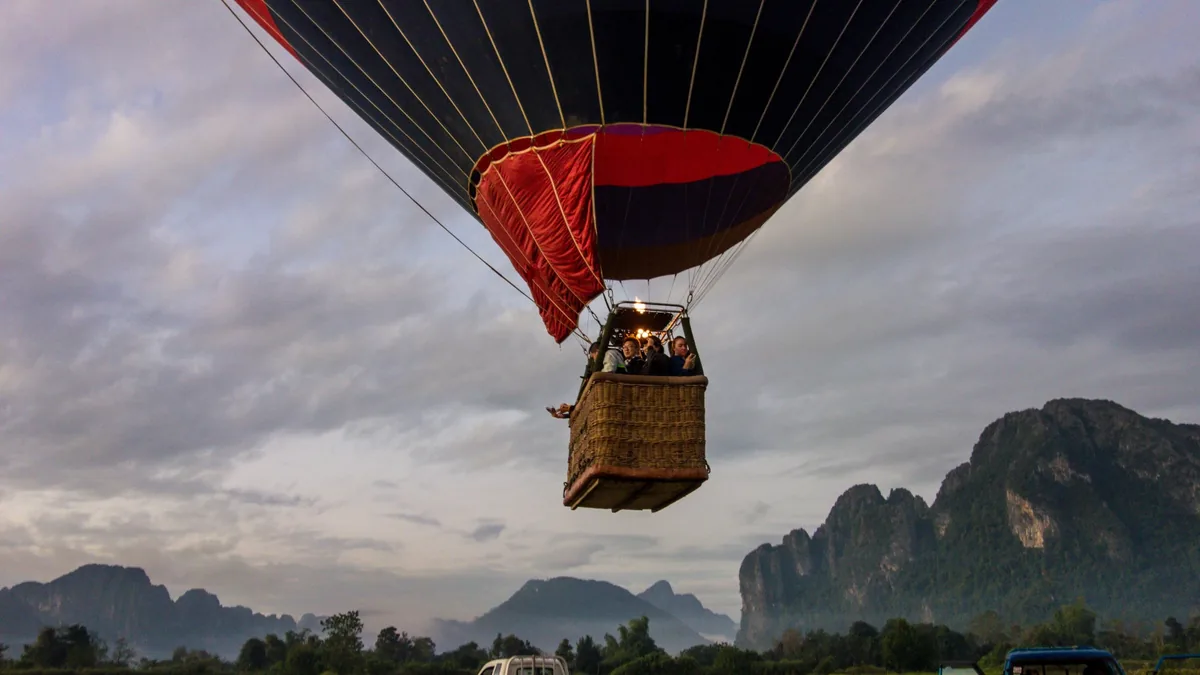 Vang Vieng, dawn
How long
One night, two at most
November to February is the window: clear skies, mist in the valley at dawn, balloons flying and the river low enough to be pleasant. March and April bring heat and the burning haze that covers the whole of northern Laos, and the towers disappear into it. From June the rains turn the lagoons from blue to brown within hours of a storm and some caves flood outright, which is worth knowing before you build a day around one. September and October are wet, green, and often clear by late afternoon.
Connections
The train changed everything here
Vang Vieng used to be a place you endured a mountain road to reach. The Laos–China railway ended that: the line links Vientiane, Vang Vieng and Luang Prabang at around two hours a leg, against six or seven by road. That is why the town appears on short Laos itineraries at all, and why it works as a single night between the two cities rather than a detour. The station is a few kilometres out, so build in a transfer at both ends, and book early — in the high season seats go several days ahead and there is no practical standby.
| Leg | How long | What to know |
|---|---|---|
| Vientiane by rail | About 2 hours | Then thirty minutes into the capital from the station. |
| Luang Prabang by rail | About 2 hours | The scenic leg, through tunnels and river valleys. |
| Vientiane by road | 3 to 4 hours | Used for private transfers that stop on the way. |
| Friendship Bridge I, for Thailand | About 3 hours in total via Vientiane | The Lao e-visa is valid at that bridge, and not at every crossing. |
Of the nationalities we most often book, only Japanese passports have 30 days visa-free in Laos; British, EU, American, Australian and Canadian travellers need a visa. The Lao e-visa is single entry, 30 days, and must be carried printed — a phone screen is refused. It covers nine ports: Wattay, Luang Prabang and Pakse airports, Friendship Bridges I, II and IV, the Boten checkpoint, Boten railway station and Khamsavath railway station. Anywhere else, including every Vietnamese land gate, you buy a visa on arrival, and the e-visa fee is not refunded if you arrive at a port it does not cover. We do not publish fees: your coordinator confirms the current figure.
One night between the two cities.
Plan My Trip
Tell us your dates
We will tell you whether the balloons will fly, and book the train before it sells out.
Common questions
Questions travellers ask most
Is Vang Vieng still a party town?
No. The riverside bars were closed down in 2012 after a number of deaths, and what replaced them is an outdoor-activity town — caves, kayaking, viewpoints and dawn balloon flights. Accounts online that describe something else are more than a decade old.
How many nights does it need?
One, for most routes: in by train in the morning, one cave or lagoon, out the next day. Two if you want a dawn balloon flight and time at the quieter lagoons further from town.
Train or road from Vientiane?
The train, at around two hours against three to four by road, and far more comfortable. Book several days ahead in the high season; the stations at both ends are outside the towns, so allow for a transfer.
Journey ideas
Where a private route could take you
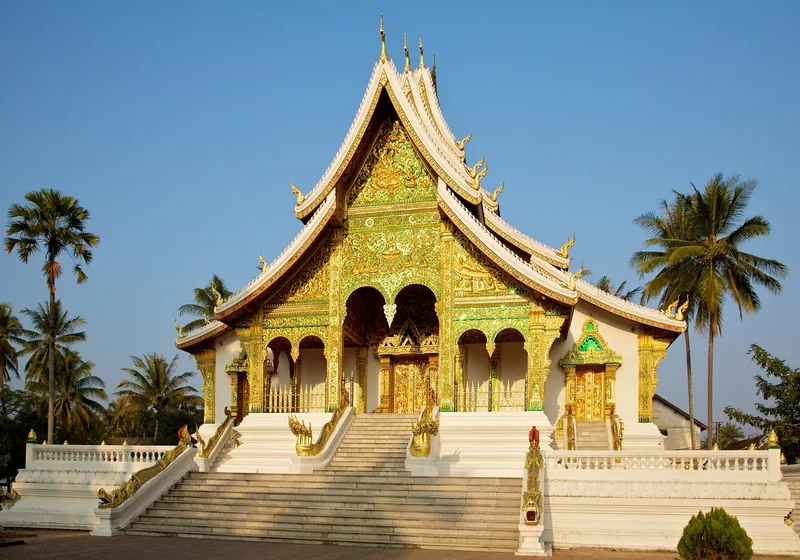
Laos
Luang Prabang
Three nights at the end of the river, and the start of the railway south.
View journey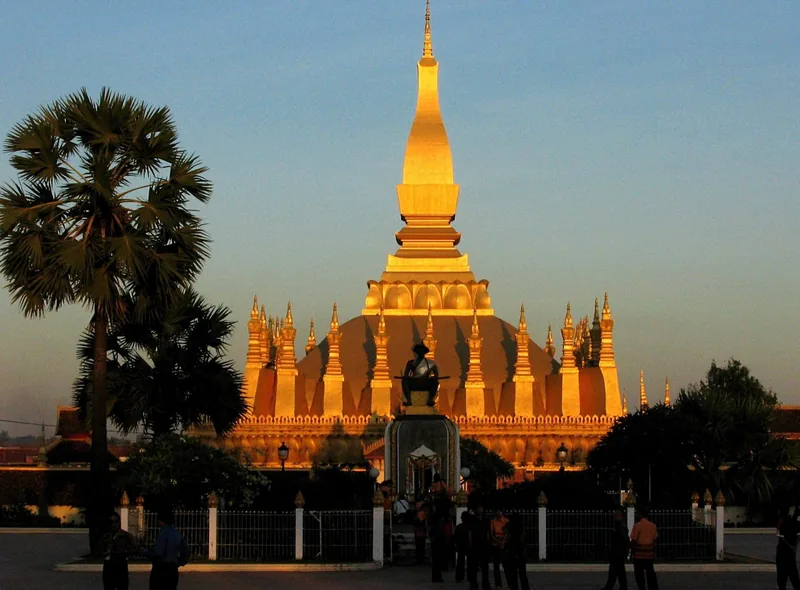
Laos
Vientiane
A night or two, and two different ways out of the country.
View journey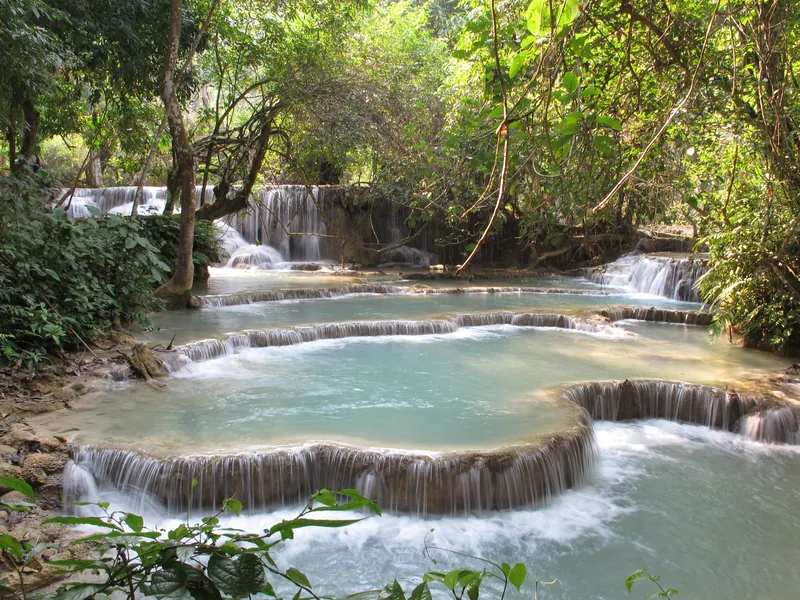
Destinations
Laos
The slow boat, the northern valleys, and the nine ports the e-visa covers.
View journey
Example itinerary — fully customizable
The Lao slow boat
Eight days: Huay Xai to Vientiane, by river and by train.
View journey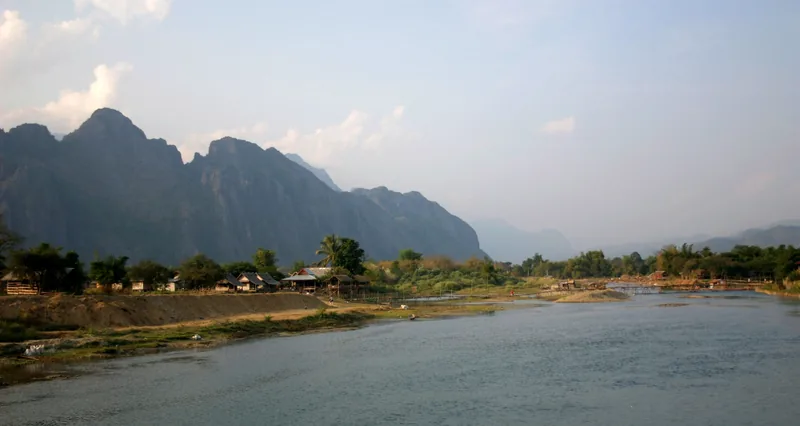
Start planning
Let’s plan your journey
Five quick questions. Your coordinator will take it from there.
Prefer to talk? WhatsApp or call+84 904 511 319