Multi-country
Indochina in twenty-one days
Three countries, two land borders and one flight — the long way round the old French Indochina, taken at a pace that lets the countries join up instead of stacking against each other.
The route
Three weeks, and why it takes three
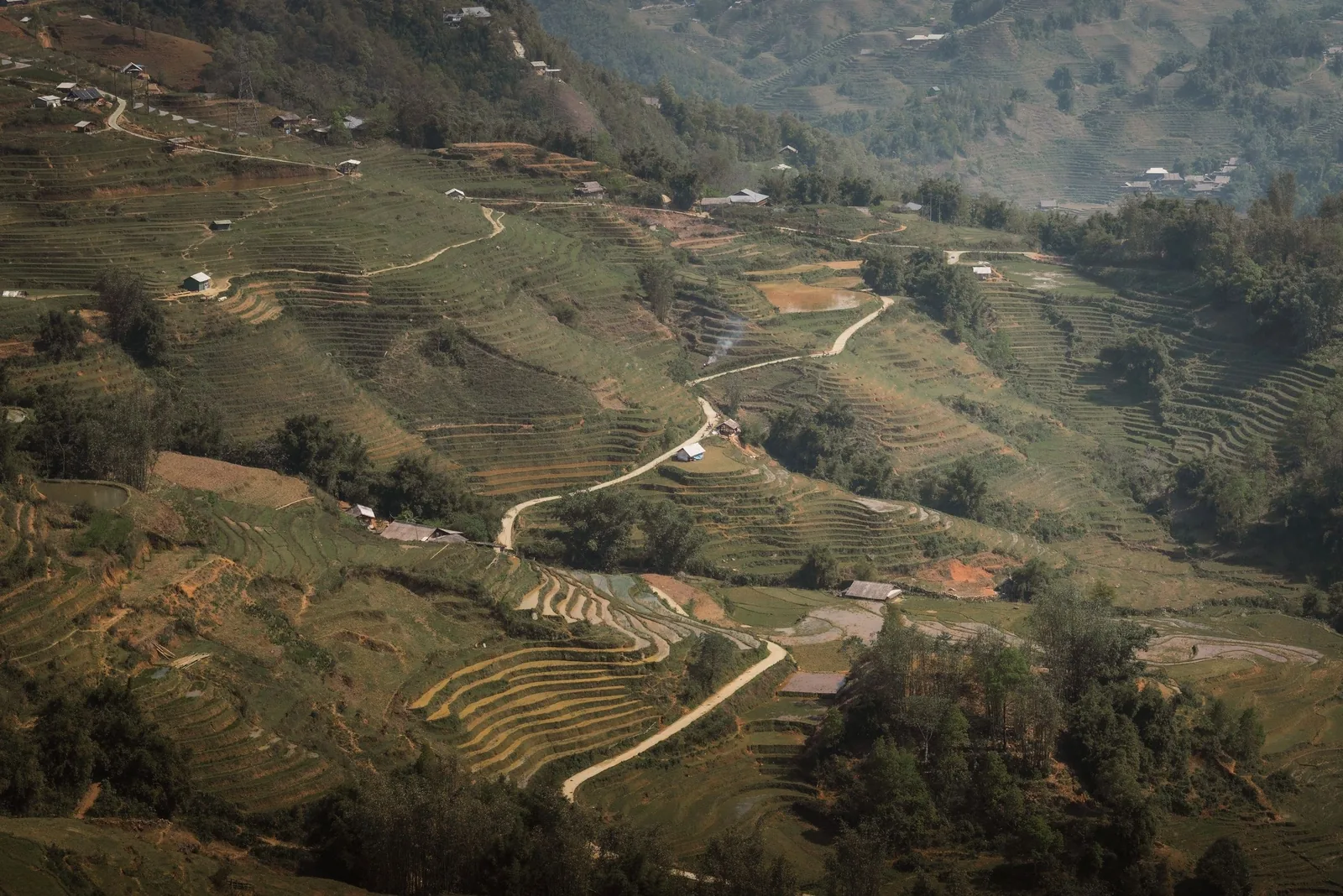
The three countries of the old French Indochina fit together on the map and do not fit together on a two-week calendar. Twenty-one days is the shortest version of this trip we will build without cutting something down to a photograph. It runs the north of Vietnam, crosses the Annamite range at Lao Bao into southern Laos, works up the Mekong to Luang Prabang, flies once into Siem Reap, and comes back into Vietnam by road at Moc Bai to finish in the south.
Two of the three joins are on the ground. The Luang Prabang to Siem Reap leg is flown because there is no useful road between them — the only overland route would send you back down the length of Laos — and it is the one place on this itinerary where an aircraft is plainly the right answer.
- Length
- 21 days, 20 nights
- Group
- Private, up to 12
- Starts
- Hanoi
- Ends
- Ho Chi Minh City
- Borders
- Two by land — Lao Bao and Moc Bai
- Best months
- November to March
Stops
Where you stop
Itinerary
Day by day
Day 1
Arrive in Hanoi
Met at Noi Bai and driven into the Old Quarter, about 45 minutes. Nothing is scheduled. A loop of Hoan Kiem lake at dusk and an early dinner, which is the fastest way onto local time before a long trip.
Day 2
Hanoi on foot
The stelae courtyard before the school groups
The Temple of Literature at opening, then the Museum of Ethnology, which explains the fifty-three minority groups you will otherwise meet as a photograph. The afternoon is free. An eating walk in the evening through four or five pavement kitchens, which teaches you how to order for the next three weeks.
Day 3
Hanoi to Ha Long Bay
Dusk at anchor
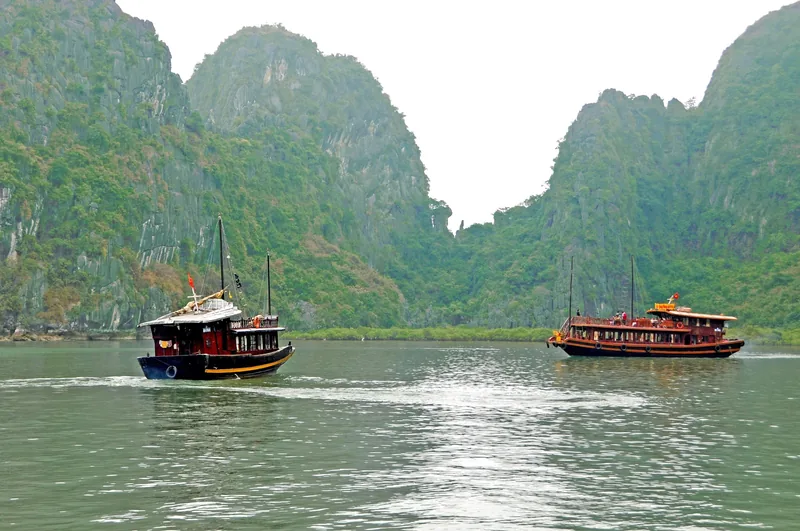
Two and a half hours of expressway, aboard around midday. Kayaking and swimming in the afternoon; the reason for the night is the stretch after four o’clock when the bay empties and you are at anchor in a side channel with nothing moving.
Day 4
Off the water, and south to Hue
Brunch as the boat comes in mid-morning, back in Hanoi by early afternoon, and an hour and fifteen in the air to Hue. The walk along the Perfume river at dusk is the right end to a moving day.
Day 5
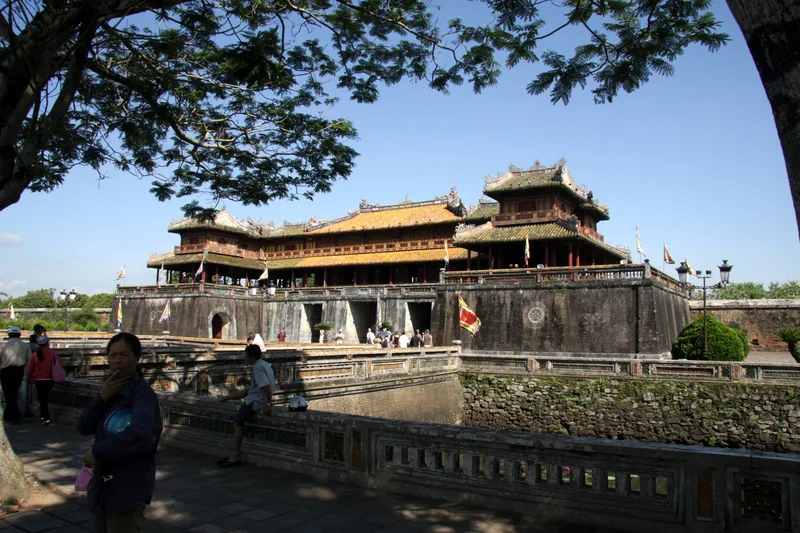
The citadel and two tombs
The Reading Pavilion at Tu Duc
The Imperial City in the morning: much of it was destroyed in 1968 and what has been rebuilt is honest about being rebuilt, which is more interesting than a complete palace. Two royal tombs in the afternoon rather than five — Minh Mang for its axis and its water, Tu Duc because the emperor used it as a garden retreat for sixteen years before he was buried in it.
Day 6
Over the pass at Lao Bao into Laos
The country changing within a kilometre at the top of the pass
The first border day, and the longest drive of the trip. Three hours west from Hue through the Annamite foothills to the gate. You clear Vietnamese exit control at Lao Bao on foot, walk across to Dansavanh and take a Lao visa on arrival at the window — US dollars in cash, one passport photograph, filled in there and then. The Lao e-visa is not valid at this gate or at any Vietnamese land crossing. A Lao car and guide meet you, and Savannakhet is four to five hours further. Seven to eight hours door to door.
Day 7
Savannakhet, then south to Pakse
An hour walking the French quarter — a square of shuttered two-storey houses, a 1930s church and a town square nobody is using — which is the whole of the sightseeing and is enough. Then four to five hours south along the Mekong to Pakse.
Day 8
Wat Phou and Champasak
The upper terrace before nine
An hour south of Pakse, Wat Phou climbs six terraces up a hillside below a spring and a mountain the Khmer took for a lingam. The earliest stonework is seventh century, older than anything at Angkor, which you will see in two weeks and can compare. Go at opening; the afternoon is free.
Day 9
The Bolaven plateau
Swimming below Tad Yuang in the afternoon
East of Pakse the land rises to between a thousand and thirteen hundred metres and drops about ten degrees. Coffee has been grown here since the French period and the smallholder farms show you the whole process. Tad Fane falls 120 metres in twin streams into a gorge; Tad Yuang five minutes away you can walk down to and swim below.
Day 10
North to Luang Prabang
A flight north — direct when Lao Airlines schedules it, otherwise connecting in Vientiane, which costs the middle of the day either way. We keep the afternoon free rather than promise it. Luang Prabang in the late light is the town at its best.
Day 11
Luang Prabang on foot
Wat Xieng Thong just after opening
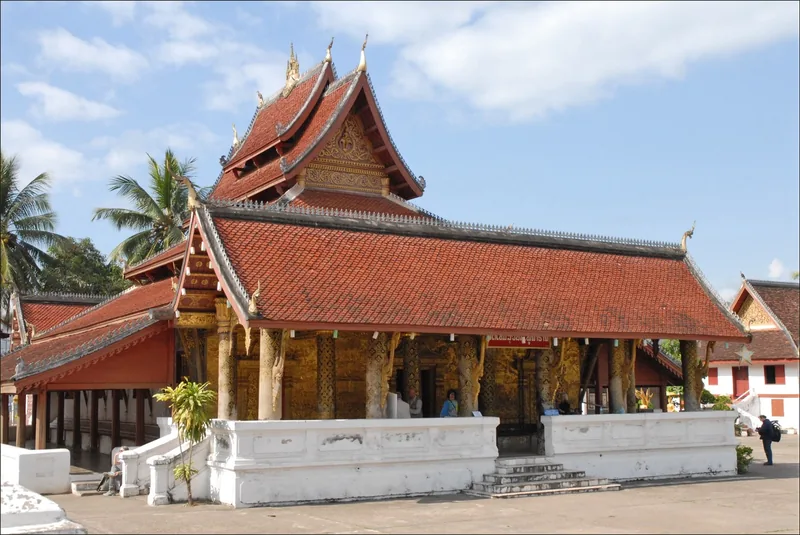
The alms round happens at dawn whether or not anyone watches; watch from a distance or not at all, and your guide will explain what the rules actually are before you decide. Then the royal palace museum and Wat Xieng Thong, whose roof reaches almost to the ground. The afternoon is free; Mount Phousi at sunset is 328 steps.
Day 12
Kuang Si, and the river
The lower pools at half past eight
Twenty-nine kilometres out, about forty-five minutes: limestone pools stepping down through forest in a milky turquoise. Go at eight and swim in the lower pools. In the afternoon a boat upriver to the Pak Ou caves, two hours each way, where the journey is the better half of the outing.
Day 13
Fly to Siem Reap
The one flight on this itinerary that replaces no road worth having. It is about two hours direct when the service is scheduled, and otherwise connects through Vientiane or Bangkok and takes most of the day. We hold the afternoon free either way. Cambodian entry is at the airport, where the e-visa is accepted and a visa on arrival is also issued; the terminal is an hour east of town.
Day 14
Angkor, in the right order
Bayon before eight
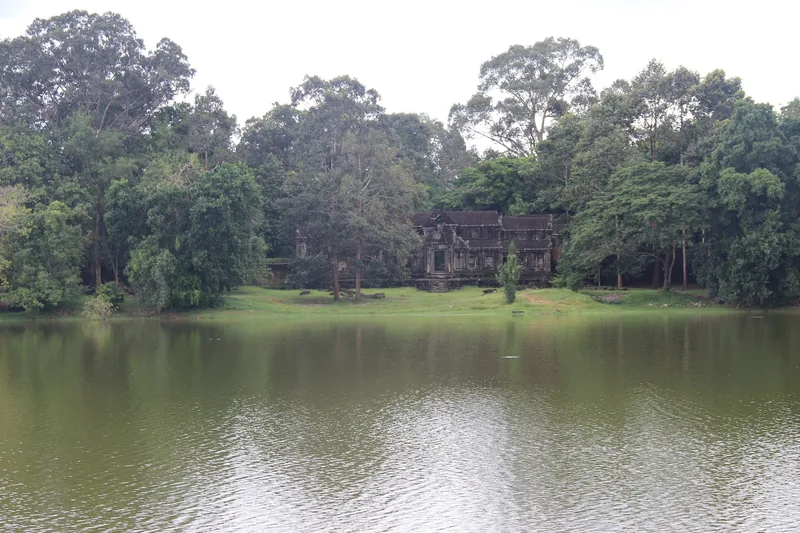
Angkor Thom before Angkor Wat. The Bayon early, Ta Prohm for forty minutes after it, the middle of the day off, and Angkor Wat late in the afternoon from the west. Having seen Wat Phou six days ago you will read these differently from most visitors, which is one of the arguments for this route.
Day 15
Banteay Srei and the outer temples
The lintels at Banteay Srei at seven
Thirty-seven kilometres out, the finest carving in Cambodia, best at opening. Preah Khan and Neak Pean on the way back are quiet at midday. If three temple days is one too many by now, we will take the afternoon to Kampong Phluk on the lake instead.
Day 16
South to Phnom Penh
Forty-five minutes by air, or five and a half to six hours by road, with Battambang as an optional night in the middle. The afternoon in Phnom Penh is the riverfront and nothing harder, because tomorrow is not an easy day.
Day 17
Phnom Penh
The pre-Angkorian galleries at the National Museum
Tuol Sleng and Choeung Ek in the morning, in that order, with a guide who will not perform them. Four hours, and they are the reason to stop here. The afternoon is the Royal Palace, the silver pagoda and the National Museum.
Day 18
Back into Vietnam at Moc Bai
The second border day. Three to four hours southeast to Bavet, Cambodian exit control on foot with your luggage, the short walk across, and Vietnamese entry at Moc Bai. Allow 45 minutes to an hour and a half. A Vietnamese car and guide meet you; Ho Chi Minh City is two hours on, and the Cu Chi tunnels sit roughly on the way if you want them today rather than tomorrow.
Day 19
Saigon
The basement situation room at the Reunification Palace
The War Remnants Museum in the morning — uncomfortable, one-sided and the most honest two hours available here — then the Reunification Palace, its 1960s interiors untouched since the day it fell. Cholon in the afternoon: the Binh Tay market, Thien Hau temple and the streets between.
Day 20
The Mekong Delta
A sampan in a coconut canal at Ben Tre
Two hours southwest to Ben Tre, where the delta is coconut groves and narrow canals rather than the floating-market coach circuit further on. A sampan through the small channels, a brick kiln, a coconut-candy workshop that is a real one, and back in the city by early evening. Three weeks of river, finishing where it reaches the sea.
Day 21
Ho Chi Minh City, and home
Tan Son Nhat is close to the centre, about 40 minutes at most hours and longer in the evening peak. If your flight is late we will hold the room.
Borders
Two land borders, and the documents that decide them
This route leaves Vietnam by land at Lao Bao and re-enters it by land at Moc Bai. That is two separate Vietnamese entries, and it is the reason this itinerary needs its paperwork settled weeks in advance rather than days.
- A Vietnamese e-visa names the entry and exit gates at application and they cannot be changed afterwards. This route flies in to Noi Bai, leaves overland at Lao Bao, and comes back overland at Moc Bai before flying out of Tan Son Nhat — which needs a multiple-entry e-visa with those gates named, or a second application. Your coordinator handles the sequencing and tells you exactly what to file and when.
- The Lao e-visa is NOT valid at Lao Bao, Nam Can or Tay Trang. At Dansavanh you take a visa on arrival in US dollars cash with a passport photograph. If you hold a Lao e-visa for another reason, carry it printed — a phone screen is refused — and expect it to be of no use at this gate.
- Cambodian entry here is by air at Siem Reap, where the e-visa is accepted and a visa on arrival is also issued. The e-arrival card is required for flights.
- Cambodian exit and Vietnamese entry at Bavet – Moc Bai: open, busy, straightforward, and crossed on foot with your luggage.
- The Lao digital immigration form is filed within three days of arrival and again before departure; the Vietnamese pre-arrival declaration applies at every airport, filed no more than three days ahead.
Neither government publishes a live status page for Lao Bao, so we confirm it with operators on both sides before every departure. We do not publish visa fees: the current figures are on the Vietnamese, Lao and Cambodian portals, and your coordinator confirms them in writing before you travel, including how much US dollar cash to carry to the Lao window.
Photographs
What the days look like
 Ha Long BayHue
 Lao Bao
 Wat PhouLuang Prabang
 Angkor
Price
What it costs
| Travellers | Comfortable hotels | Boutique and luxury |
|---|---|---|
| 2 travellers | On request | On request |
| 4 – 6 travellers | On request | On request |
Twenty nights across three countries, three sets of guides and vehicles, and five internal flights. The fixed part of the quote is higher than on any other route on this site; the hotel part is still the one that moves it most, and in southern Laos there is very little to move. We will tell you which four nights are the plain ones before you commit, not after.
Included
What is included
What the price includes
- Private air-conditioned car and driver in each of the three countries, with vehicle handovers at both land borders.
- English-speaking local guides: one in Vietnam for the northern leg, one in Laos, one in Cambodia, and a Vietnamese guide again from Moc Bai. All licensed in their own country.
- Internal flights as listed — Hanoi to Hue, Pakse to Luang Prabang, Luang Prabang to Siem Reap, and Siem Reap to Phnom Penh if you fly rather than drive that leg — in economy with checked baggage.
- Twenty nights of accommodation with breakfast, including one night in a cabin on an overnight boat in Ha Long or Lan Ha Bay.
- Full board on the Ha Long boat; lunch at Hue, on both border days, at Wat Phou, on the Bolaven plateau, at Pak Ou, on the first Angkor day and in the delta; dinner on the Hanoi eating walk.
- Entrance fees to everything named in the day-by-day: the Hue citadel and two royal tombs, Wat Phou, the Bolaven farms, the Luang Prabang royal palace museum, Kuang Si, Pak Ou, the three-day Angkor pass, Banteay Srei, Tuol Sleng, Choeung Ek, the Royal Palace, the National Museum, the War Remnants Museum, the Reunification Palace and the Cu Chi tunnels.
- Boat trips: the overnight junk and kayaks in Ha Long, the Mekong crossing at Champasak, the Pak Ou river boat, and a sampan in the Ben Tre canals.
- All airport and border transfers, and the coordination of two separate land entries into Vietnam.
- A coordinator on a local number for the whole three weeks, and a written visa plan for your nationality — which document, which gate, which form, and when each is filed.
What it does not include
- International flights into the first city and out of the last.
- Visa fees for every country on the route. We do not publish these figures — the current ones are on each government’s official portal, and your coordinator confirms them in writing before you travel.
- Travel insurance, which we ask every traveller to hold.
- Meals not named in the day-by-day, and all drinks.
- Tips for guides, drivers and boat crew.
- Personal expenses: laundry, telephone, spa treatments, anything bought.
Honesty
Who this route is not for
Three weeks and two land borders is a serious undertaking, and it is the wrong trip for more people than it is the right one.
- Anyone who will not do two seven-hour road days. Day six and day eighteen are the structure of this itinerary. Remove them and you have a different, shorter trip built on flights, which we are happy to build instead.
- Travellers who want their visas simple. Two separate overland entries into Vietnam means multiple-entry paperwork with fixed gates, decided weeks ahead and unchangeable. If that sounds like a burden, it is one we carry for you, but it still has to be right first time.
- Anyone expecting a consistent hotel standard. Savannakhet and Pakse are plain wherever you spend; Hanoi, Luang Prabang, Siem Reap and Saigon are not. Four of the twenty nights are modest by design.
- Travellers with a wheelchair or serious mobility limits. Two borders on foot with luggage, Angkor and Wat Phou on uneven stone, and a boat boarded from a tender.
- Anyone with a beach in mind. There is not one on this route. Add Phu Quoc at the end if you want one, and give it four nights rather than two.
- March and April travellers who care about views. Burning season haze covers northern and southern Laos for weeks, and Angkor is punishing by eleven in the morning.
The long way round, overland where the borders allow.
Plan My Trip
Start from this route
Tell us your dates. Three weeks with two land crossings needs the visa plan settled first, and that is where we start.
Common questions
Questions travellers ask most
Could this be done in eighteen days?
Not overland. Take out the Bolaven plateau, a Luang Prabang night and a Saigon night and you are at eighteen, but the two border days remain and the trip becomes a series of transfers with sightseeing between them. Eighteen days is better spent on two countries.
Why fly Luang Prabang to Siem Reap?
Because there is no useful road. The overland route would send you back down the length of Laos to the Cambodian gate at Trapeang Kriel and cost three days to arrive at a place two hours away in the air. If you want that road, take the Cambodia and Laos itinerary, which is built around it.
Do we need two Vietnamese visas?
You need one that covers two entries with the right gates named, or two separate applications — which it is depends on your nationality and on the current e-visa rules. It is settled before anything else is booked, because the gates cannot be changed once the visa is issued.
Which months work for all three countries at once?
November to March. December and January are the driest and the coolest in Laos and Cambodia, with Hanoi grey and about fifteen degrees, which some people mind and some prefer. April and May are the hottest weeks of the year on this whole route and we will say so when you ask for them.
Journey ideas
Where a private route could take you
Example itinerary — fully customizable
Vietnam & Laos
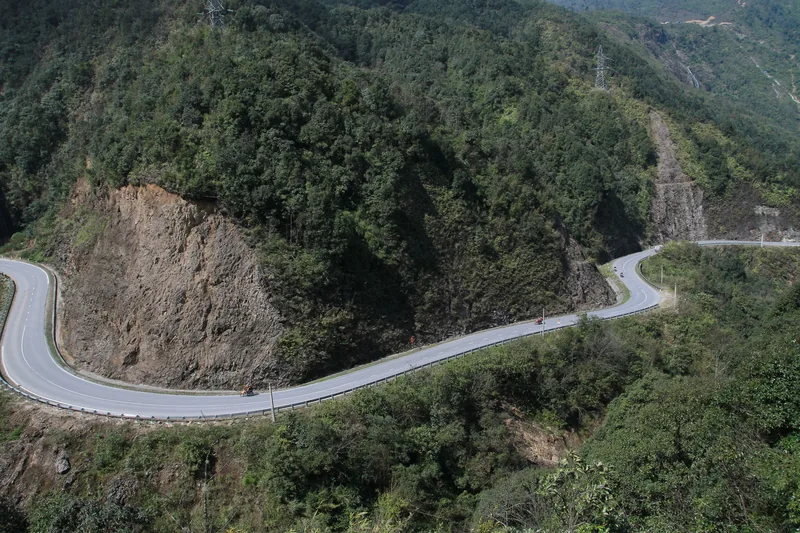
Twelve days, two countries, the Lao Bao gate and the southern Mekong.
View journey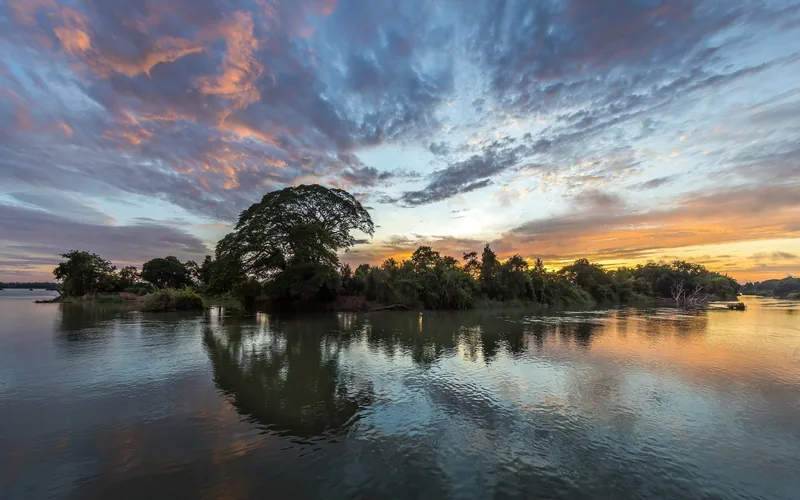
Example itinerary — fully customizable
Cambodia & Laos
Twelve days, one river, and the region’s least-used border.
View journey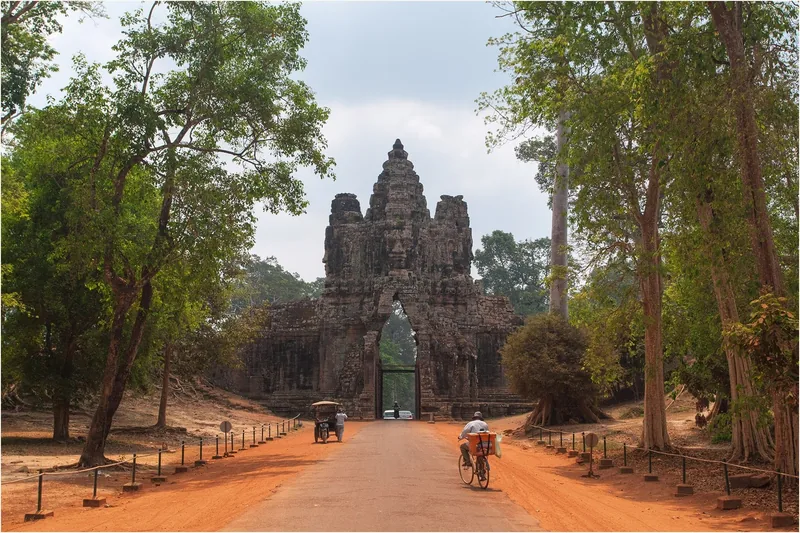
Example itinerary — fully customizable
Thailand, Cambodia & Vietnam
Fifteen days, three countries, one flight where the road used to be.
View journey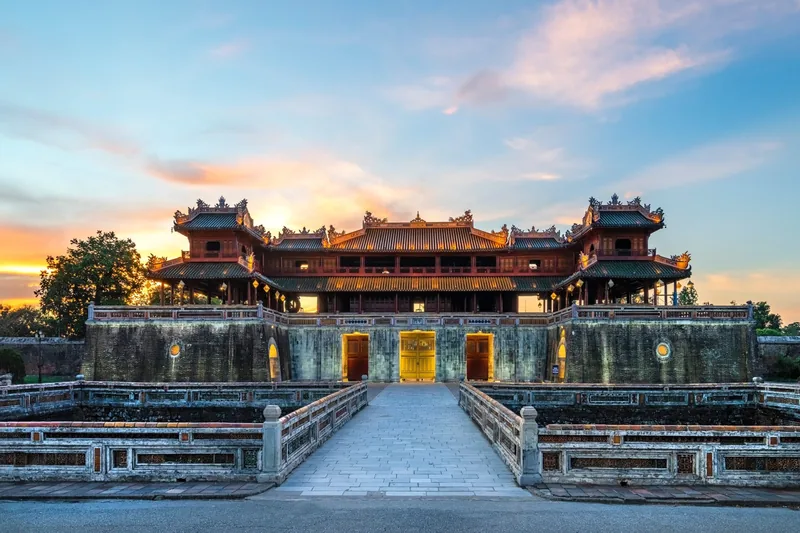
Vietnam
Hue
One or two nights between the north and Hoi An, and the road over the Hai Van pass.
View journey
Start planning
Let’s plan your journey
Five quick questions. Your coordinator will take it from there.
Prefer to talk? WhatsApp or call+84 904 511 319