Travel guide
Southeast Asia with children
Children do not make this region harder, but they do make it unforgiving of a bad schedule. What follows is specific, and some of it is what we say no to.
Family travel
The region is easy with children. The itinerary is not.
Southeast Asia is one of the better parts of the world to travel with children. Small children are welcomed rather than tolerated, in restaurants and on trains and in places where a European family would be given a look. Food is quick, plain options exist everywhere, and hotels expect families rather than accommodating them.
What goes wrong is almost never the country. It is a schedule built for adults and then handed to a four-year-old: a nine-hour transfer, a temple at midday, three one-night stops in a row. The whole of this page is really one argument — plan for the youngest person in the party, and the trip works for everybody.

By age
Three different trips, depending on the age
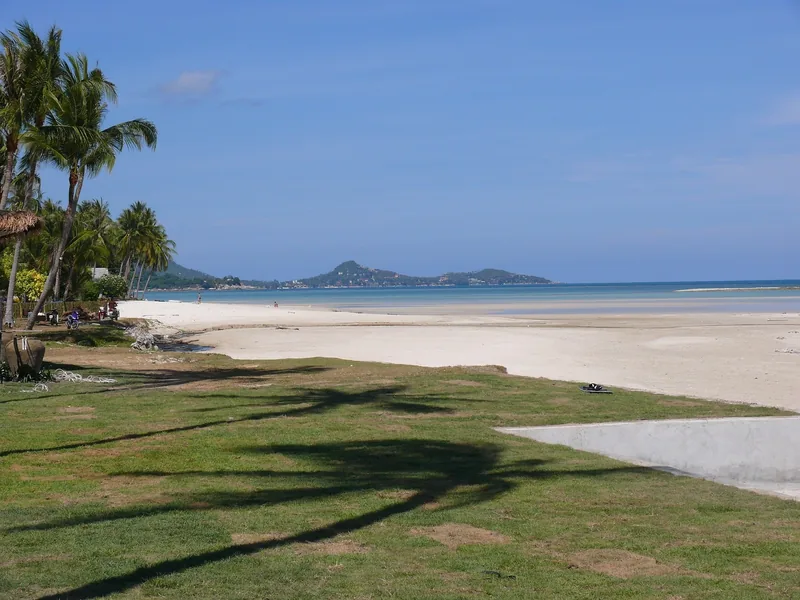
Pool, plain food and short days
Two to three hours of movement is the working limit, and it needs a stop in the middle. Build the day around a morning out and an afternoon in the water, and accept that the pool will be remembered more fondly than anything with a ticket.
Plain food is easy to find — rice, noodle soup without chilli, eggs, bread, bananas, fried rice — and in Vietnam and Thailand the chilli usually comes on the side. Child car seats are not standard in the region; we source them where we can and say so honestly where we cannot.
Three nights minimum per stop. A one-night stay with a four-year-old is a packing exercise, not a visit.
The best age for this region
Four hours of travel is manageable with a break. Eight-year-olds walk three or four kilometres happily, take to boats and bicycles, and are old enough for a cooking class, a lantern-making workshop or a morning on a fishing boat.
History lands when it is physical: the tunnels at Cu Chi, a bamboo train, a fort to climb, a market with money of their own to spend. Give them a camera and a small job each day and the trip stops being something done to them.
Angkor works well at this age in three short mornings rather than two long days, starting at opening and stopping by ten.
Independence, and one thing that is theirs
A full day is fine, including an early start and a late dinner, and a fourteen-year-old will take more from a guide than a younger child will. The risk at this age is not exhaustion but resentment at being scheduled.
Build in one thing that belongs to them: a dive course in Palawan or Komodo, surf lessons on the Bali coast, a day exploring Hoi An old town without adults, a cooking class they chose.
This is also the age at which the difficult places — Tuol Sleng, Choeung Ek, the War Remnants Museum — can be done properly, with preparation beforehand and a conversation afterwards.
Limits
Travel-day limits we hold to
| Age | Longest travel day | Minimum nights per stop | Guided time per day |
|---|---|---|---|
| Under 5 | 2 – 3 hours, broken | 3 nights | One activity, mornings only |
| 5 – 9 | 4 hours, broken | 3 nights | A guided morning, free afternoon |
| 10 – 13 | 5 hours | 2 – 3 nights | Most of a day, with a choice in it |
| 14 and over | A full day, including a flight | 2 nights | As much as they want |
Two structural rules sit behind that table. First, no more than one moving day in three — if you are transferring on day four, day five stays in one place. Second, the beach or the pool block goes at the end, not the beginning: children tolerate the cultural half of a trip far better when there is water at the end of it that they have been promised.
Our limits
What we will not put in a family route
- Overnight sleeper buses, at any age. They are cramped, they travel fast through the night and they arrive at four in the morning.
- Road days over four hours for children under ten, unless there is no alternative and the alternative is a flight we have already ruled out.
- Angkor or any exposed temple site in the middle of the day between March and May. The stone holds heat and there is very little shade.
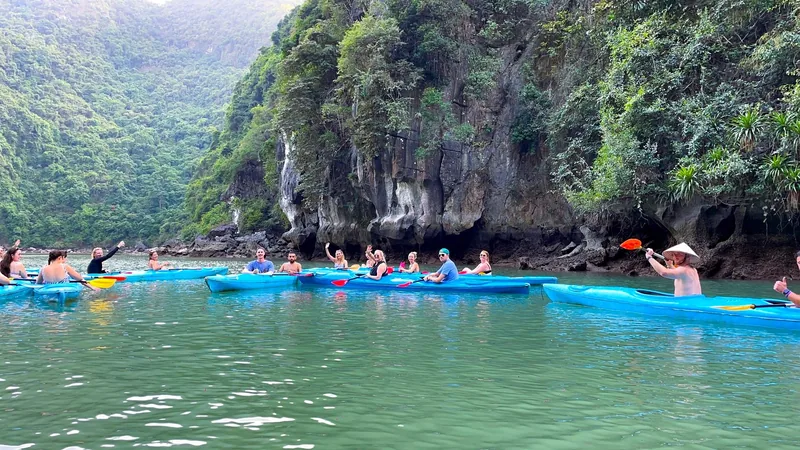
- Mekong speedboats, and small boats without life jackets that fit the child rather than an adult.
- Three one-night stops in a row, which is a schedule adults dislike and children cannot absorb.
- The genocide sites in Cambodia for children under about fourteen. They are among the most important things in the country and they are not suitable for a primary-school child.
- Elephant riding, at any age. We use the sanctuaries that do not offer it.
If a family asks for one of these we will say why we would rather not, propose the alternative, and if the answer is still yes on the ones that are a matter of taste rather than safety, we will book it and say so in the itinerary. On the boats and the buses we simply will not.
Practical
Heat, water and food
Heat is the constraint that actually shapes a family day here. Between March and May the mainland runs at 33 to 38°C with humidity that stops sweat evaporating, and small children dehydrate faster than adults and complain about it later. The working pattern is out by half past seven, back by eleven, water in the afternoon, out again at four. Allow two or three days at the start of the trip for everyone to acclimatise, and do not schedule the hardest walking day first.
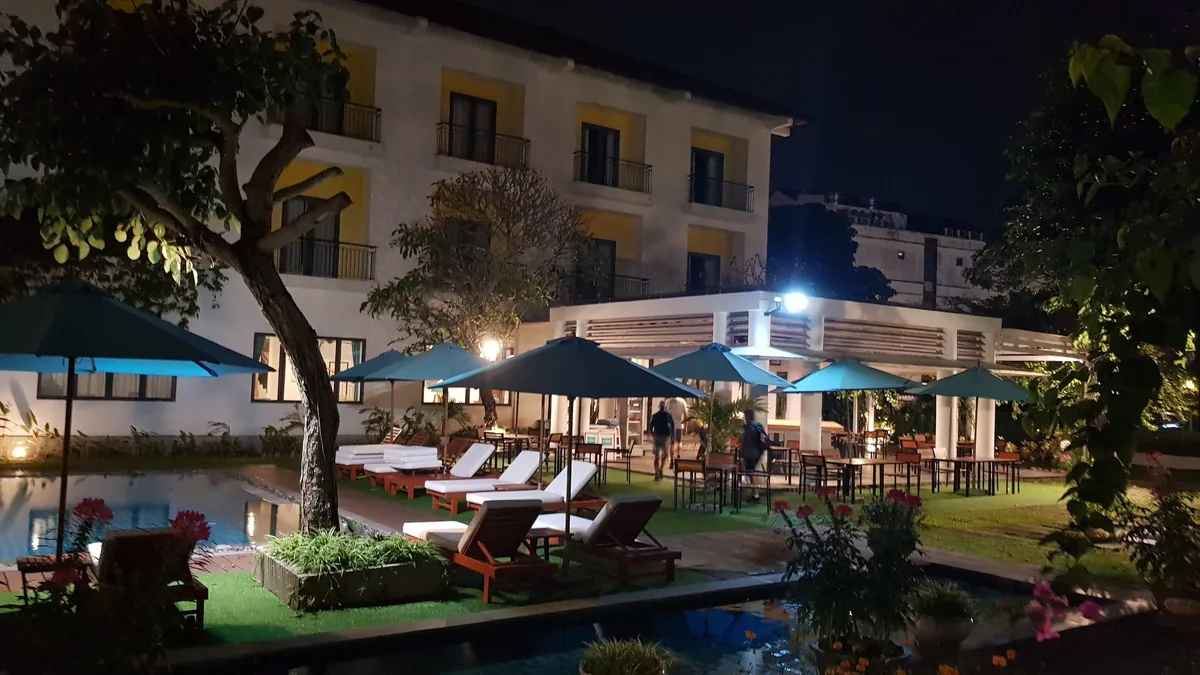
Water is the other one. Hotel pools in the region are usually unsupervised — assume no lifeguard anywhere and plan accordingly. Sea conditions vary hugely between coasts and months, and a beach that is glassy in January can have a rip in July. Boat trips are a genuine highlight at every age, but bring a buoyancy aid that fits a small child rather than relying on what is aboard; adult life jackets are common and child sizes are not.
Food is the easiest part. Plain rice, noodles, eggs, bread, fruit and grilled meat are available everywhere, fruit you peel yourself is safe and abundant, and hotels will make something simple without being asked twice. Take the usual care with pre-cut fruit left standing and with raw shellfish, and give small children a couple of days before the more fermented end of the local cooking.
 The afternoon block, Hoi An
Country by country
Easiest and hardest of the six
Thailand is the easiest country in the region with young children, and it is not close. The beach resorts are genuinely set up for families, the domestic flights are short and frequent, the food is mild if you ask, and Bangkok has hospitals of an international standard, which matters more than anyone wants to think about. Vietnam is a close second and is warmer towards children socially than anywhere else we work — expect your toddler to be picked up by strangers in a restaurant — but the distances are longer and the internal flights matter more.
Indonesia sits in the middle: Bali is straightforward and Java and Flores are not, and the difference between them is a flight. The Philippines is harder than it looks, because getting between two good islands means a flight and a boat, and between June and November the typhoon season can rearrange both.
Laos is the hardest of the six with small children. The distances are long, the roads are slow, medical facilities outside Vientiane and Luang Prabang are thin, and the things that make the country worth visiting — the slow boat, the northern valleys — are the things that take the most patience. With a fourteen-year-old it is excellent. With a four-year-old we would rather send you to Thailand and keep Laos for the next trip.
Documents
Paperwork, and the boring things that matter
Every child needs a passport of their own and, where one applies, a visa or entry permit of their own — there is no family entry anywhere in the region. The compulsory arrival forms are filed per traveller and not per family: the Thailand Digital Arrival Card, Vietnam’s pre-arrival airport declaration, the All Indonesia card and Philippine eTravel all need a record for each child, infants included. Where a child travels with only one parent, carry a birth certificate and, if the parents have different surnames or are separated, a letter of consent; it is rarely asked for and awkward when it is.
Entry rules were verified against government sources on this date and are set out in full in our visa and border guides. Two that affect families most: the Vietnamese e-visa fixes the entry and exit gates for every member of the party, and the Lao e-visa must be carried as a printed sheet for each traveller rather than shown on a phone. We never print visa fees, here or anywhere on this site, because they change without announcement.
Tell us the ages first.
Plan My Trip
Plan around the youngest person
Give us the ages and we will build the days around them — shorter transfers, water in the afternoons, and a beach at the end.
Common questions
Questions travellers ask most
What is the best age to bring a child to Southeast Asia?
Around eight is the easiest: old enough to walk, swim and enjoy a boat or a cooking class, young enough to be delighted by all of it. Four is entirely possible with short days and a pool. Fourteen is the age at which the history finally lands.
Which country is easiest with a toddler?
Thailand, for the family beach resorts, the short domestic flights and the international-standard hospitals in Bangkok. Vietnam is a close second and is the warmest towards small children socially.
Is it too hot for children?
Between March and May on the mainland it is genuinely demanding, and the answer is the shape of the day rather than the month: out early, in the water from late morning, out again at four. November to February is comfortable almost everywhere.
Can children visit Angkor?
Yes, and they usually enjoy it more than their parents expect — Ta Prohm in particular. Three short mornings at opening beat two long days, and between March and May stop by ten o’clock.
Journey ideas
Where a private route could take you
Example itinerary — fully customizable
Vietnam for families
Twelve days, four bases, nothing longer than a short flight.
View journey
Travel guide
How many days
Minimum nights per country, the true cost of a border day, and three worked examples.
View journey
Travel guide
Health and packing
What to ask your doctor, what the climate demands, and what a border wants to see.
View journey
Destinations
Thailand
Two coasts, four Mekong bridges, and one closed border that changes every route.
View journey
Start planning
Let’s plan your journey
Five quick questions. Your coordinator will take it from there.
Prefer to talk? WhatsApp or call+84 904 511 319