Travel guide
Health, packing and the practical list
The questions to take to a travel clinic, the things the climate actually demands, and the documents a land border wants to see. Nothing on this page is medical advice.
Before anything else
What this page is, and what it is not
We plan trips. We are not doctors, we are not a travel clinic, and nothing on this page is medical advice. What follows is a list of things worth raising with your own doctor or a travel health clinic, together with the practical detail we can speak to — what the heat is actually like, where the mosquitoes are worst in which month, what a land border wants to see in your hand, and what belongs in a suitcase for this climate.
Book that clinic appointment six to eight weeks before you fly if you can. Some courses need more than one visit, and the appointment is worth having even if the answer turns out to be that you need nothing.
Nothing on this page is medical advice and none of it is a prescription or a recommendation to take or avoid any medicine or vaccine. Vaccination and malaria prevention depend on your health, your age, your medical history and the exact route you are taking. Discuss all of it with a doctor or a travel health clinic, and follow their advice rather than ours.
Vaccinations and medicines
Things to ask a travel clinic about
This is a list of topics to raise, not a list of things to have. Which apply to you depends on your history, your route and how long you are staying.
- Routine vaccinations, and whether yours are up to date — the boosters most adults are overdue for are the ones a clinic mentions first.
- Hepatitis A and typhoid, which are commonly discussed for travel to the region.
- Hepatitis B, which is usually discussed for longer stays or for travellers who may need medical or dental treatment while away.
- Rabies, which comes up for long stays, rural routes and travellers with young children, who are less likely to report a bite.
- Japanese encephalitis, which is usually discussed for longer stays in rural, rice-growing areas, particularly in the wet season.
- Malaria prevention, which is route-specific. Cities, resorts and the main tourist areas in these six countries are generally considered low risk; forested and remote border areas are the ones a clinic will focus on.
- Whether a yellow fever certificate applies to you — it is an entry requirement here only if you arrive from a country where yellow fever is present, so it depends on your whole routing.
- Your existing prescriptions: whether they are legal to carry in each country you enter, and whether you need a doctor’s letter. Some common painkillers and stimulant medicines are restricted here and the rules differ by country, so check with each embassy if there is any doubt.
Carry personal medicines in their original labelled packaging, in hand luggage, with enough for the trip plus a few days. Pharmacies are good and inexpensive across the region, but a specific brand may not exist.
Climate
Heat and humidity, which are the real constraint
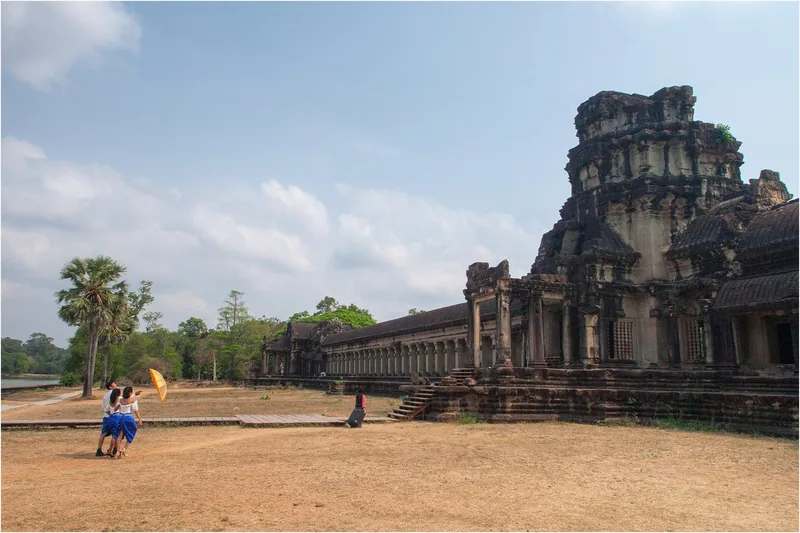
The number people underestimate is not the temperature but the humidity. At 34°C and 80 per cent humidity sweat does not evaporate, so the body loses its main cooling mechanism and a walk that would be easy at home becomes hard work. March to May on the mainland is the demanding stretch, and the open temple sites are the hardest places to be in it, because there is almost no shade.
The practical answers are dull and they work. Give yourself two or three days to acclimatise before the hardest day. Start at seven and stop by eleven. Drink more than you think, and add oral rehydration salts once a day in the hot months rather than waiting until you feel unwell. Wear loose, light, long clothing rather than less clothing — it is cooler and it deals with sun and mosquitoes at once.

Mosquitoes
Mosquito-borne illness, by region and season
Two different mosquitoes matter here, and they behave differently, which is why a single piece of advice does not cover both.
| Illness | Where it matters most | Season | What actually reduces risk |
|---|---|---|---|
| Dengue | Cities and towns as much as countryside, across all six countries | Mainland: June to November. Philippines: July to November. Indonesia: January to April | Daytime bite avoidance — the mosquito bites in daylight, especially early morning and late afternoon |
| Malaria | Forested and remote border areas; low risk in cities, resorts and main tourist areas | Higher in and after the rains | Route-specific. A clinic will advise on prevention for the exact areas you enter |
| Japanese encephalitis | Rural rice-growing areas, usually for longer stays | Wet season | Evening and night bite avoidance; vaccination is a clinic discussion |
| Chikungunya and Zika | Same mosquito and same places as dengue | Same pattern as dengue | Daytime bite avoidance; specific advice applies in pregnancy |
Bite avoidance is the part you control. Use a repellent a pharmacist recommends and reapply it as the label says. Cover arms and ankles at dawn and dusk, when the malaria mosquito feeds, and remember that the dengue mosquito feeds in the middle of the day, which is when most people stop bothering. If you develop a fever during or after a trip to this region, say where you have been — that sentence changes how you are assessed.
Food, water and motion
Water, ice, and the boat
Drink bottled or filtered water; most hotels now provide it in glass rather than plastic, and a refillable bottle is worth carrying. Commercial tube ice — the cylinders with a hole through them — is made from treated water and is used across the region; crushed ice of unknown origin somewhere remote is the one to decline. Fruit you peel yourself is straightforward, pre-cut fruit standing on a tray is less so, and raw shellfish is the category we would skip in the wet season.
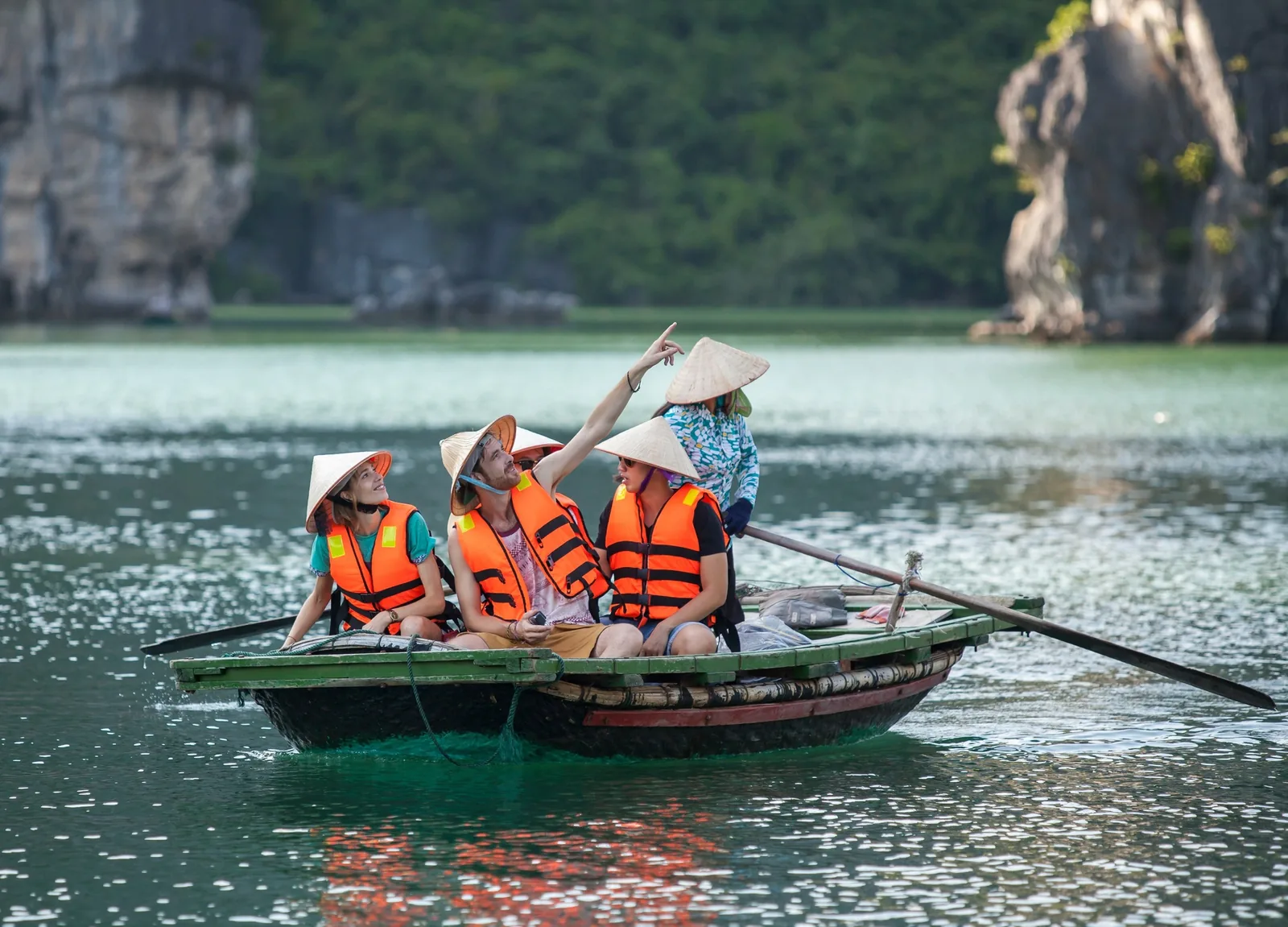
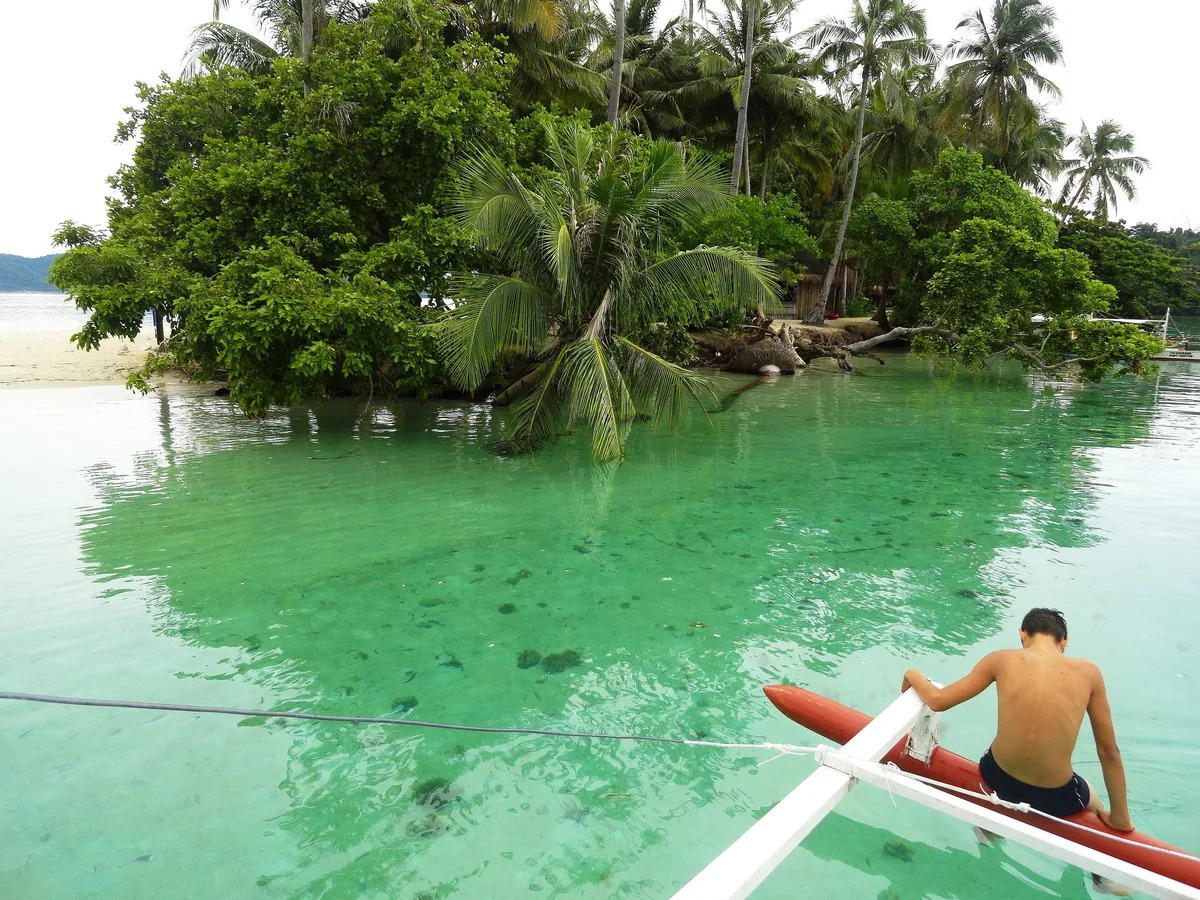
Boats are in almost every itinerary here, and seasickness is worth preparing for rather than discovering. The Ha Long and Lan Ha overnight boats sit in sheltered water and are usually flat, and the Mekong slow boat barely moves. What can be rough is anything fast and open: the Bali fast boats to Nusa Penida and the Gili islands, Philippine inter-island boats in a swell, and Andaman ferries at the edges of the season. If you are prone to motion sickness, ask your pharmacist before you travel, since remedies work better taken in advance, and sit low and central rather than at the back.
 Inter-island crossings, Palawan
Borders
What to carry at a land border
Border posts here are informal buildings with formal rules, and almost everything that goes wrong at one is a document problem rather than an official one. What you want is a paper folder in your hand luggage, not a phone with three per cent battery and no signal.
- Your passport, valid at least six months beyond the day you leave the region, with at least two blank pages. The Philippines counts the six months from your departure date, which is stricter than the usual reading.
- Two to four passport photographs, 35 × 45 mm, carried loose. Several visa-on-arrival counters still want one physically stapled to a form.
- US dollars in cash, in clean, unmarked, untorn notes. Torn or heavily marked notes are refused, and the refusal is not negotiable. This matters most in Cambodia and at the Lao gates the e-visa does not cover.
- Printed copies of every visa or approval you hold. The Lao e-visa in particular must be presented as a printed sheet — a photograph on a phone is refused.
- Printed hotel bookings for the first nights, and a printed onward or return ticket where one is a condition of entry.
- A pen. There are always forms and there is never a pen.
| Border | Crossing | Route | Time at the border | Status | What it means for your visa |
|---|---|---|---|---|---|
| Vietnam – Cambodia | Moc Bai – Bavet | Road, Ho Chi Minh City – Phnom Penh | 6 – 7 h | Open | Cambodian e-visa accepted here. Your Vietnamese e-visa must name Moc Bai as the exit gate. |
| Vietnam – Cambodia | Ha Tien – Prek Chak | Road, Phu Quoc ferry – Kampot / Kep | 3 h from Ha Tien to Kampot | Open | Take a Cambodian visa on arrival here (USD cash and a passport photo). The e-visa is not listed for this gate. |
| Vietnam – Laos | Lao Bao – Dansavanh | Road, Hue / Dong Ha – Savannakhet | 7 – 8 h | Operating, no government status page | The Lao e-visa is not valid at this gate — buy a visa on arrival. |
| Vietnam – Laos | Nam Can – Nam Kan | Road, Vinh – Phonsavan | 8 h | Operating, no government status page | Lao visa on arrival only. |
| Vietnam – Laos | Tay Trang – Sop Hun | Road, Dien Bien Phu – Muang Khua | 5 h | Operating, no government status page | Lao visa on arrival only. |
| Thailand – Laos | Friendship Bridge I | Road, Nong Khai – Vientiane | 30 min | Open | Lao e-visa valid. The Lao digital arrival form runs here. |
| Thailand – Laos | Friendship Bridge II | Road, Mukdahan – Savannakhet | 30 min | Open | Lao e-visa valid. |
| Thailand – Laos | Friendship Bridge IV | Road, Chiang Khong – Huay Xai | 30 min | Open | Lao e-visa valid. This is where the Mekong slow boat to Luang Prabang starts. |
| Laos – Cambodia | Nong Nok Khiene – Trapeang Kriel | Road, 4000 Islands – Stung Treng | 2 h | Operating, no government status page | Cambodian e-visa accepted at Trapeang Kriel; leaving Laos needs no e-visa, but entering Laos this way does need a visa on arrival. |
| Thailand – Cambodia | Aranyaprathet – Poipet | Road, Bangkok – Siem Reap | — | Closed since 23 June 2025 | Closed to tourists. Fly Bangkok – Siem Reap instead. |
| Thailand – Cambodia | Hat Lek – Cham Yeam | Road, Trat – Koh Kong | — | Closed since 23 June 2025 | Closed to tourists. |
Entry rules move, sometimes with days of notice — Thailand shortened its visa exemption on 15 September 2026, and the Thailand – Cambodia land border has been shut since June 2025. We check this table against the immigration portals and the UK and US government travel pages, and we write the date we checked at the top of it. Before you book flights, confirm your own nationality on the official portal; fees in particular change without announcement and we do not quote them here for that reason. Your coordinator will tell you which documents your route needs and when to file them.
Power
Plugs, power and connectivity
Mains voltage is 220 to 230 volts across all six countries, which is the important number. Sockets vary: Vietnam, Thailand, Cambodia and Laos take a mixture of two round pins and two flat pins and usually accept either; Indonesia is firmly two round pins; and the Philippines uses American-style flat pins at 220 volts, which is the combination that destroys appliances rated for 110. Carry a universal adaptor, and a converter rather than an adaptor for anything not dual-voltage.
Power cuts outside the cities are short and occasional, so a power bank earns its place. Local data is cheap, and an eSIM bought before you fly saves an airport queue; coverage is good in Vietnam, Thailand, Indonesia and the Philippines, thinner in rural Laos and parts of Palawan.
Packing
What the climate actually demands in a suitcase
Pack for six days, not fourteen. Laundry is quick, cheap and available everywhere, and a smaller bag makes every transfer, boat and internal flight easier — many regional carriers hold hand luggage to a lower limit than you are used to.
- Loose, light, quick-drying clothing with long sleeves and long legs. Cooler than shorts in the sun and better against mosquitoes.
- One set of modest clothing for temples: shoulders and knees covered. This is enforced at Angkor, at the Grand Palace in Bangkok and at many Lao and Balinese temples, where a sarong may also be required.
- Shoes you can take off easily, because you will, repeatedly, and sandals that survive being wet.
- A light rain shell rather than a heavy coat, and a warm layer for northern Vietnam or northern Laos between December and February, where evenings genuinely need one.
- A dry bag for boat days and a small torch for power cuts, caves and temple interiors.
- A small kit: oral rehydration salts, plasters, antiseptic, insect repellent, high-factor sun cream, anything you take for motion sickness, and your prescriptions in their original packaging.
- A paper folder with the border documents above, kept separate from the passport.
What to leave at home: a heavy coat, a second pair of proper shoes, and a wardrobe for each day. Every transfer is easier with a smaller bag.
Common questions
Questions travellers ask most
Which vaccinations do I need for Southeast Asia?
That is a question for a doctor or a travel clinic, not for us — it depends on your health, your history and your exact route, and nothing on this page is medical advice. The topics usually discussed are routine boosters, hepatitis A, typhoid, hepatitis B, rabies and Japanese encephalitis, along with malaria prevention for remote or forested areas. Book the appointment six to eight weeks before you fly.
Is malaria a risk on a normal itinerary?
Cities, resorts and the main tourist areas across the six countries are generally considered low risk, and forested or remote border areas are where a clinic will concentrate. Because it depends entirely on the route, send us your itinerary and take it to the clinic with you. Dengue, which has no preventive medicine and is carried by a mosquito that bites in daylight, is the one most travellers should think about.
Can I drink the tap water?
Drink bottled or filtered water. Most hotels provide filtered water, and a refillable bottle saves a great deal of plastic. Commercial tube ice is made from treated water and is used everywhere; it is crushed ice of unknown origin in remote places that is worth declining.
What do I actually need at a land border?
A passport with six months of validity and two blank pages, two to four passport photographs, US dollars in clean unmarked notes, printed copies of any visa or approval — the Lao e-visa must be on paper — printed first-night hotel bookings, and a pen. We send a document checklist for your specific gates before you travel.
Journey ideas
Where a private route could take you
Travel guide
With children
Travel-day limits, what we refuse, and which countries are easiest with young children.
View journey
Travel guide
Getting around
Flights, trains, buses, boats and cars — what each one really costs you in a day.
View journey
Travel guide
When to go
Twelve months, six countries, and the route shape each one suits.
View journey
Travel guide
Travel costs
Indicative daily ranges by country, and where the money really goes.
View journey
Start planning
Let’s plan your journey
Five quick questions. Your coordinator will take it from there.
Prefer to talk? WhatsApp or call+84 904 511 319