Travel guide
Getting around
Every hour you spend moving is an hour you are not somewhere. This is what each way of moving actually costs in time and comfort, including the parts that are genuinely unpleasant.
Flights
The first decision: what to fly
Southeast Asia has cheap, frequent domestic aviation and slow roads. That combination means the default answer for any movement over about 400 km is a flight, and the exceptions are the interesting part of this page.
Fly the long internal legs — Hanoi to Da Nang, Da Nang to Ho Chi Minh City, Denpasar to Labuan Bajo, Manila to Palawan, Bangkok to Chiang Mai — and fly anything that would otherwise be a ten-hour road day. Do not fly a distance you could drive in four hours: with the airport margins at both ends, a one-hour flight is a five-hour day, and you will have seen nothing but two terminals.
The one route where flying is not optional is Bangkok to Siem Reap. The Thailand – Cambodia land border has been closed to tourists since June 2025, and the road around it through Laos costs three days.
| Typical leg | Best way | Door to door |
|---|---|---|
| Hanoi – Hoi An | Fly to Da Nang, then 45 minutes by road | About 4 hours |
| Bangkok – Siem Reap | Fly — the land border is closed | About 4 hours |
| Ho Chi Minh City – Phnom Penh | Road, crossing at Moc Bai | 6 – 7 hours |
| Chiang Khong – Luang Prabang | Mekong slow boat, one night at Pak Beng | 2 days |
| Vientiane – Luang Prabang | Laos–China railway | About 2 hours |
| Hue – Hoi An | Private car over the Hai Van pass | 4 hours with stops |
| Bali – Yogyakarta | Fly | About 3.5 hours |
| Manila – El Nido | Fly, or fly to Puerto Princesa and drive | 3 – 8 hours |
Trains
Trains: two that are worth planning around
The Laos–China railway has changed what is possible in Laos more than anything else in a decade. Vientiane to Luang Prabang, which was a seven-hour road day over mountains, is now about two hours. It is clean, quick and cheap, and the tickets sell out several days ahead in the dry season, which is the practical argument for having someone buy them for you. The catch is that the stations are well outside the towns — allow half an hour at each end — and the line runs on a fixed timetable that will not wait for a late arrival.
Vietnam’s railway is slower and better at what it does. The overnight run from Hanoi to Hue or Da Nang takes about thirteen hours in a four-berth soft sleeper, which sounds worse than it is: you board after dinner and wake up in a different climate, and it saves a hotel night. The daylight stretch between Hue and Da Nang, around three hours along the coast and over the Hai Van headland, is the single best train ride in the region and is worth taking even if you drive the rest. What the Vietnamese railway is not is fast: Hanoi to Ho Chi Minh City end to end is more than thirty hours, and nobody should do that unless the train is the point.
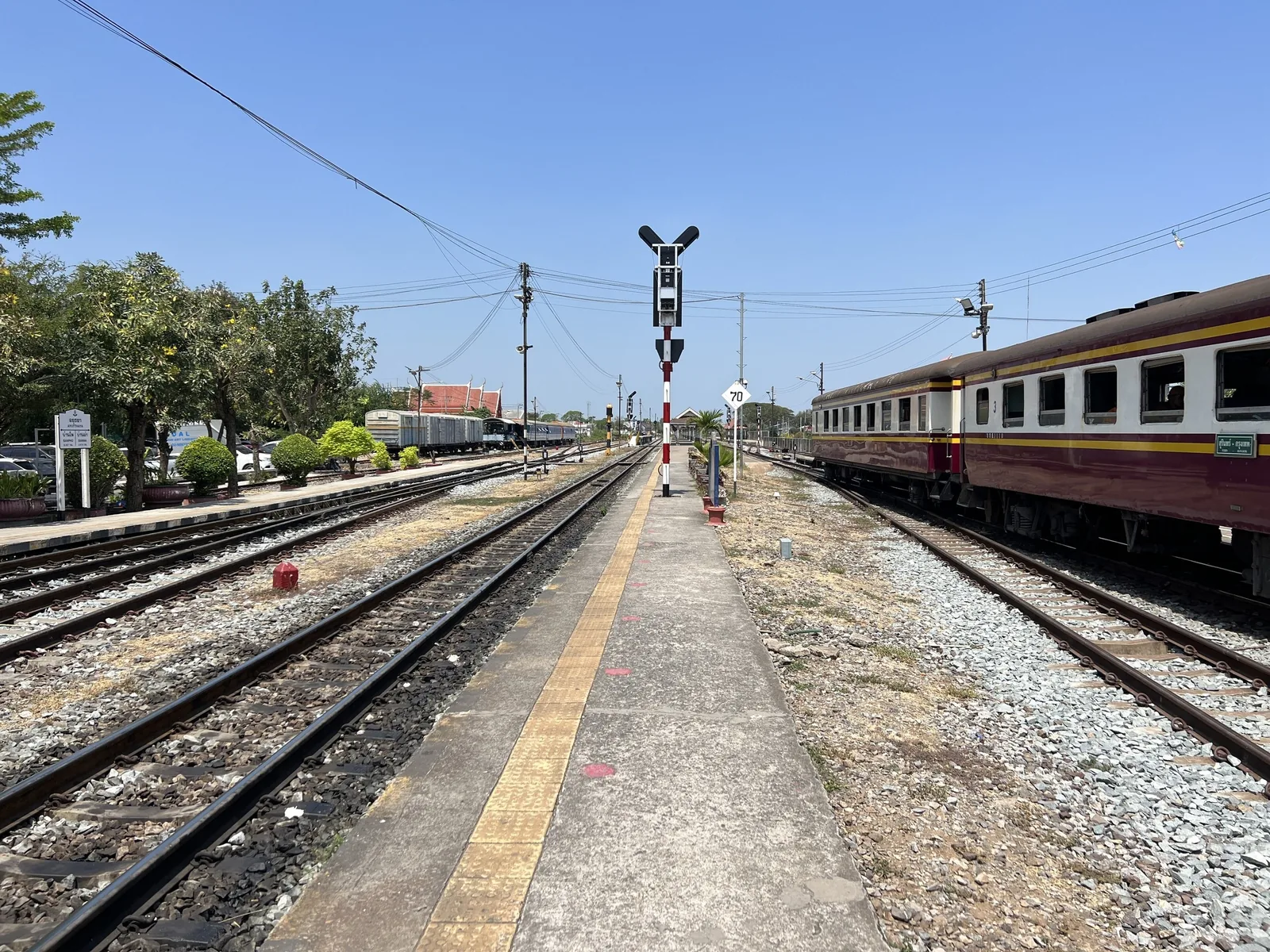
In Thailand, the overnight Bangkok to Chiang Mai sleeper takes about thirteen hours and is comfortable in the newer carriages. The hour and a half up to Ayutthaya is the easiest day trip in the country.


Boats
Boats: the slow one, and the ones to be careful with
The Mekong slow boat from Huay Xai to Luang Prabang is two days — roughly six hours to Pak Beng, a night there, then seven or eight hours on. It is the most enjoyable border crossing in the region and the only one people look forward to. The boats are long and low with bus seats bolted into them; there is a toilet, there is food, and there is no way to hurry any of it. Take a cushion and a book.
The speedboats that run the same river in six hours are a different proposition: they are loud, they are hard on the spine, and their safety record is poor. We do not book them, and we would rather lose the booking than put someone on one.
Elsewhere the boats matter as much as the flights. Ha Long Bay is only worth doing as an overnight, because the bay empties after four in the afternoon. The Andaman and Gulf ferries are routine in the dry season and can be cancelled in a squall. The Bali to Nusa Penida and Gili fast boats are short and frequently rough, and the crossing from Bali towards Flores in January and February is regularly called off. In the Philippines, the boat between islands is not a scenic extra — it is the road, and it stops when the sea says so.
 Day one of the slow boat
Buses
Buses, and when we will not use one
Public long-distance buses are cheap, frequent and usually the wrong choice on a private trip, because a private car costs a manageable amount more and gives you the stops. There are exceptions. The Lao VIP buses between Vientiane and the south are the only practical option on some legs. Cambodian roads between Phnom Penh and Siem Reap are good enough that the five to six hour run is genuinely comfortable.
Vietnamese sleeper buses — the ones with three rows of reclining berths — are the part of regional travel people complain about most, and fairly. They are cramped for anyone over about 175 cm, they drive through the night at speed, and they arrive at four in the morning. We do not put them in itineraries. The night train does the same job better.
Private car
The private car, and the days it earns
A car with a driver is the default on most of our trips, and on some legs it is unambiguously the right answer rather than a luxury. Hue to Hoi An over the Hai Van pass is four hours with stops and is a highlight in its own right. Ho Chi Minh City into the Mekong Delta only works with a vehicle, because the point is the small roads. Kampot to the Vietnamese coast, Siem Reap to Battambang and the rice country, the run out to Kuang Si from Luang Prabang — all of these are better driven.
The honest limit is about five hours of driving in a day, six if the road is good and the stops are worthwhile. Beyond that, the day is the journey, and everyone arrives too tired to do anything with the evening. When a route needs more than six hours between two places, we look for a flight, a train or a different route.
In cities, ride-hailing applications work well in Vietnam, Thailand, Indonesia and the Philippines and take most of the negotiation out of a short hop. Laos has its own local application with thinner coverage. Metered taxis are reliable in Bangkok and patchy elsewhere.
Borders
Crossing a border by road, in practice
A land crossing is a walk between two buildings with a vehicle change in the middle. Your driver takes you to the barrier on one side; you clear exit formalities on foot, walk or shuttle across, clear entry on the other, and meet a second driver. Nothing about it is difficult, and almost everything that goes wrong is paperwork that could have been sorted a week earlier.
| Border | Crossing | Route | Time at the border | Status | What it means for your visa |
|---|---|---|---|---|---|
| Vietnam – Laos | Lao Bao – Dansavanh | Road, Hue / Dong Ha – Savannakhet | 7 – 8 h | Operating, no government status page | The Lao e-visa is not valid at this gate — buy a visa on arrival. |
| Vietnam – Laos | Nam Can – Nam Kan | Road, Vinh – Phonsavan | 8 h | Operating, no government status page | Lao visa on arrival only. |
| Vietnam – Laos | Tay Trang – Sop Hun | Road, Dien Bien Phu – Muang Khua | 5 h | Operating, no government status page | Lao visa on arrival only. |
| Thailand – Laos | Friendship Bridge I | Road, Nong Khai – Vientiane | 30 min | Open | Lao e-visa valid. The Lao digital arrival form runs here. |
| Thailand – Laos | Friendship Bridge II | Road, Mukdahan – Savannakhet | 30 min | Open | Lao e-visa valid. |
| Thailand – Laos | Friendship Bridge IV | Road, Chiang Khong – Huay Xai | 30 min | Open | Lao e-visa valid. This is where the Mekong slow boat to Luang Prabang starts. |
| Laos – Cambodia | Nong Nok Khiene – Trapeang Kriel | Road, 4000 Islands – Stung Treng | 2 h | Operating, no government status page | Cambodian e-visa accepted at Trapeang Kriel; leaving Laos needs no e-visa, but entering Laos this way does need a visa on arrival. |
Border status and visa validity were verified against government sources on this date. The rules that most often break a self-planned route: the Lao e-visa is single entry, 30 days, must be carried printed rather than shown on a phone, and is valid at nine ports only — not at any Vietnamese land gate, not at Nong Nok Khiene and not at Friendship Bridge III, where you buy a visa on arrival instead. The Vietnamese e-visa fixes the entry and exit gates you named and cannot be changed afterwards. The Thailand – Cambodia land border has been closed to tourists since 23 June 2025. We do not print border or visa fees on this site, because they change without announcement.
Honestly
What is genuinely uncomfortable
- Overnight sleeper buses anywhere on the mainland, and particularly in Vietnam and Laos. Cramped, fast and badly timed.
- Mekong speedboats between Huay Xai and Luang Prabang. Loud, punishing and with a poor safety record.
- The full-length Hanoi to Ho Chi Minh City train, at more than thirty hours. Magnificent in theory, a long time in a berth in practice.
- Fast boats out of Bali in the wet season, and any Philippine inter-island boat in a storm warning. Both are routine until they are not.
- Motorbike taxis in heavy city traffic, which we will book if you ask and will not put in an itinerary by default.
- Any road day over about six hours, regardless of how good the vehicle is.
We would rather write these down than have you discover them. Where a route needs one of them, we will say so before you book, and where there is an alternative that costs an hour and saves a day of misery, we take the alternative.
Let us do the moving parts.
Plan My Trip
One coordinator, every connection
Trains booked before they sell out, drivers waiting on both sides of a border, and flights with margins that survive a delay.
Common questions
Questions travellers ask most
Is the Laos–China railway worth using?
Yes, between Vientiane, Vang Vieng and Luang Prabang — about two hours instead of seven on the road. The stations are outside the towns, so allow half an hour at each end, and the tickets sell out several days ahead in the dry season.
Should I take the night train in Vietnam?
For Hanoi to Hue or Da Nang, yes: about thirteen hours in a four-berth soft sleeper, and it saves a hotel night. For the full run to Ho Chi Minh City, no — that is over thirty hours and the flight is two.
Is the Mekong slow boat safe and comfortable?
Safe, and comfortable enough: two long days on bus seats in a wooden boat, with a night at Pak Beng. The speedboats that cover the same route in six hours are a different matter and we do not book them.
How long is too long for a road day?
About six hours of driving. Beyond that the day is the journey and the evening is gone. The exception is a border day that cannot be flown, such as Ho Chi Minh City to Phnom Penh at six to seven hours.
Journey ideas
Where a private route could take you
Travel guide
How many days
Minimum nights per country, the true cost of a border day, and three worked examples.
View journey
Travel guide
Two-week routes
Five fourteen-day shapes, with the joins that make them possible.
View journey
Destinations
Laos
The slow boat, the northern valleys, and the nine ports the e-visa covers.
View journey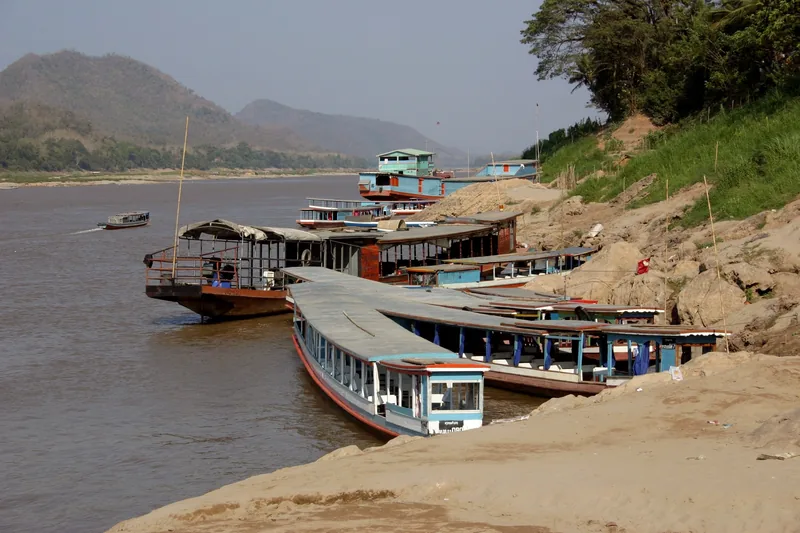
Example itinerary — fully customizable
Thailand & Laos
Nine days, one bridge, and two days on the river to Luang Prabang.
View journey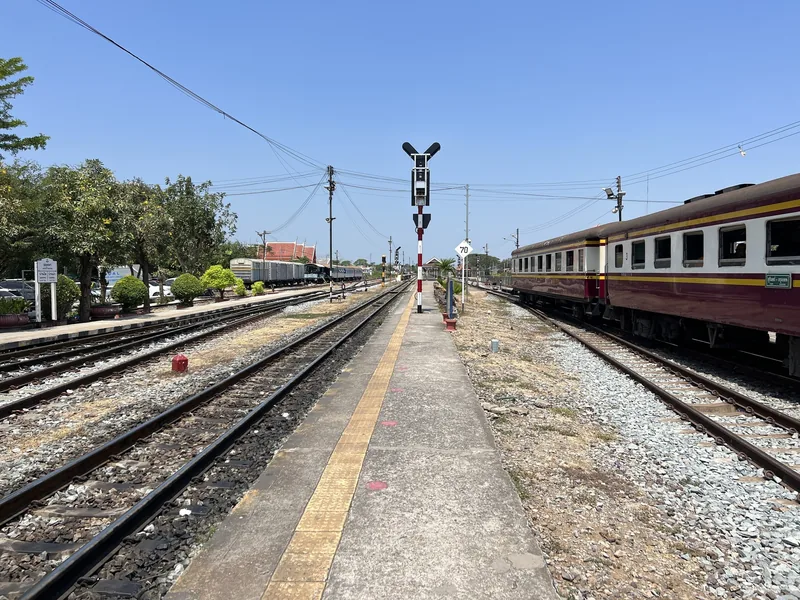
Start planning
Let’s plan your journey
Five quick questions. Your coordinator will take it from there.
Prefer to talk? WhatsApp or call+84 904 511 319