Travel guide
Five two-week routes
Not a list of places, a list of shapes. Each of these five works because of a specific join — a road, a bridge, a boat or a one-hour flight — and each of them excludes somebody.
Routes
What makes a route work
A fourteen-day route is not a list of the best places in Southeast Asia. It is a sequence in which each move is short enough to leave the day intact, each border is open in the direction you are travelling, and the paperwork for the next country can be filed before you reach it. Change the order and the same five places can become a good trip or an exhausting one.
These are the five shapes we build most often. Each one is described by its join first, because the join is what decides whether it is possible at all — and two of the joins have changed in the last eighteen months.
Route 1
Vietnam north to south
One country, two internal flights, no border. The easiest fortnight in the region.
Route 2
Vietnam and Cambodia overland
Two countries joined by one road day at Moc Bai, placed mid-trip.
Route 3
Thailand and Laos by slow boat
The one border crossing people look forward to: two days down the Mekong.

Route 4
Thailand and an island week
One country, one internal flight, and seven nights that do not move.

Route 5
Bali and Java
The southern-hemisphere route, dry when the mainland is not.
One country
Route 1 — Vietnam north to south
- The sequence
- Hanoi 2 nights · Ha Long or Lan Ha Bay 1 · Hoi An 3 · Ho Chi Minh City 2 · Mekong Delta 1 · Phu Quoc 4
- The joins
- Two domestic flights of about an hour and fifteen each — Hanoi to Da Nang, Da Nang to Ho Chi Minh City — plus a 45-minute hop to Phu Quoc. No border, no visa change, no paperwork after arrival.
- Best months
- February to April, and December. In October the centre is at flood risk, so the Hoi An block moves to the start.
- Who it suits
- First trips to Asia, travellers who want one country in depth, anyone whose dates fall in a month that suits the mainland.
- Who it does not
- People who want variety between cultures rather than between regions. Vietnam changes a great deal from north to south, but it is one country and it feels like one.
This is the route we recommend most and sell least, because two countries sound better in the planning stage. It has the lowest failure rate of anything on this page: nothing depends on a border, and the only thing that can go wrong is weather in the centre, which the ordering already protects against. Phu Quoc is 30 days visa-free for every nationality.
Two countries, one road
Route 2 — Vietnam and Cambodia, overland at Moc Bai
The reason the border sits on day nine and not day thirteen is simple: if the crossing runs long you lose an afternoon in Phnom Penh instead of an international flight. That single decision is most of what we are paid for on a route like this.
| Border | Crossing | Route | Time at the border | Status | What it means for your visa |
|---|---|---|---|---|---|
| Vietnam – Cambodia | Moc Bai – Bavet | Road, Ho Chi Minh City – Phnom Penh | 6 – 7 h | Open | Cambodian e-visa accepted here. Your Vietnamese e-visa must name Moc Bai as the exit gate. |
| Vietnam – Cambodia | Ha Tien – Prek Chak | Road, Phu Quoc ferry – Kampot / Kep | 3 h from Ha Tien to Kampot | Open | Take a Cambodian visa on arrival here (USD cash and a passport photo). The e-visa is not listed for this gate. |
| Vietnam – Laos | Lao Bao – Dansavanh | Road, Hue / Dong Ha – Savannakhet | 7 – 8 h | Operating, no government status page | The Lao e-visa is not valid at this gate — buy a visa on arrival. |
| Vietnam – Laos | Nam Can – Nam Kan | Road, Vinh – Phonsavan | 8 h | Operating, no government status page | Lao visa on arrival only. |
| Vietnam – Laos | Tay Trang – Sop Hun | Road, Dien Bien Phu – Muang Khua | 5 h | Operating, no government status page | Lao visa on arrival only. |
Verified against government sources on this date. The Vietnamese e-visa is open to every nationality for up to 90 days but fixes the entry and exit gates you name on the application, and they cannot be changed afterwards — naming the wrong gate is the most common way a self-planned overland route fails. The Cambodian e-visa is valid at two land gates only, Bavet and Trapeang Kriel; at Prek Chak, the gate from Ha Tien, it is a visa on arrival with US dollars in cash and a passport photo. We do not print visa fees, because they change without announcement.
Two countries, one river
Route 3 — Thailand and Laos, down the Mekong
This is the only land border in the region that people look forward to. It is also the one where the paperwork is least forgiving: the Lao e-visa is valid at nine named ports only, it must be carried as a printed sheet, and a photograph of it on a phone is refused. Everywhere else in Laos it is a visa on arrival instead, and the e-visa is not refunded if you arrive at the wrong gate holding one.
Verified on this date. Two rules shape this route. The Lao e-visa is single entry, 30 days, printed, and valid at nine ports only — not at any Vietnamese land gate, not at Nong Nok Khiene and not at Friendship Bridge III. And Thailand’s visa exemption dropped from 60 days to 30 on 15 September 2026 for 60 countries and territories, with overland entries on it capped at twice a calendar year, so a route that leaves Thailand for Laos and returns uses your second entry. The Thailand Digital Arrival Card is compulsory and free, filed within three days of arrival. No fees are printed on this site.
One country, one beach
Route 4 — Thailand, and then a week that does not move
- The sequence
- Bangkok 3 · Chiang Mai 3 · Krabi or Koh Samui 7
- The joins
- Two domestic flights, roughly an hour and a half each, plus a boat transfer if the beach is an island. No border and no second set of paperwork.
- Which coast
- November to April, the Andaman — Krabi, Phuket, the Phi Phi boats. June to September, the Gulf — Samui, Phangan — which is calmer then. In late October and November neither coast is reliable, which is the one month we move the beach to the front of the trip.
- Who it suits
- Families, anyone travelling with a young child, first-time visitors who want a week of nothing at the end, and travellers coming off a long-haul flight with jet lag to lose.
- Who it does not
- Anyone who came to see as much as possible. Seven nights in one place is the point of this route.
The seven-night block is deliberate. The commonest mistake in a two-week Thailand itinerary is three nights on each of two islands, which spends a full day on a ferry and an airport and leaves neither place long enough to relax in. Pick one coast and stay on it.
The southern hemisphere route
Route 5 — Bali and Java
Entry is a visa on arrival for European, North American, Australian and Northeast Asian passports, valid 30 days and extendable once. The All Indonesia arrival card is filed within 72 hours of arriving, Bali charges a separate tourist levy per person, and proof of onward travel is checked at Denpasar.
Indonesian entry rules were verified on this date. We do not print the visa on arrival fee or the Bali levy here: both change without announcement and the official portals are the only source worth quoting. Your coordinator sends the current figures and the correct link for your nationality before you travel.
Which of the five is yours?
Plan My Trip
Send us your fortnight
Tell us the dates, who is travelling and what you would be sorry to miss. We will tell you which of these shapes fits and what we would change about it.
Common questions
Questions travellers ask most
Can I do Thailand and Cambodia overland in two weeks?
Not at the moment. The Thailand – Cambodia land border has been closed to tourists since 23 June 2025 and remains closed, including Poipet and Hat Lek. Bangkok to Siem Reap is a one-hour flight, several a day, and that is the only sensible way across.
Which of these five is best for a first trip to Asia?
Route 1 or Route 4 — one country, internal flights only, no border paperwork after arrival. Both leave room for jet lag in the first two days, which the multi-country routes do not.
Can I run any of these in reverse?
Route 1 and Route 3 read equally well in either direction, and we often start Route 3 in Luang Prabang and finish in Bangkok to make the international connection easier. Route 2 is better in the order given, because you want the border in the middle of the trip and Angkor at the end.
Are these fixed itineraries?
No. They are shapes. Each links to the package page that follows it most closely, and every trip we run is rebuilt around your dates, your pace and the ages of the people travelling.
Journey ideas
Where a private route could take you
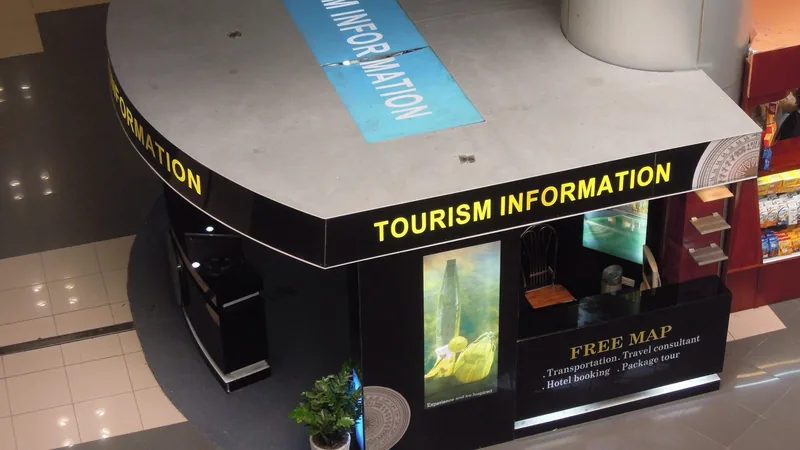
Travel guide
How many days
Minimum nights per country, the true cost of a border day, and three worked examples.
View journey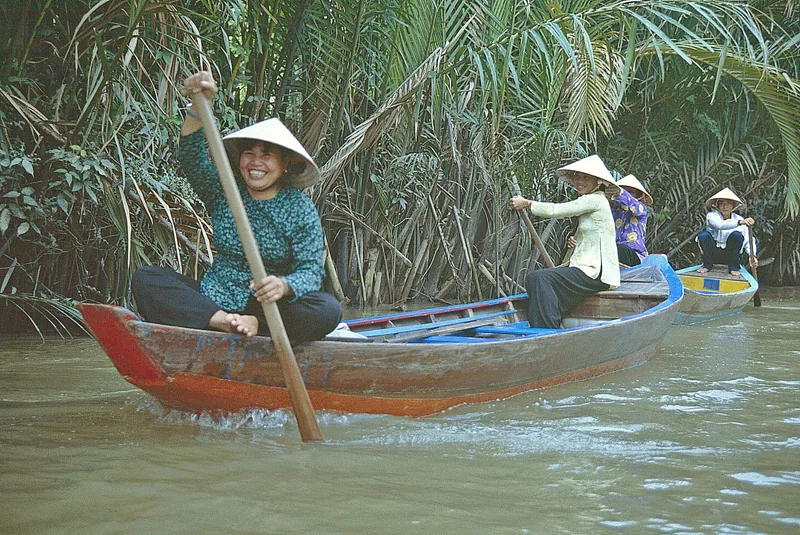
Example itinerary — fully customizable
Vietnam & Cambodia
Fourteen days, two countries, one land border — Hanoi to Angkor.
View journey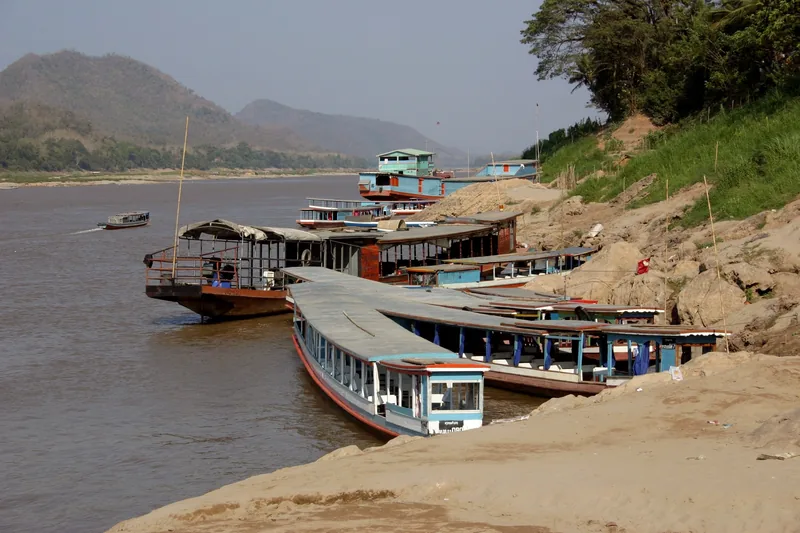
Example itinerary — fully customizable
Thailand & Laos
Nine days, one bridge, and two days on the river to Luang Prabang.
View journey
Example itinerary — fully customizable
Bali & Java
Ten days, two islands, one short flight and no land borders.
View journey
Start planning
Let’s plan your journey
Five quick questions. Your coordinator will take it from there.
Prefer to talk? WhatsApp or call+84 904 511 319