Thailand
Chiang Mai
A moated Lanna capital with thirty temples inside a square mile, a mountain behind it, and the best two days of learning anywhere on a Southeast Asian route.
Chiang Mai
A walled square with a mountain behind it
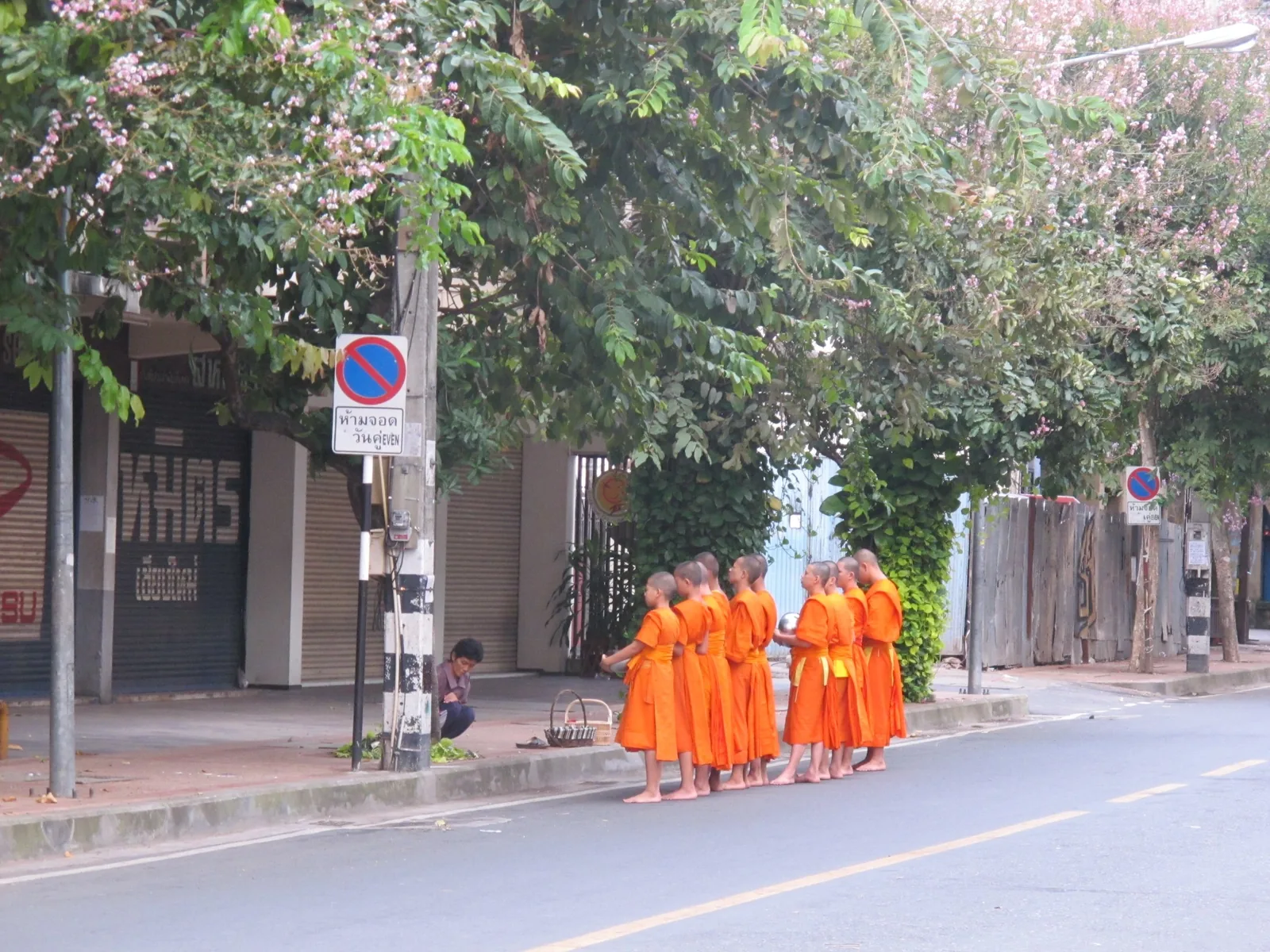
Chiang Mai was the capital of the Lanna kingdom for two and a half centuries before Bangkok existed. The moat and the brick walls that squared off the old city in 1296 are still there, still full of water, and still the thing every address is described in relation to. Inside them sit around thirty working temples in roughly one square mile. Outside them the city is modern and unremarkable in every direction; behind it, to the west, Doi Suthep rises to 1,600 metres and keeps the air a few degrees cooler than the plain.
What people come for is a pace rather than a monument. This is the second city of Thailand and it behaves like a large town — you can walk across the old quarter in half an hour, the food costs a third less than in Bangkok, and the days arrange themselves into a temple in the morning, something learned in the afternoon and a market in the evening. Three nights is the honest figure. Two leaves you hurrying; four is comfortable if you want a day in the hills.
Priorities
Three temples, before the fatigue sets in
Thirty temples in a square mile is more than anyone wants to see. Three is the right number, and they should be unlike one another.
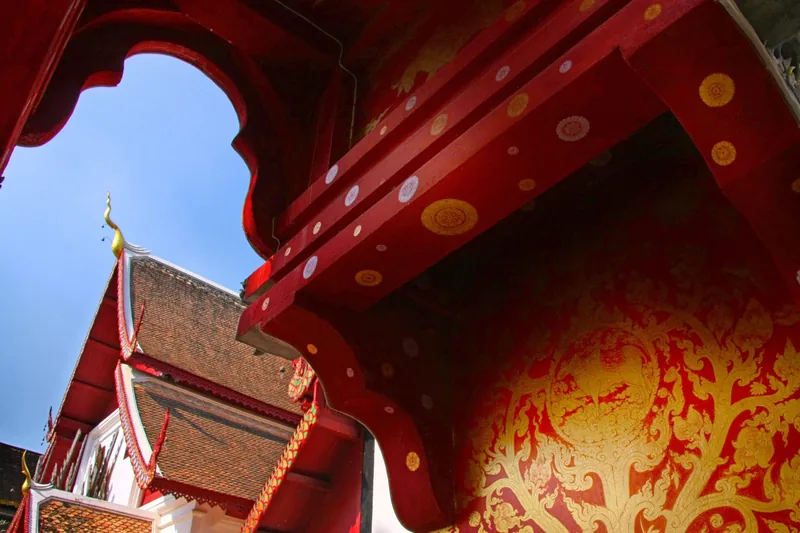
- Wat Phra Singh, inside the walls, for Lanna woodwork and the small Phra Singh hall behind the main one, which is where the good carving is.
- Wat Chedi Luang, whose brick tower lost its upper third to an earthquake in 1545 and was never restored — the most affecting thing in the old city.
- Wat Phra That Doi Suthep, forty minutes up the mountain, in the first hour after it opens while the cloud is still sitting in the valley below.
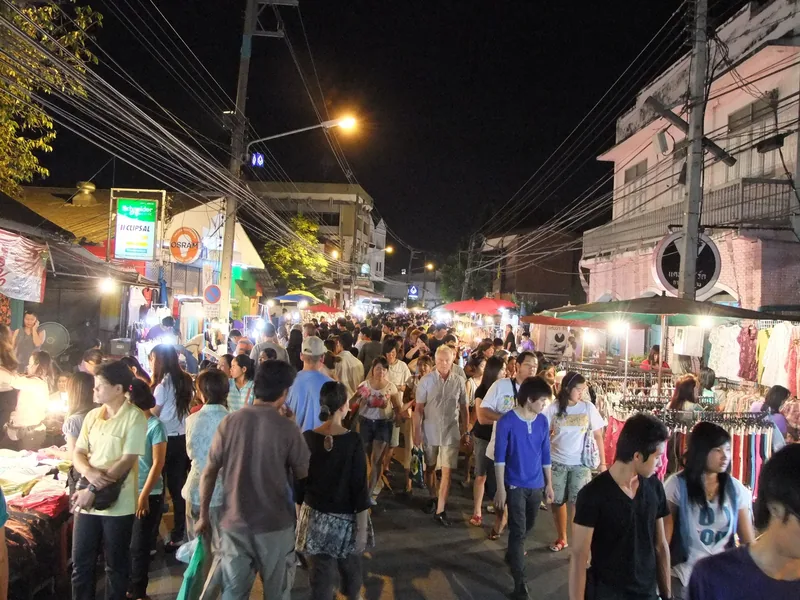
- The Sunday walking street, which closes Ratchadamnoen road to traffic and is the best market in the north. It fills by seven, so go at four.

Booking ahead
The two things worth booking before you arrive
Chiang Mai has more cooking schools than anywhere else in the country, and the good ones share a shape: a market walk to learn the ingredients, then four or five dishes cooked over gas in an open kitchen outside town, finishing in the early afternoon. It is the single activity travellers mention a year later, for the obvious reason that you go home able to make the food.
Elephants are the harder question and we will be direct about it. A camp that offers rides or performances is not somewhere we send people. What does exist, north and west of the city, are places where a small herd lives in forest and a visit means walking, watching and feeding, with no riding and no queue of visitors bathing the animals. We name the specific camps we use at the planning stage rather than on a web page, because standards move and a camp that was good three years ago may not be now.

Seasons
The cool season, and the two months nobody advertises
Onward
Onward, and the two ways into Laos
Chiang Mai is the hinge of every northern route. Everything except the Lao leg runs back through it, and the Lao leg can be done twice as fast or five times as well.
| Onward leg | How long | What to know |
|---|---|---|
| Chiang Rai | 3 hours by road | The standard way north, and the first half of the overland route to the Lao border. |
| Bangkok | 1 hour 15 by air; 11 to 13 hours by overnight sleeper | The train is the better journey and costs a night rather than a day. |
| Luang Prabang, Laos | 1 hour by air, most days | The fast version. The slow version is road to Chiang Khong, Friendship Bridge IV, then two days on the Mekong. |
| Phuket or Krabi | About 2 hours by air | Direct in the high season; otherwise through Bangkok, which adds half a day. |
Give the north three nights.
Plan My Trip
Tell us your dates
We will tell you whether your month is clear or full of smoke, and whether the Lao border should follow.
Common questions
Questions travellers ask most
How many nights does Chiang Mai need?
Three. One for the old city and the temples inside the walls, one for a cooking school or the hills, and one left unplanned. Two works if Chiang Mai is only a stop on the way to the Lao border, but the mountain will wait for another trip.
When is the burning season, and how bad is it?
Roughly early March to late April, when field clearing across the north fills the valley with smoke for weeks at a time. It is bad enough that we would rather rebuild an itinerary around it than send you into it.
How do I know an elephant camp is a good one?
No riding, no performances, no queue of visitors bathing the animals, and a herd small enough that it is not being moved through a timetable. We name the camps we work with when we plan your trip, because standards change and a list on a web page ages badly.
Journey ideas
Where a private route could take you
Thailand
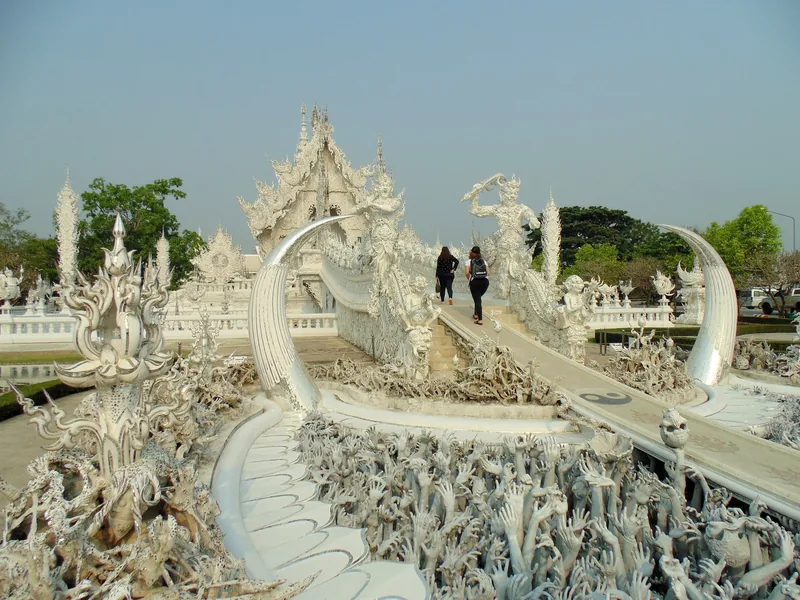
Chiang Rai
A night in the far north, and the morning you cross the Mekong.
View journey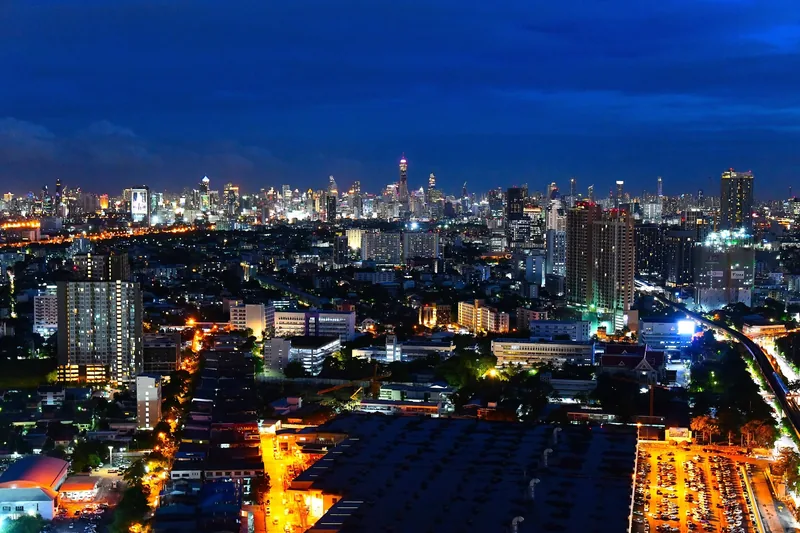
Thailand
Bangkok
Two or three nights, the river, and the flights that make every other leg possible.
View journey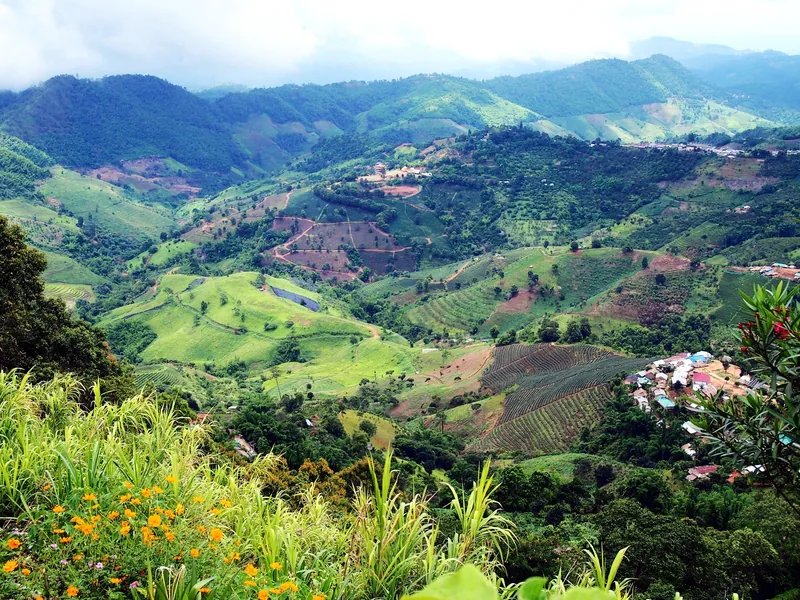
Example itinerary — fully customizable
Northern Thailand
Seven days in the hills, ending where three countries meet.
View journey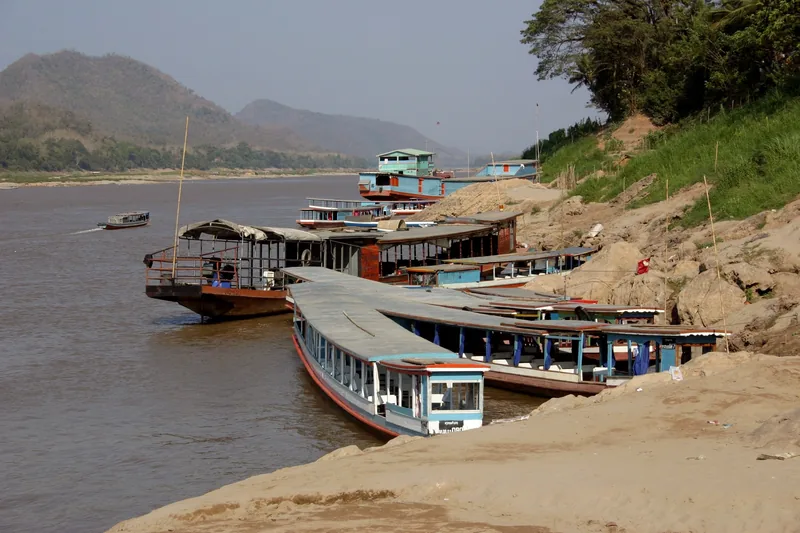
Example itinerary — fully customizable
Thailand & Laos
Nine days, one bridge, and two days on the river to Luang Prabang.
View journey
Start planning
Let’s plan your journey
Five quick questions. Your coordinator will take it from there.
Prefer to talk? WhatsApp or call+84 904 511 319