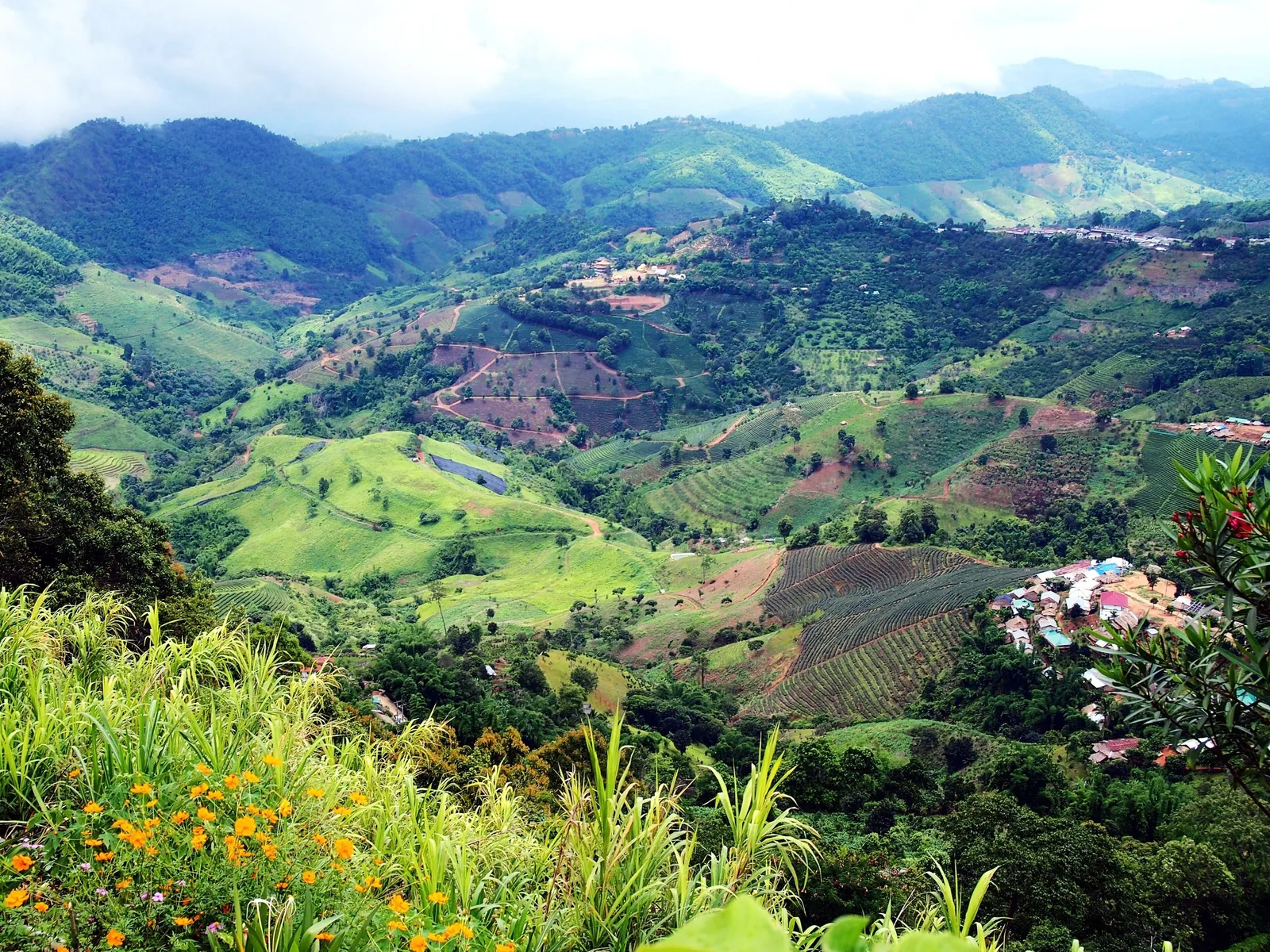
Thailand
Northern Thailand in seven days
A former kingdom with its own script, its own food and a climate three degrees cooler — and a week spent learning to make things rather than queueing to look at them.
Overview
The kingdom that was not Siam
Lanna was a separate kingdom for six centuries and was not fully absorbed into Siam until 1892. That is why the north has its own temple architecture, its own script still used on monastery walls, a noticeably different kitchen and a cool season that Bangkok does not get. A week here is not a shortened version of a Thailand trip; it is a different country with a shared passport.
The shape is simple and deliberately unhurried: three nights in Chiang Mai learning to make things, three hours of road north, and three nights working outwards from Chiang Rai to the tea hills and the Mekong. No internal flights, no packing before dawn, and one afternoon in every pair left unscheduled.
- Length
- 7 days, 6 nights
- Group
- Private, up to 12
- Starts
- Chiang Mai
- Ends
- Chiang Rai
- Longest transfer
- 3 hours, Chiang Mai to Chiang Rai
- Best months
- November to February
Nights
The nights, in order
Day by day
What happens each day
Day 1
Arriving in Chiang Mai
Khao soi on the first evening, which is the dish of the north
The airport is barely fifteen minutes from the old city, which is the first thing to like about the place. Nothing is planned. Walk one side of the moat before dark, eat khao soi somewhere with plastic stools, and go to bed early — everything worthwhile here happens before nine in the morning.
Day 2
Three temples inside a square mile
The unrestored brick of Wat Chedi Luang in late light
There are around thirty working monasteries inside the 1296 walls and the right number to visit is three, chosen to be unlike one another. Wat Phra Singh for Lanna woodwork, and the small hall behind the main one where the good carving is. Wat Chedi Luang, whose brick tower lost its upper third in a 1545 earthquake and was never restored. And one you pick yourself on the walk between them. The afternoon is free; the evening is a market.
Day 3
A market, a kitchen, and the road of workshops
Watching an umbrella painted freehand in about four minutes
The morning is a cooking school: a market walk to learn the ingredients, then four or five northern dishes cooked over gas in an open kitchen outside town, finishing with what you made. The afternoon runs east along the craft road towards San Kamphaeng — paper umbrellas painted by hand at Bo Sang, silversmiths, a working silk loom. These are trades rather than souvenir stops, and the difference is obvious within five minutes.
Day 4
The mountain, the forest camp, and the road north
Doi Suthep at opening, before the coaches arrive
Doi Suthep in the first hour it opens, forty minutes up the mountain with the cloud still sitting in the valley. Then an elephant camp north of the city where a small herd lives in forest and a visit means walking and watching — no riding, no performances, no queue of visitors bathing the animals. We name the camp when we plan your trip rather than on a web page, because standards move. Afterwards the road north: three hours to Chiang Rai, arriving for dinner.
Day 5
Three buildings, none of them old
Baan Dam, which is not a temple and not quite anything else
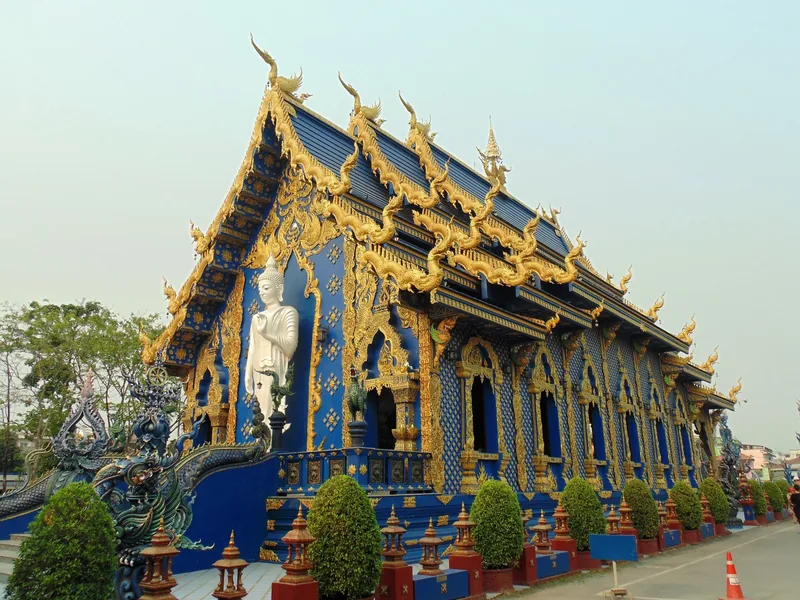
Chiang Rai is known for structures built within living memory, which is worth knowing before you arrive expecting ruins. Wat Rong Khun, the white temple, is an artist’s ongoing project begun in 1997 in white plaster and mirror glass, and considerably stranger inside than the photographs suggest. Wat Rong Suea Ten, the blue temple, was finished in 2016 and is the better twenty minutes if you only have one. Baan Dam, the black house, is a sculptor’s compound of dark teak halls full of bones, hides and horn, and the one people remember. The afternoon is free.
Day 6
The river, and the name that oversells itself
Chiang Saen, where the ruins stand on a working riverbank
North to Sop Ruak, where the Ruak meets the Mekong and Thailand, Laos and Myanmar meet at a point. What is physically there is a sign, a large seated Buddha and souvenir stalls, and it earns about ten minutes. The opium museum a kilometre up the road earns an hour and is the only honest account of the trade the name refers to. Then Chiang Saen, eight kilometres downstream: a walled river town with thirteenth-century brick ruins along the bank and Chinese cargo boats tying up below them. That is the stop worth the drive.
Day 7
Tea in the hills, then out
A Yunnanese breakfast in a tea village in Thailand
The half-day north into the tea country at Mae Salong, planted by former Kuomintang soldiers who settled here after 1949 and still largely Yunnanese in language and food. Terraces, a morning market and a tasting at a smallholding. Back down for the airport, which is twenty minutes from town, with flights to Bangkok through the day. If your onward plan is Laos rather than home, Chiang Khong and the bridge are an hour and a half east instead.
Paperwork
Entry, and the border this week stops short of
The week flies in and out, so the paperwork is the simple Thai version. It is worth knowing what the far north does and does not connect to, because the map suggests more than is true.
- The Thai visa exemption is 30 days, not 60, for sixty countries and territories including the United Kingdom, the EU, the United States, Canada, Australia and Japan. It has been 30 days since 15 September 2026, and it is for tourism only.
- The Thailand Digital Arrival Card is compulsory, free, and filed within three days of arrival.
- Entering Thailand overland on the exemption is capped at twice per calendar year, which matters if you add Laos and come back.
- Friendship Bridge IV at Chiang Khong, an hour and a half east of Chiang Rai, is open, and the Lao e-visa is valid there. That is where the Mekong slow boat to Luang Prabang begins, and it is the natural extension to this week.
- The Thailand – Cambodia land border has been closed to tourists since 23 June 2025 at both Poipet and Cham Yeam. Nothing in the far north touches it, but it rules out a Thailand and Angkor route by road from anywhere.
We do not publish visa fees. The current figures are on the official Thai and Lao portals, and your coordinator confirms them in writing. If you carry on into Laos, note that the Lao e-visa is printed only — a phone screen is refused at the bridge.
Pictures
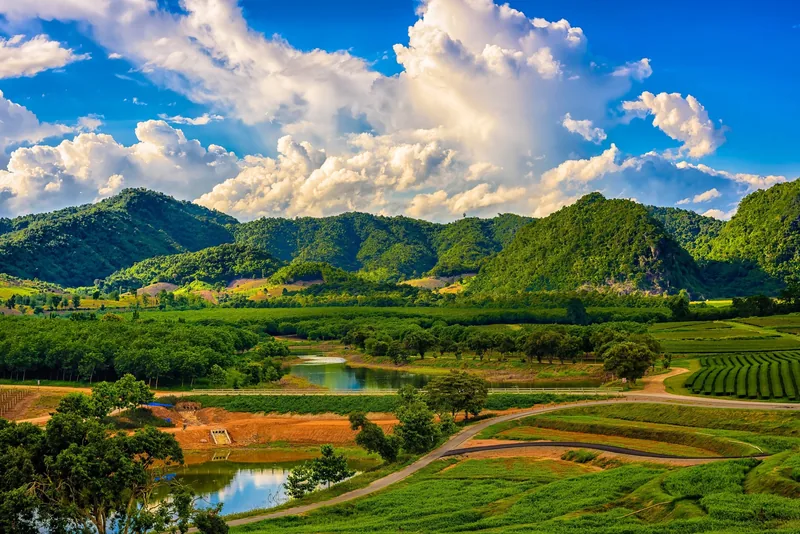
What the week looks like
 Chiang MaiBo Sang
 Doi Suthep
 Wat Rong Suea TenThe Chiang Rai hills
 Sop Ruak
Cost
How we quote it
| Travellers | Comfortable hotels | Boutique and luxury |
|---|---|---|
| 2 travellers | On request | On request |
| 4 – 6 travellers | On request | On request |
The north is the cheapest week on this site in the comfortable column and has a real boutique tier in the second — restored teak houses inside the Chiang Mai walls, and one or two places on the river near Chiang Rai. Nothing in the week depends on which you choose except the rooms. Ask and the figure comes back within a working day, itemised, with every hotel named.
Included
What the quote covers
What the price includes
- Private air-conditioned car and driver for the whole week, including the three-hour transfer to Chiang Rai and every excursion from both towns.
- English-speaking licensed guides for the Chiang Mai temples, the craft villages, the elephant camp, the Chiang Rai temples and the river day. Free afternoons have no guide, by design.
- Six nights with breakfast: three in or near the Chiang Mai old city and three in or near Chiang Rai.
- A half-day cooking school with the market walk and lunch, and lunch on the craft afternoon, at the elephant camp, on the river day and in the tea hills.
- Workshop visits arranged in advance at Bo Sang and with a silversmith and a silk weaver, so they are working rather than performing.
- Entrance fees to everything named above, including Doi Suthep, Wat Rong Khun, Wat Rong Suea Ten, Baan Dam, the opium museum at Sop Ruak and the Chiang Saen ruins.
- The tea tasting at a Mae Salong smallholding.
- All airport transfers at both ends.
- A coordinator on a Thai number for the whole week, and the arrival card filed on time for every traveller.
What it does not include
- International flights into the first city and out of the last.
- Visa fees and entry charges. We do not publish these figures — the current ones are on the government’s official portal, and your coordinator confirms them in writing before you travel.
- Travel insurance, which we ask every traveller to hold.
- Meals not named in the day-by-day, and all drinks.
- Tips for guides, drivers and boat crew.
- Personal expenses: laundry, telephone, spa treatments, anything bought.
Straight talk
Who should not book this route
This is the quietest week on the site and the one most often booked for the wrong reason. Five travellers should take something else.
- Anyone travelling in March or April. Farmers clear fields across the whole north and the smoke sits in the valleys for weeks; Chiang Mai has some of the worst air quality in the world in those months and Mae Salong disappears entirely. We will not run this week then, and we will say so rather than sell you a version of it.
- Anyone who wants a beach. There is no coast within six hours of anywhere on this itinerary. Add the Andaman or the Gulf afterwards and the trip becomes ten or eleven days.
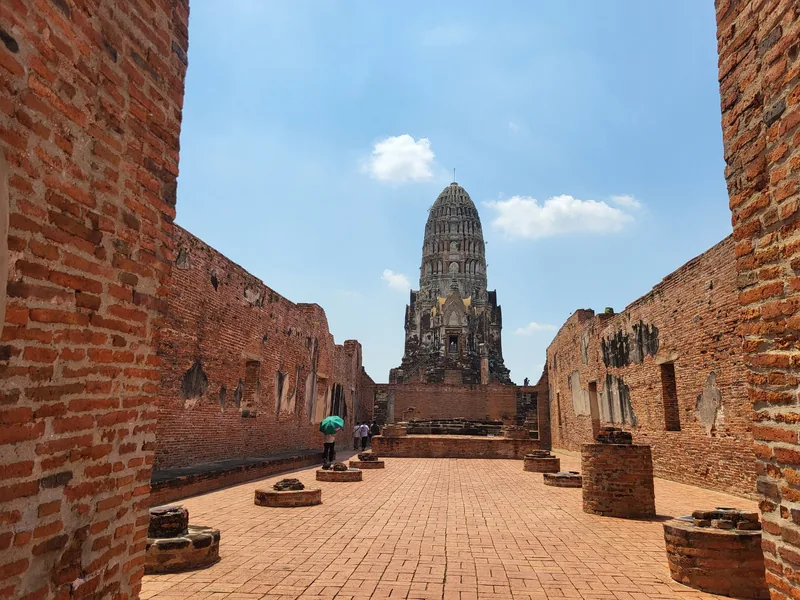
- Anyone expecting ancient ruins at Chiang Rai. The three famous buildings there were all built within living memory. Ayutthaya and Sukhothai are the ruined cities, and neither is in the north.
- Anyone booking for a hill-tribe trek. This week visits tea villages and craft workshops and does not walk between hill settlements. Trekking in the north is a separate trip with its own permits, guides and pace, and we will build it rather than bolt it on.
- Anyone who came for the elephants and wants to ride or bathe one. We do not book camps that offer either. If that is the expectation, this is not the operator.
Two towns, one road, no flights.
Plan My Trip
Start from this route
Tell us your dates and whether Laos follows. We will send a quote and an amended day-by-day within a working day.
Common questions
Questions travellers ask most
Is the Golden Triangle worth the drive?
The viewpoint at Sop Ruak is worth ten minutes and nothing more. What justifies the day is the opium museum, which is the only honest account of the trade, and Chiang Saen eight kilometres downstream, which is a walled river town with thirteenth-century ruins on a working bank.
Can this week continue into Laos?
It is the natural way to. Chiang Rai to Chiang Khong is an hour and a half, Friendship Bridge IV takes about thirty minutes with formalities, and the Mekong slow boat from Huay Xai reaches Luang Prabang in two days with a night at Pak Beng. The Lao e-visa is valid at that bridge and must be carried printed.
How much walking is there?
Not much: two to three kilometres a day, all of it flat or on level forest track. The physical part of this week is the sitting — there are two road days of two to three hours and several hours of hill roads around Mae Salong.
Which months?
November to February, when it is dry, clear and genuinely cold before dawn in the hills — ten degrees is ordinary at Mae Salong in January. May to October is green, wet and quiet, with rain mostly in the afternoon. March and April we refuse.
Journey ideas
Where a private route could take you
Example itinerary — fully customizable
Thailand highlights
Nine days from Rattanakosin to the Andaman, by train, road and one flight.
View journey
Example itinerary — fully customizable
The Lao slow boat
Eight days: Huay Xai to Vientiane, by river and by train.
View journey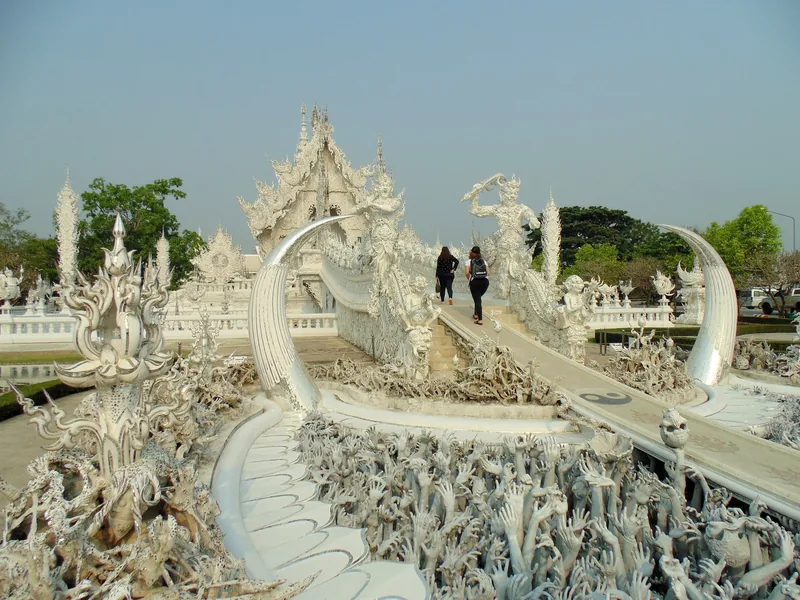
Thailand
Chiang Rai
A night in the far north, and the morning you cross the Mekong.
View journey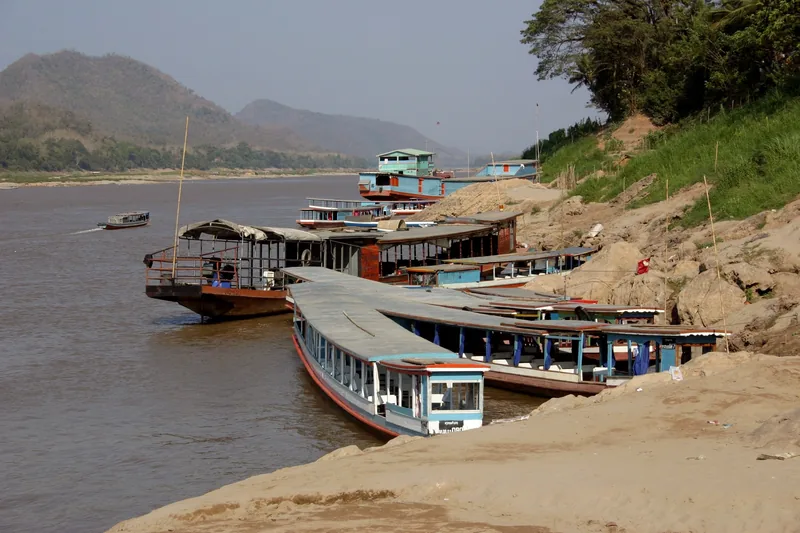
Example itinerary — fully customizable
Thailand & Laos
Nine days, one bridge, and two days on the river to Luang Prabang.
View journey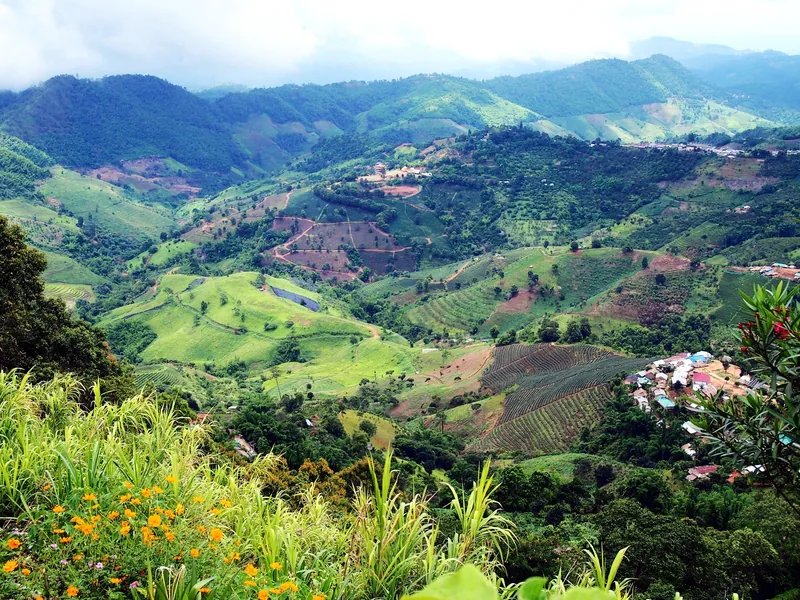
Start planning
Let’s plan your journey
Five quick questions. Your coordinator will take it from there.
Prefer to talk? WhatsApp or call+84 904 511 319