Thailand
Chiang Rai & the Golden Triangle
Thailand’s northernmost province, three temples built in living memory, and the crossing that turns a Thai holiday and a Laos holiday into one trip.
Chiang Rai
The last Thai town before the river
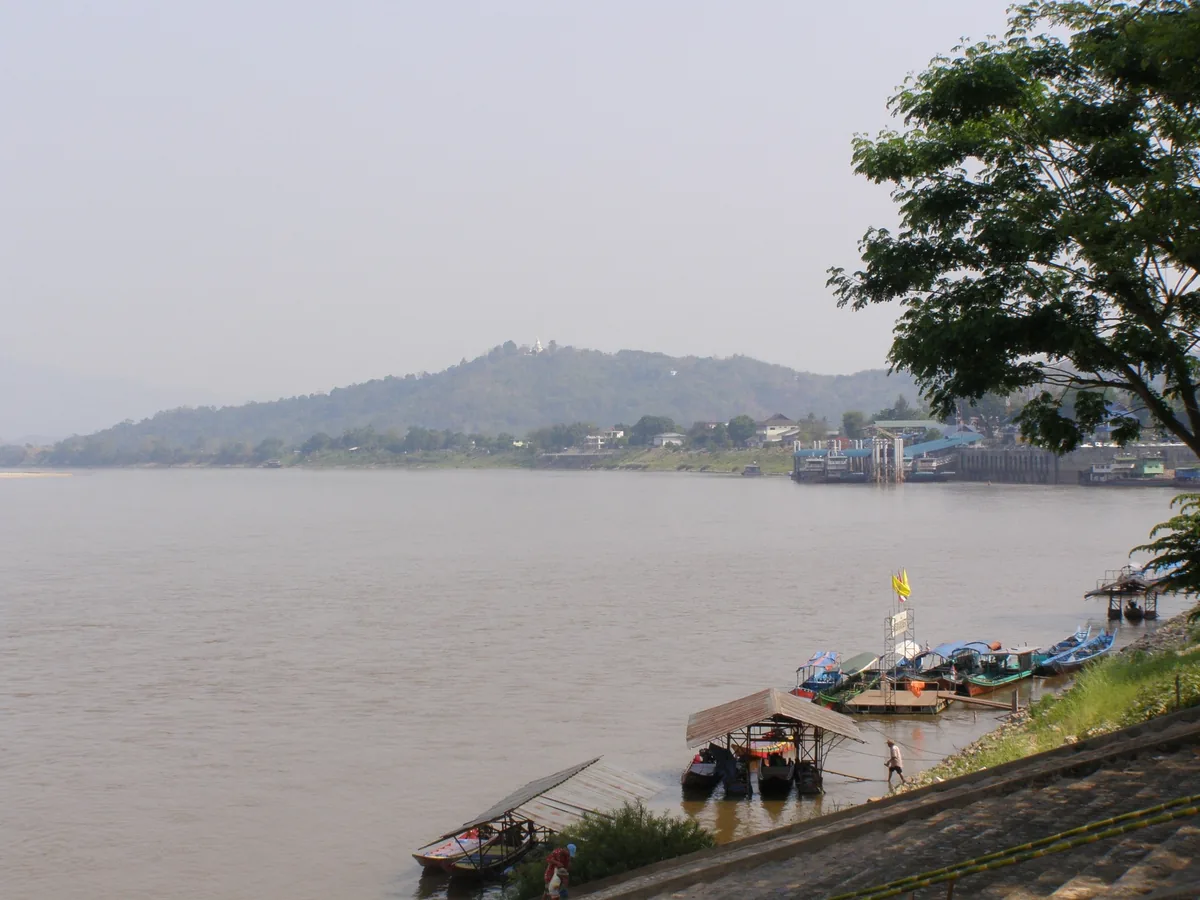
Chiang Rai is smaller, plainer and two hundred metres higher than Chiang Mai, and most itineraries give it one night on the way to somewhere else. That is roughly right. The town holds a night bazaar, a clock tower that changes colour on the hour and not a great deal besides. What earns the detour is the country around it: ridges of hill farmland to the north, tea and coffee smallholdings, Akha and Lahu villages on the slopes, and sixty kilometres away the point where the Mekong stops being a river in Thailand and becomes the border with Laos.
It is also the practical reason this page exists. Chiang Rai province holds the Thai – Lao crossing that most of our northern routes use, at Chiang Khong, and the Mekong slow boat to Luang Prabang leaves from the Lao bank opposite. A night here is what turns that crossing into a civilised morning rather than a pre-dawn departure from Chiang Mai.
Around the town
Three buildings, none of them old
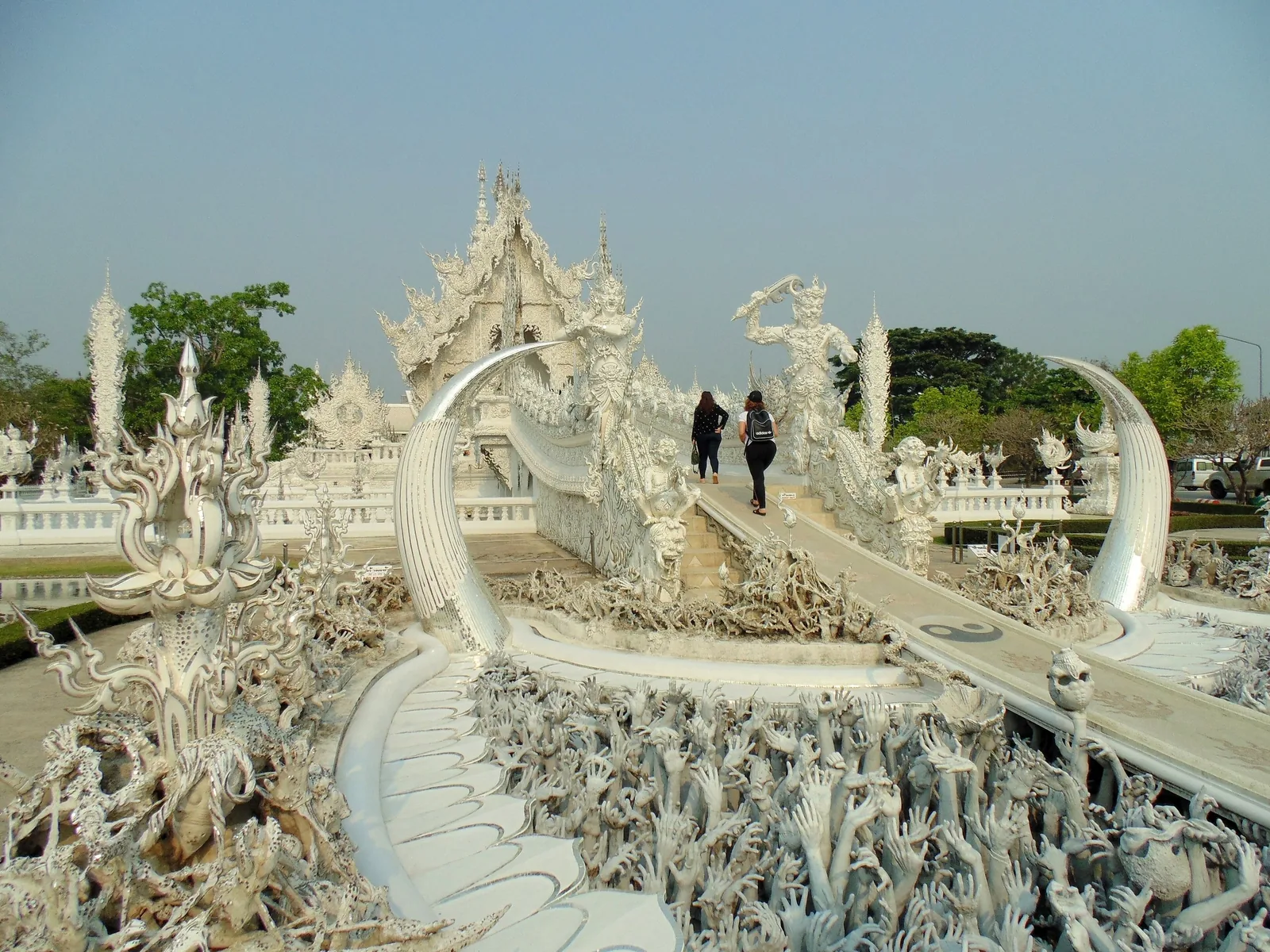
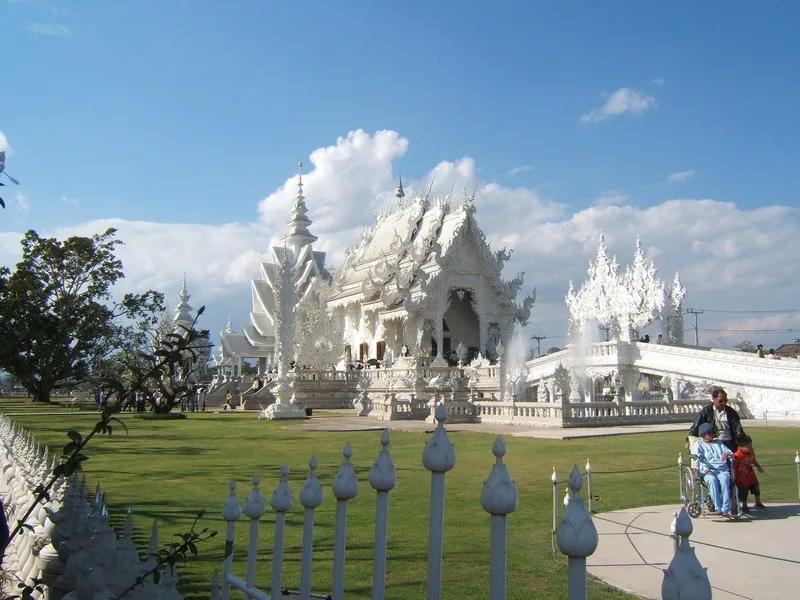
The structures Chiang Rai is known for were all built within living memory. That is not a criticism, but it is worth knowing before you arrive expecting ruins.
- Wat Rong Khun, the white temple — an artist’s ongoing project begun in 1997, in white plaster and mirror glass, and considerably stranger inside than the photographs suggest. Twenty minutes south of the town.
- Wat Rong Suea Ten, the blue temple — smaller, finished in 2016, and the better twenty minutes if you only have time for one.
- Baan Dam, the black house — a sculptor’s compound of dark teak halls filled with bones, hides and horn. Not a temple at all, and the one people remember.
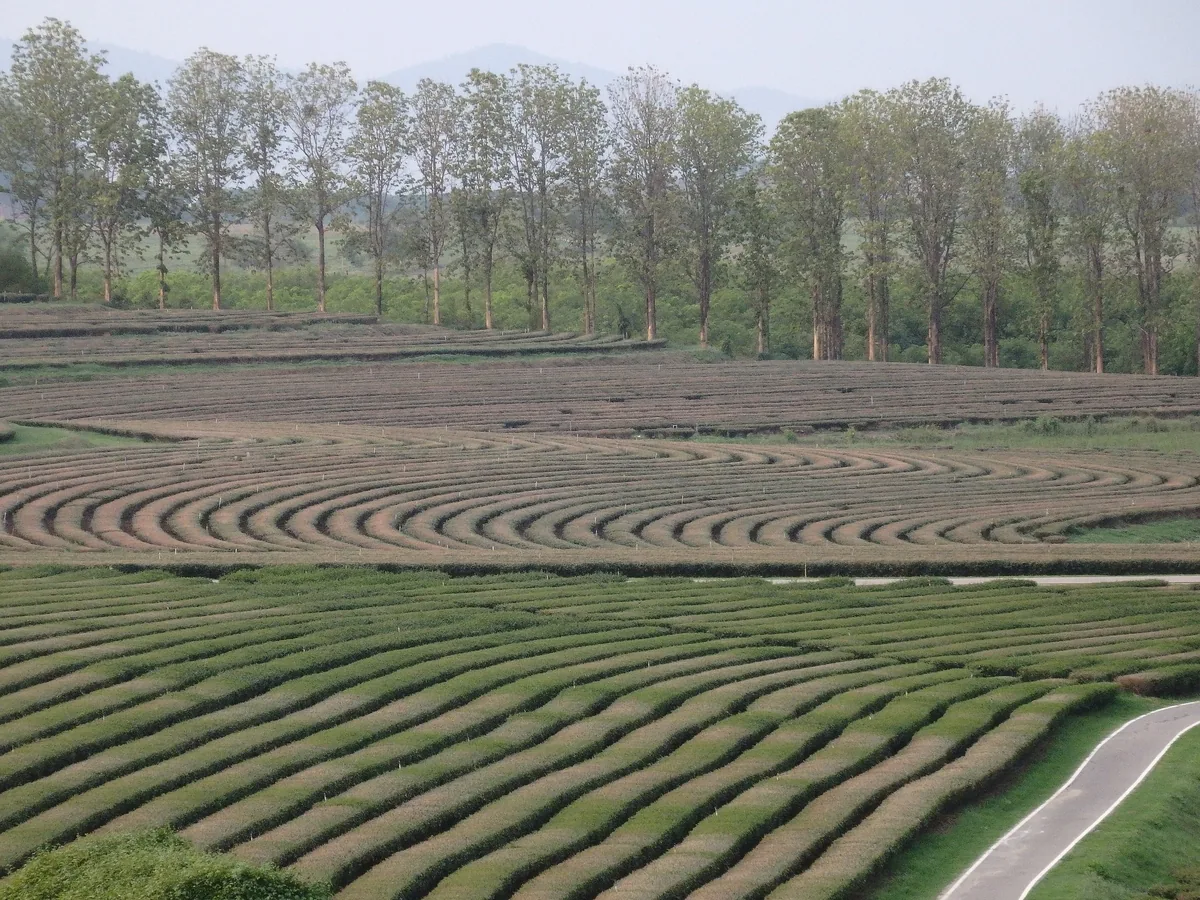
- The hill road north towards Mae Salong, a half-day by car through tea terraces planted by former Kuomintang soldiers. Go with someone who knows which villages are worth stopping in.
The river
The Golden Triangle, minus the myth
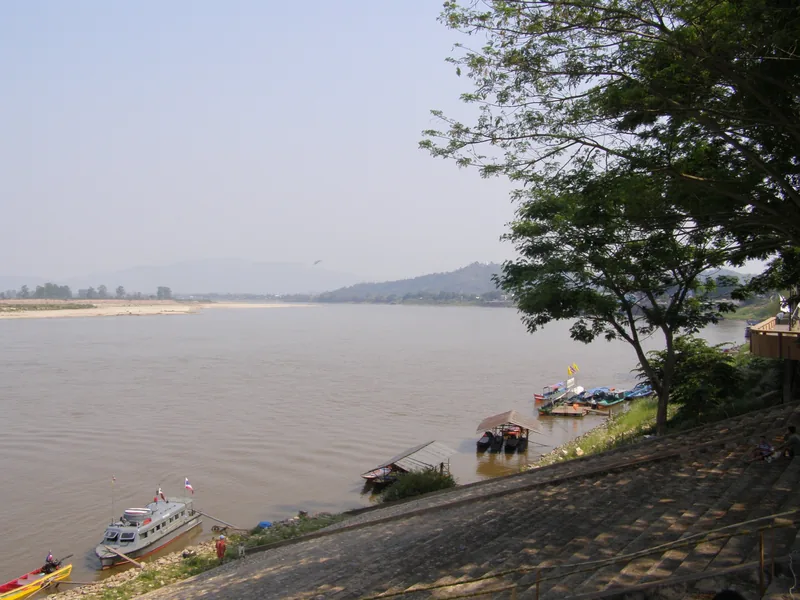
The Golden Triangle is a viewpoint at Sop Ruak where the Ruak river meets the Mekong and Thailand, Laos and Myanmar meet at a point. What is physically there is a sign, a large seated Buddha and a row of souvenir stalls. The view earns ten minutes. The opium museum a kilometre up the road earns an hour and is the only honest account of the trade the name refers to. Chiang Saen, eight kilometres downstream, is the better stop: a walled river town with thirteenth-century brick ruins along the bank and Chinese cargo boats tying up below them.
Borders
The crossing at Chiang Khong
Chiang Khong sits seventy kilometres downriver, about an hour and a half by road, and the Fourth Thai – Lao Friendship Bridge carries you over to Huay Xai. From the Lao bank the Mekong slow boat leaves in the morning for Luang Prabang: two days on the river with a night at Pak Beng. It is the one border crossing in the region that people look forward to rather than endure, and it is the whole reason a Thailand route and a Laos route can be a single trip rather than two flights.
| Leg | How long | What to know |
|---|---|---|
| Chiang Rai to Chiang Khong | 1.5 hours by road | Leave early if you want to catch the same morning’s slow boat. |
| Friendship Bridge IV to Huay Xai | About 30 minutes with formalities | A shuttle bus crosses the bridge; you are not permitted to walk it. |
| Huay Xai to Luang Prabang by slow boat | 2 days, with a night at Pak Beng | Morning departures only. The fast boat exists and we do not use it. |
| Chiang Rai to Chiang Mai | 3 hours by road | The usual approach. Chiang Rai also has its own airport with Bangkok flights. |
Friendship Bridge IV at Chiang Khong is open and the Lao e-visa is valid there, as it is at Bridge I (Nong Khai – Vientiane) and Bridge II (Mukdahan – Savannakhet). On the Thai side, the 30-day visa exemption in force since 15 September 2026 allows only two overland entries per calendar year, so a route that crosses into Laos and comes back has used one of them. The Thailand Digital Arrival Card is compulsory and free and is filed within three days of arrival, including when you arrive by land. We do not publish visa fees: the current figure is on the official portal, and your coordinator confirms it before you travel.
Planning
How long the far north needs
Cross by river, not by air.
Plan My Trip
Tell us your dates
We will tell you whether the slow boat fits your week, and what the Lao e-visa needs to say.
Common questions
Questions travellers ask most
Is Chiang Rai worth a night on its own?
One night, yes — the three modern temples are half a day and the drive from Chiang Mai is three hours. Two nights only if you want the Golden Triangle and the tea hills as well, or if you are crossing into Laos and would rather not start before dawn.
Can I go overland from Thailand to Luang Prabang?
Yes. Chiang Rai to Chiang Khong is an hour and a half, Friendship Bridge IV takes you to Huay Xai in about thirty minutes, and the Mekong slow boat is two days from there with a night at Pak Beng. The Lao e-visa is valid at that bridge.
Is the white temple an ancient site?
No. Wat Rong Khun was begun in 1997 by the artist Chalermchai Kositpipat and is still unfinished. The blue temple was completed in 2016. Both are worth seeing on their own terms; neither is a ruin.
Journey ideas
Where a private route could take you
Thailand
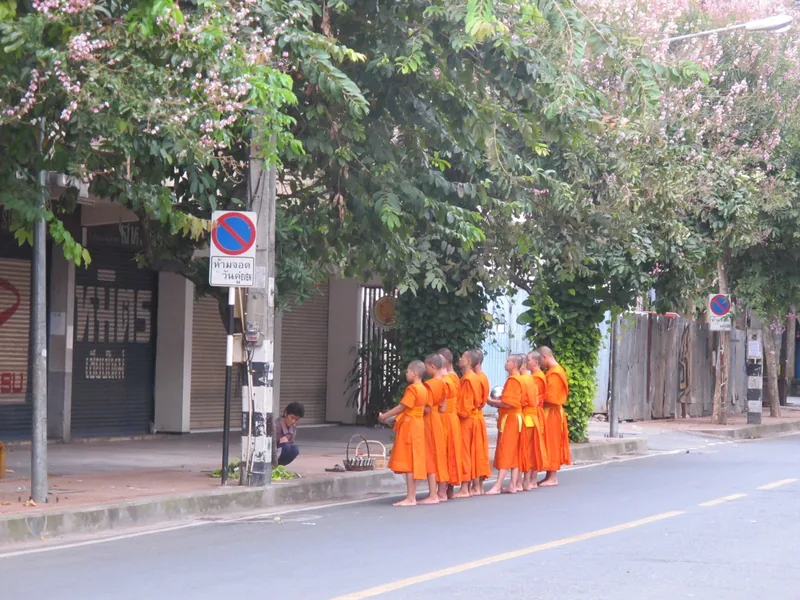
Chiang Mai
Three nights in the north — temples, a kitchen, and the hills above the city.
View journey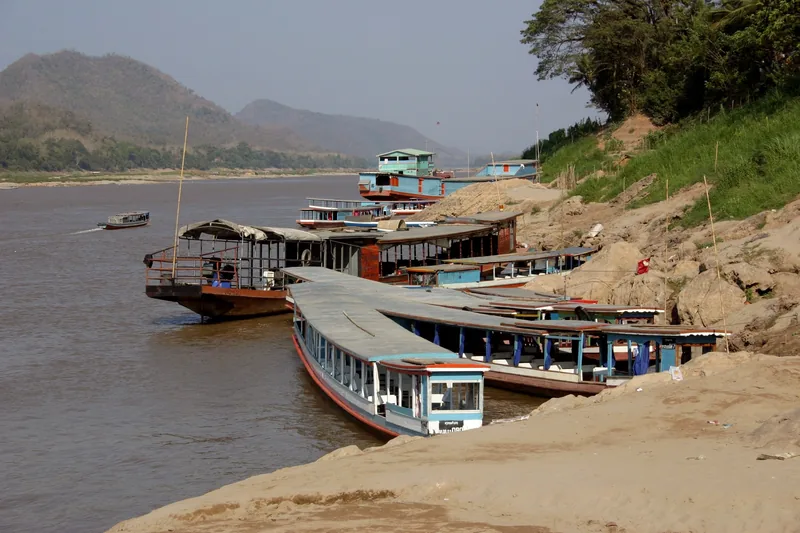
Example itinerary — fully customizable
Thailand & Laos
Nine days, one bridge, and two days on the river to Luang Prabang.
View journey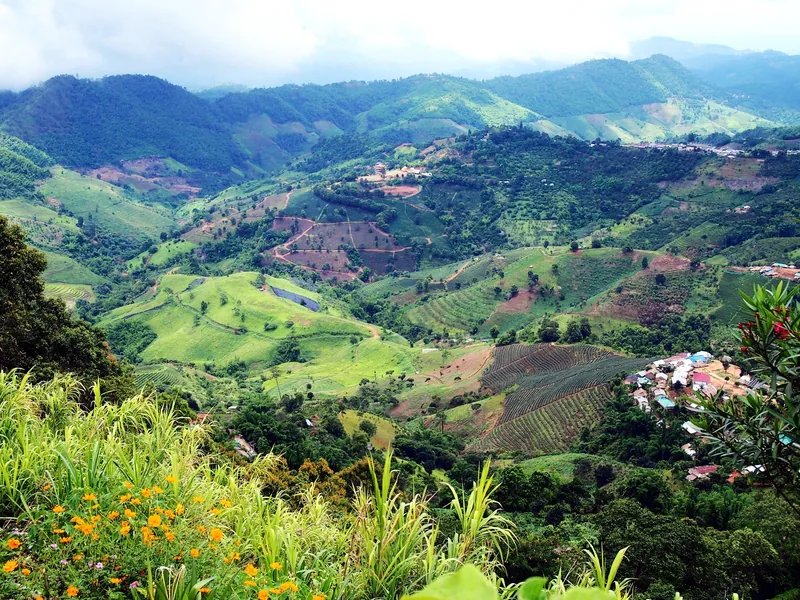
Example itinerary — fully customizable
Northern Thailand
Seven days in the hills, ending where three countries meet.
View journey
Destinations
Thailand
Two coasts, four Mekong bridges, and one closed border that changes every route.
View journey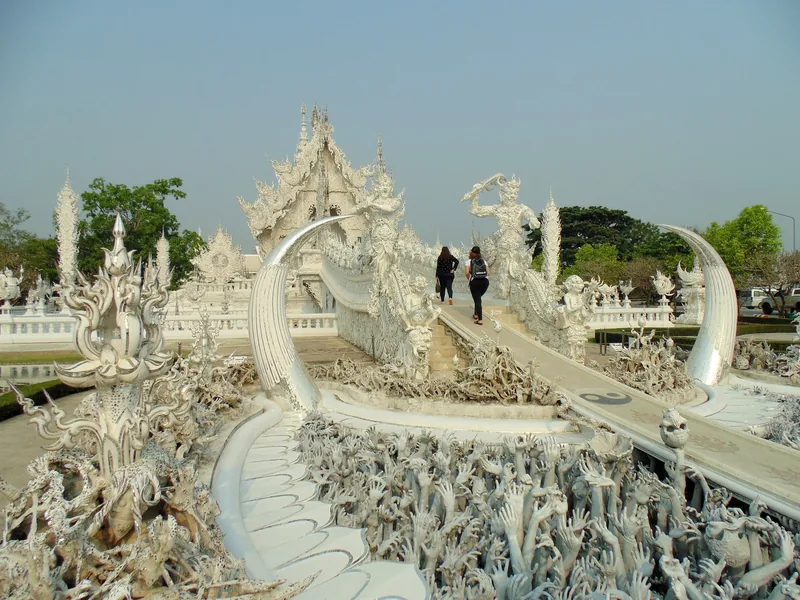
Start planning
Let’s plan your journey
Five quick questions. Your coordinator will take it from there.
Prefer to talk? WhatsApp or call+84 904 511 319