Vietnam
Mekong Delta
Forty thousand square kilometres of river, canal and rice — the most densely farmed landscape in Vietnam, and the slowest, most rewarding way to leave the country.
Mekong Delta
A landscape with no dry land to speak of
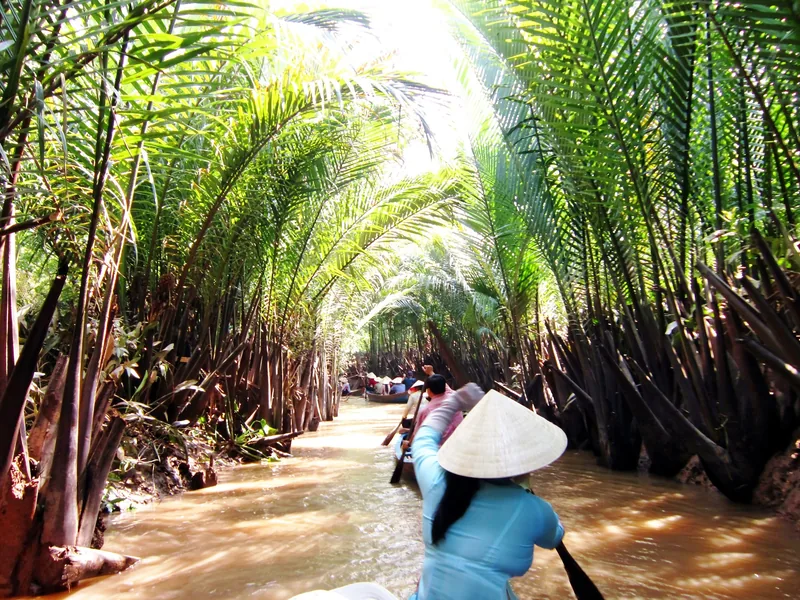
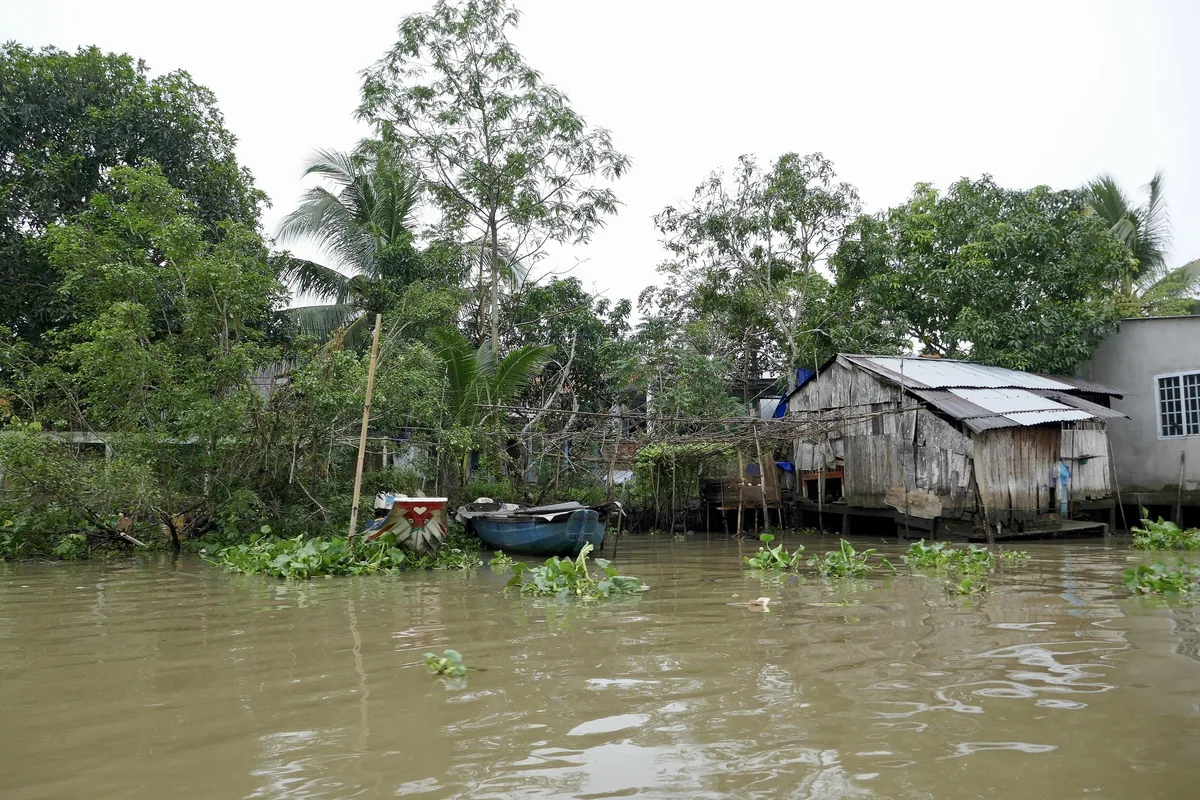
The Mekong arrives in Vietnam after four and a half thousand kilometres and immediately falls apart into nine branches, which is where the Vietnamese name — the Nine Dragons — comes from. What that produces is 40,000 square kilometres of alluvial flat, threaded with so many canals that in most of the delta the road is the secondary route and the water is the primary one. It grows more than half the country’s rice and most of its fruit, and it is the only part of Vietnam where houses face the water and turn their backs on the lane.
It is also the part of the country most often done badly. The standard day trip from Ho Chi Minh City goes to My Tho, two hours each way, puts you in a rowing boat for twenty minutes with a conical hat on and returns you by six. That is not the delta; it is a performance of it, and travellers come back convinced there is nothing there.
Doing it properly
Go further, and stay the night
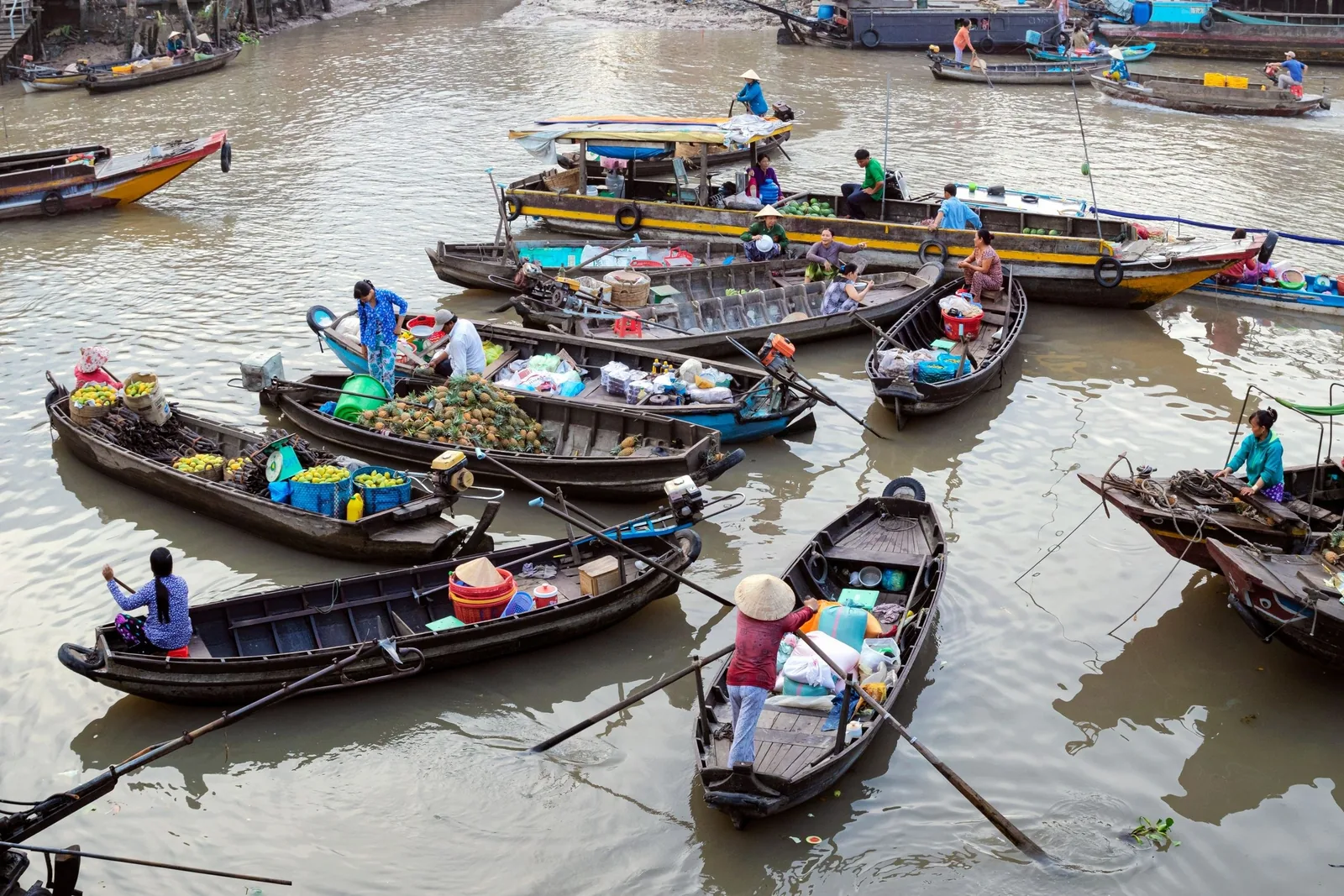
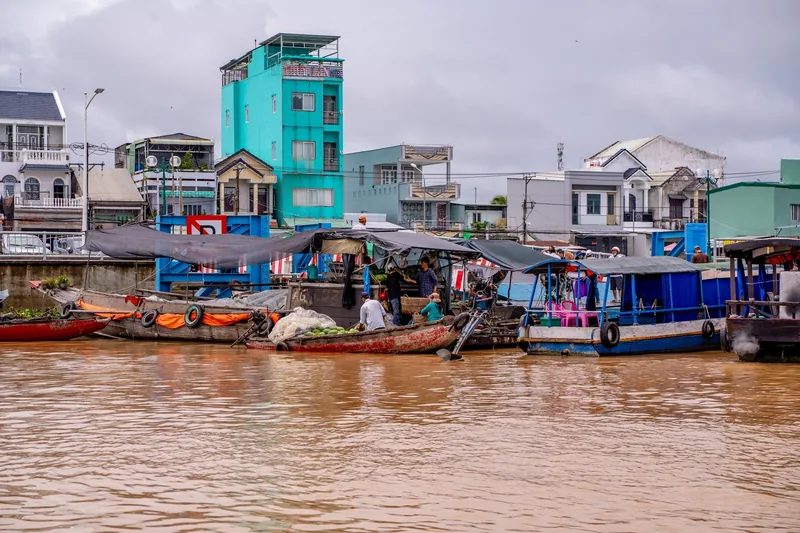
Can Tho is three and a half to four hours from the city and is where the delta becomes worth the journey. The reason is timing rather than distance: the Cai Rang floating market works between five and eight in the morning, and you cannot reach it from Ho Chi Minh City on the same day. Staying in Can Tho means being on the water at first light, when the market is doing what it was built to do — wholesale trade between boats, each one advertising its cargo on a pole above the deck — rather than selling coffee to visitors at ten.
- Cai Rang at sunrise, from a small boat rather than a tour barge. Two hours, and the best two hours in the delta.
- A canal homestay near Cai Be or Vinh Long — plain rooms, family cooking, and a night with no traffic noise at all.
- The orchards around Vinh Long and the brick and rice-paper workshops, which are working businesses rather than demonstrations.
- Tra Su cadjeput forest near Chau Doc, flooded and green from September to November, which is the one thing here the wet season improves.
Seasons
One night or two
One night, in Can Tho, gets you the market at dawn and a half-day of canals, and that is enough for most itineraries. Two nights lets you move west to Chau Doc on the Cambodian border, through Long Xuyen and the rice plains, which is a different and emptier part of the delta. Two nights is also what the river crossing into Cambodia needs, because that boat leaves Chau Doc in the morning. Anything beyond three nights is for travellers with a specific interest — birds, food, or the Khmer Krom temples around Tra Vinh and Soc Trang.
Borders
The way out to Cambodia
The delta is the slow way into Cambodia, and for travellers who have already done the flight from Hanoi it is the most interesting leg of the trip. From Chau Doc a passenger boat runs up the Bassac river to Phnom Penh in about five hours, clearing immigration at a river post on the way — you watch the delta turn into Cambodia through the window rather than at a truck stop. The alternative, and the more dependable one, is the road: back to Ho Chi Minh City and out through Moc Bai to Bavet, where the Cambodian e-visa is accepted, six to seven hours in total.
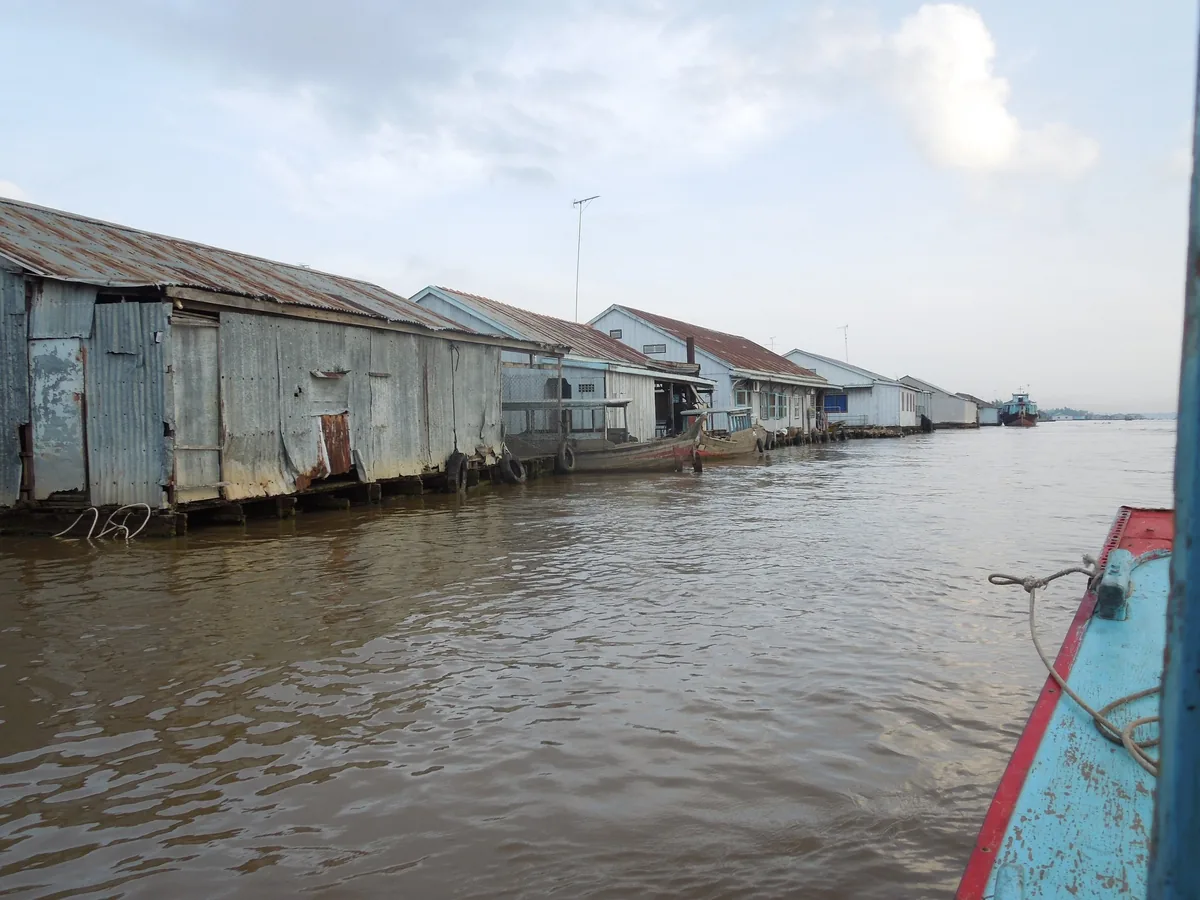 Towards the Cambodian border
Paperwork
Before you book the boat
River departures are seasonal and the schedule thins out in the low-water months, so we confirm sailings before we build an itinerary around one. The paperwork matters more than the timetable.
A Vietnamese e-visa names your exit gate when you apply and it cannot be changed afterwards, so a Chau Doc river departure has to be decided before the visa is issued, not in the delta. Of the two southern land gates, Moc Bai – Bavet accepts the Cambodian e-visa and Ha Tien – Prek Chak does not — there a visa on arrival is the only option. We do not publish visa fees: the current figures are on the official portals and your coordinator confirms them before you travel.
Leave Vietnam by the river.
Plan My Trip
Tell us your dates
We will tell you whether the boat is running in your month, and which gate your visa needs to name.
Common questions
Questions travellers ask most
Is a day trip from Ho Chi Minh City enough?
No. A day trip reaches My Tho and gets you a short boat ride in the middle of the day, which is when nothing is happening. The delta works at dawn, and that means sleeping in it — one night in Can Tho is the minimum that makes the journey worthwhile.
Are the floating markets still real?
Cai Rang is, before about eight in the morning, because it is a wholesale market where boats buy from boats. By mid-morning the trade has finished and what remains is aimed at visitors. The smaller markets are thinner than they were, as more produce moves by road.
Can I go straight from the delta into Cambodia?
Yes — by boat from Chau Doc up to Phnom Penh in about five hours, or by road back through Ho Chi Minh City and out at Moc Bai. Either way the exit gate must be named on your Vietnamese e-visa before it is issued.
Journey ideas
Where a private route could take you
Vietnam
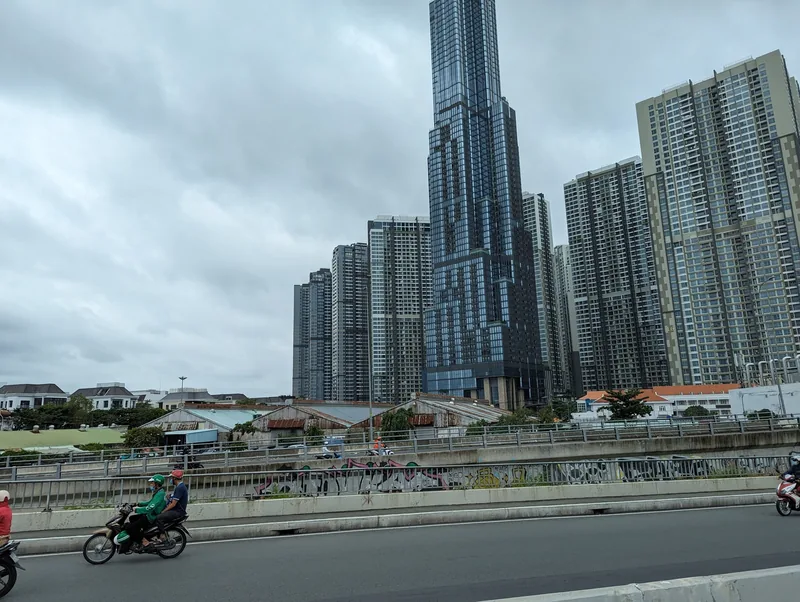
Ho Chi Minh City
Two nights in the south, and the start of the road to Phnom Penh.
View journey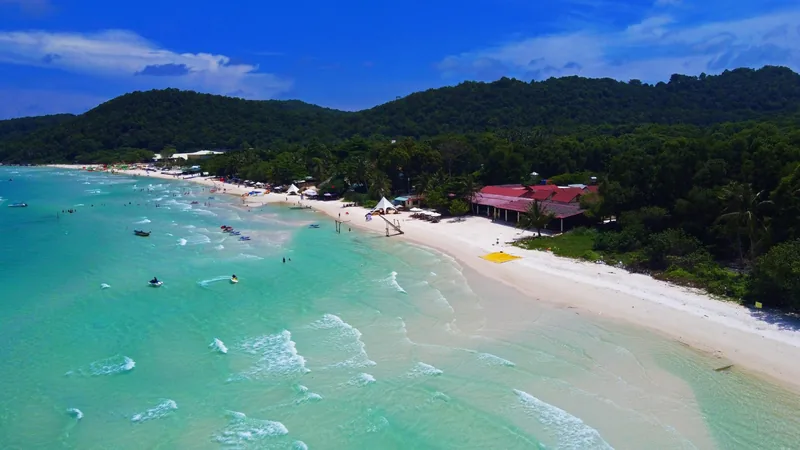
Vietnam
Phu Quoc
Three or four nights where a long overland route usually ends.
View journey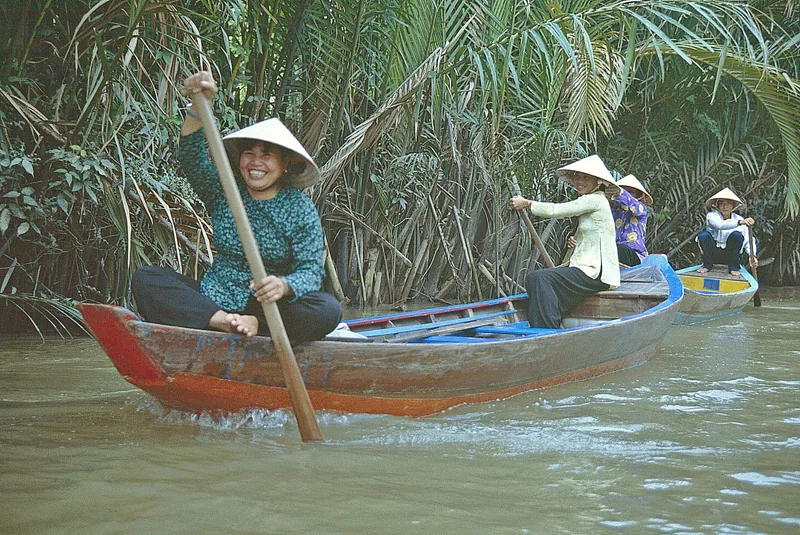
Example itinerary — fully customizable
Vietnam & Cambodia
Fourteen days, two countries, one land border — Hanoi to Angkor.
View journey
Example itinerary — fully customizable
Indochina, 21 days
Twenty-one days, three countries, two land crossings and one flight.
View journey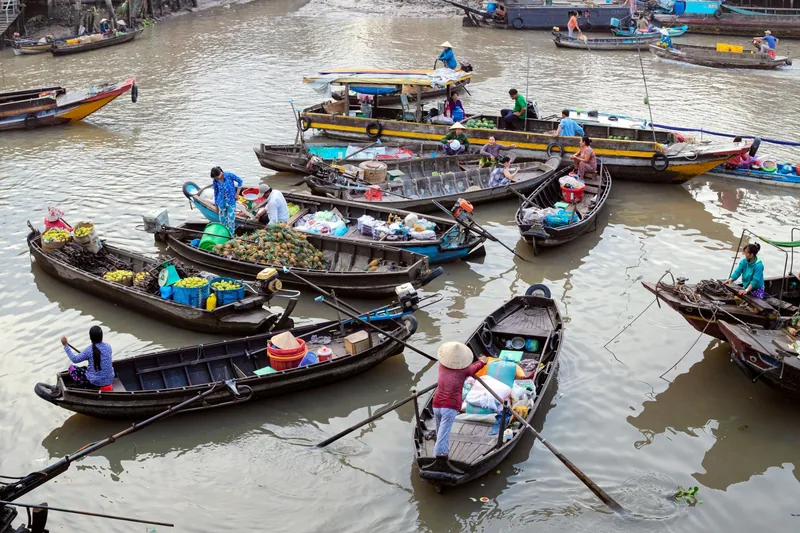
Start planning
Let’s plan your journey
Five quick questions. Your coordinator will take it from there.
Prefer to talk? WhatsApp or call+84 904 511 319