
Laos
Southern Laos in seven days
The half of Laos that fortnight itineraries never reach: one pre-Angkorian temple, one coffee plateau, and a river so wide it is counted in islands.
Overview
The south, which almost nobody builds a week around
A standard Laos itinerary is Luang Prabang, Vang Vieng and Vientiane, and it stops there. Everything on this page is south of all three and is usually skipped, which is why Wat Phou has eleven other people in it on a good morning and the Bolaven plateau has almost none. The distances are real — an hour to Champasak, an hour and a half to the plateau, three hours to the islands — so the week is built around a base rather than a procession.
What holds it together is water. Wat Phou was sited on a spring below a mountain the Khmer thought was shaped like a linga. The plateau is wet enough at a thousand metres to grow arabica and to carry the best waterfalls in the country. And at Si Phan Don the Mekong spreads to fourteen kilometres wide and falls apart into hundreds of islands before dropping over the largest cataract in Southeast Asia.


- Length
- 7 days, 6 nights
- Group
- Private, up to 12
- Starts
- Pakse
- Ends
- Pakse
- Longest transfer
- About 3 hours, then a boat
- Best months
- November to February
Nights
The nights, in order
Day by day
What happens each day
Day 1
Into Pakse
The confluence at dusk, which is all the town asks of you
Pakse airport is one of the nine ports where the Lao e-visa is valid, which is the practical reason this week starts here. The town is where the Sedone runs into the Mekong: markets, a bridge, a few decent hotels, nothing to look at. Nobody comes for Pakse. An evening on the river and an early night.
Day 2
Wat Phou, which predates Angkor Wat
The upper sanctuary, with the valley below and nobody in it
Forty-five kilometres south, at opening. A Khmer temple climbs the lower slopes of a mountain in three terraces joined by a stone stairway, built around a spring at the top, and parts of it are several centuries older than Angkor Wat. It is far less restored than anything in the Angkor park, which is exactly the appeal: broken sandstone under frangipani, rice fields running down to the Mekong, and frequently nobody else there. An hour and a half on site. Champasak village below it is one street of timber houses along the river and worth the afternoon.
Day 3
Up onto the plateau
Standing at the top of Tad Fane with the gorge full of cloud
East and up: the Bolaven rises to between a thousand and thirteen hundred metres and is roughly ten degrees cooler than the river. Coffee has been planted here since the French period and the smallholdings will show you the whole process from cherry to roast, arabica in the higher parts and robusta over most of it. Tad Fane in the afternoon — twin falls dropping over a hundred metres into a forested gorge — and Tad Yuang five minutes away, which you can walk down to and swim below.
Day 4
The eastern loop, and a village at a waterfall
Swimming below a waterfall with nobody selling anything
Further east to Tad Lo, where a village sits at the falls and the pace drops to nothing. The road between takes in a Katu village, a tea smallholding and two more waterfalls, and the whole day is short drives with long stops. This is the least scheduled day of the week and the one people ask to repeat.
Day 5
Down to the four thousand islands
The old railway bridge, which is the only railway the French ever finished here
Three hours south, dropping off the plateau and back to the river, then a boat across to Don Khon. The Mekong here spreads to fourteen kilometres wide and breaks into hundreds of islands: Don Khong is the largest and quietest, and Don Det and Don Khon hold the guesthouses, joined by a French railway bridge built to portage cargo around the falls. The afternoon is a bicycle along the old trackbed.
Day 6
Two waterfalls, and one thing we do not sell
Khone Phapheng in full volume, which you hear before you see
Li Phi, beside Don Khon, is a chaos of channels rather than a single drop, and the fishermen’s traps in it are still worked. Khone Phapheng on the mainland bank carries more water than any other fall in Southeast Asia and is the reason boats never ran through to China. About the Irrawaddy dolphins: the Lao side of the pool is effectively empty now, sightings are a matter of luck, and we do not sell dolphin trips here. The rest of the day is a hammock, which is the correct use of Don Khon.
Day 7
North again, or east into Cambodia
The last stretch of river road before the airport
Three hours back to Pakse for the flight out — Vientiane is about an hour and ten by air, and the road north is eight to ten hours and rarely worth it. If the trip continues instead, the Cambodian border is about an hour south of the islands and this is the only overland link between the two countries. Going that way, the Cambodian e-visa is accepted at Trapeang Kriel; coming the other way is where people lose money, and the panel below explains why.
Paperwork
The Lao e-visa, and the gate where it is worthless
This is the single most expensive misunderstanding in southern Laos, and it costs people the price of a visa they have already bought.
- Of the passports we most often book, only Japanese travellers have 30 days visa-free. British, EU, American, Australian and Canadian passports need a visa.
- The Lao e-visa is single entry, 30 days, must be carried PRINTED — a phone screen is refused — and is valid at nine ports only: Wattay, Luang Prabang and Pakse airports, Friendship Bridges I, II and IV, the Boten checkpoint, and Boten and Khamsavath railway stations.
- Flying into Pakse, as this week does, uses one of those nine. The e-visa works.
- Arriving overland from Cambodia at Nong Nok Khiene does NOT. That gate is not on the list, and the Lao e-visa is not valid there — you buy a visa on arrival instead, and an e-visa bought in advance is simply wasted. The same is true at Vang Tao, west of Pakse on the Thai border.
- In the other direction the asymmetry reverses: the Cambodian e-visa IS accepted at Trapeang Kriel, which is the Cambodian side of the same crossing, and at only one other land gate in the country.
- The Lao digital immigration form is filed within three days of arrival and again before departure. Passport valid six months, two blank pages.
We do not publish visa fees. The current figures are on the official Lao and Cambodian portals, and your coordinator confirms them in writing along with which document each gate on your route needs. If you are arriving from Cambodia by road, expect to pay on arrival and carry US dollars in cash.
Pictures
What the week looks like
Wat Phou ChampasakThe Bolaven plateau
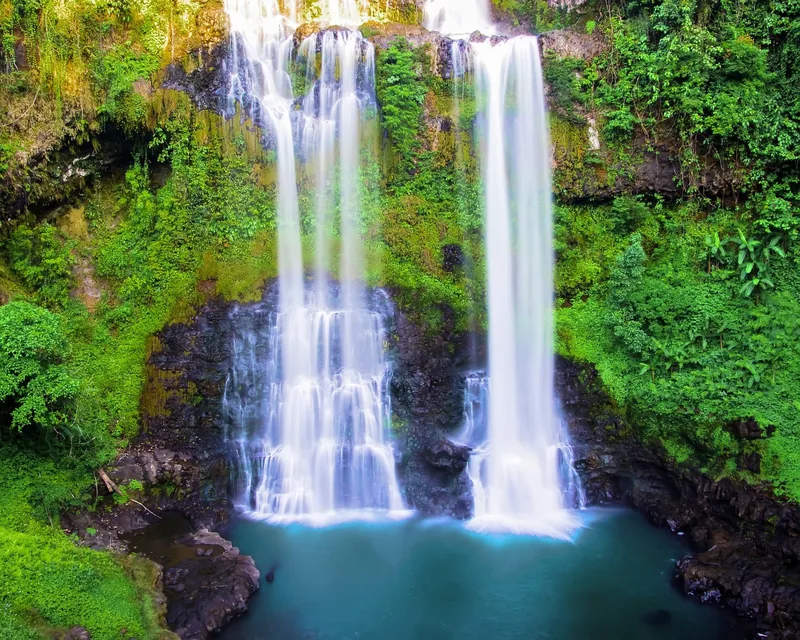 Tad Fane
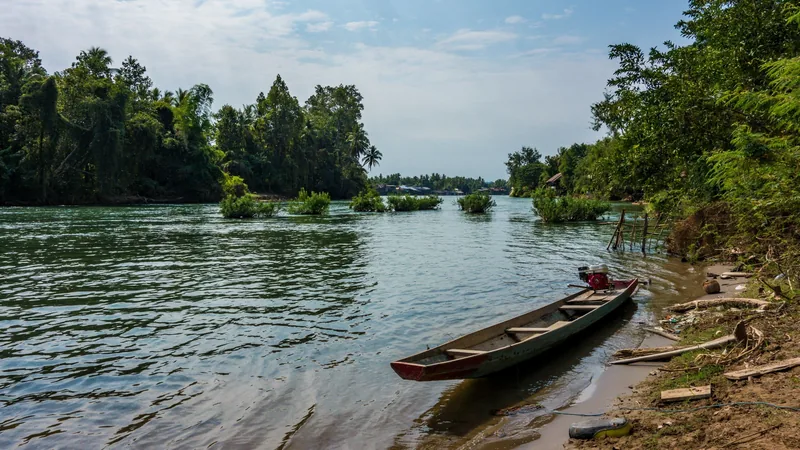 Si Phan Don
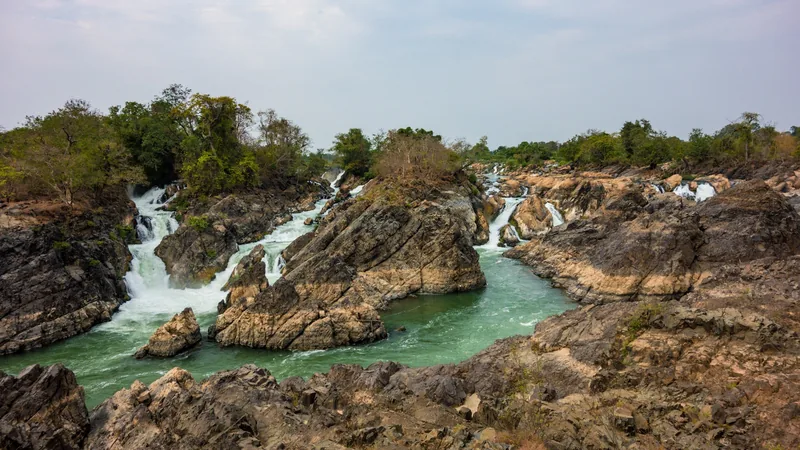 Khone Phapheng
Cost
How we quote it
| Travellers | Comfortable hotels | Boutique and luxury |
|---|---|---|
| 2 travellers | On request | On request |
| 4 – 6 travellers | On request | On request |
The honest position on the boutique column here is that it barely exists. Pakse has two or three good hotels, the plateau has lodges rather than resorts, and Don Khon has guesthouses. What you are buying in the second column is a better room at Pakse, a lodge with a view on the plateau and the best of a small field on the island — not a different class of trip. Ask and the figure comes back within a working day, itemised.
Included
What the quote covers
What the price includes
- Private air-conditioned car and driver for the whole week, including the plateau roads and the three hours down to the islands.
- An English-speaking licensed Lao guide throughout, which matters more here than in the north because very little is signed in English outside Wat Phou.
- Six nights with breakfast: two at Pakse, two in a lodge on the Bolaven plateau and two in a guesthouse on Don Khon.
- Lunch on every full day, taken locally rather than driven back for.
- The boat across to Don Khon, the island transfers, and the boat to the Khone Phapheng bank.
- Bicycles on Don Khon for the old railway trackbed.
- Entrance fees to everything named above, including Wat Phou and its museum, Tad Fane, Tad Yuang, Tad Lo, Li Phi and Khone Phapheng.
- A coffee smallholding visit arranged in advance, with the whole process shown rather than a tasting room.
- A coordinator on a Lao number for the whole week, and a written note of which visa your arrival port needs — including the warning about Nong Nok Khiene if you are coming overland from Cambodia.
What it does not include
- International flights into the first city and out of the last.
- Visa fees and entry charges. We do not publish these figures — the current ones are on the government’s official portal, and your coordinator confirms them in writing before you travel.
- Travel insurance, which we ask every traveller to hold.
- Meals not named in the day-by-day, and all drinks.
- Tips for guides, drivers and boat crew.
- Personal expenses: laundry, telephone, spa treatments, anything bought.
Straight talk
Who should not book this route
Southern Laos is quiet, and quiet is the whole product. Five travellers will find it thin rather than restful.
- Anyone who wants Luang Prabang. It is not here and it is not near — an hour and ten by air from Pakse, or eight to ten hours of road north to Vientiane first. If this is your only week in Laos and you have not seen the north, take the slow boat route instead.
- Anyone who needs good hotels. There are no luxury properties in this part of the country and we will not pretend a lodge is one. The rooms are clean, small and adequate, and the rest of the money goes into the guide, the car and the time.
- Anyone coming to see Irrawaddy dolphins. The Lao stretch of the river is effectively empty of them and we do not run dolphin trips here. Operators who still sell them are selling a boat ride.
- Anyone travelling in March, April or May who dislikes heat. Over 35°C is routine on the river in those months. The plateau stays ten degrees cooler and is the one part of Laos that is comfortable in April, so we would weight the week towards it and cut a river night.
- Anyone travelling from August to October who needs the plateau roads. The falls are at their best then and the tracks between them are at their worst — several of the smaller ones become impassable and the loop shortens to whatever the car can reach.
A temple older than Angkor, and a river with no banks.
Plan My Trip
Start from this route
Tell us your dates and whether Cambodia follows. We will send a quote and an amended day-by-day within a working day.
Common questions
Questions travellers ask most
Is Wat Phou worth flying south for?
On its own, no. As part of this week — the temple, the coffee plateau and the river islands — yes, and it is the quietest important Khmer site you will visit anywhere. Judge it against Banteay Srei rather than against Angkor Wat.
Can we carry on into Cambodia at the end?
Yes, and it is the only overland crossing between the two countries. The border is about an hour from the islands, the Cambodian e-visa is accepted at Trapeang Kriel, and Stung Treng or Kratie is where most routes break the day. Coming the other way, into Laos, the Lao e-visa is not valid at that gate and you buy a visa on arrival.
How many nights on the islands?
Two, which covers both waterfalls, the railway bridge and an afternoon doing nothing. A third is worth having if the rest of your trip has been busy; a fourth and you will have read your book.
Which months?
November to February is dry, comfortable and the reliable window for continuing into Cambodia. March to May is very hot on the river, though the plateau stays cool. August to October brings the falls to full volume and the plateau tracks to their worst.
Journey ideas
Where a private route could take you

Example itinerary — fully customizable
The Lao slow boat
Eight days: Huay Xai to Vientiane, by river and by train.
View journey
Laos
Pakse
Three nights in the south, and the only overland link to Cambodia.
View journey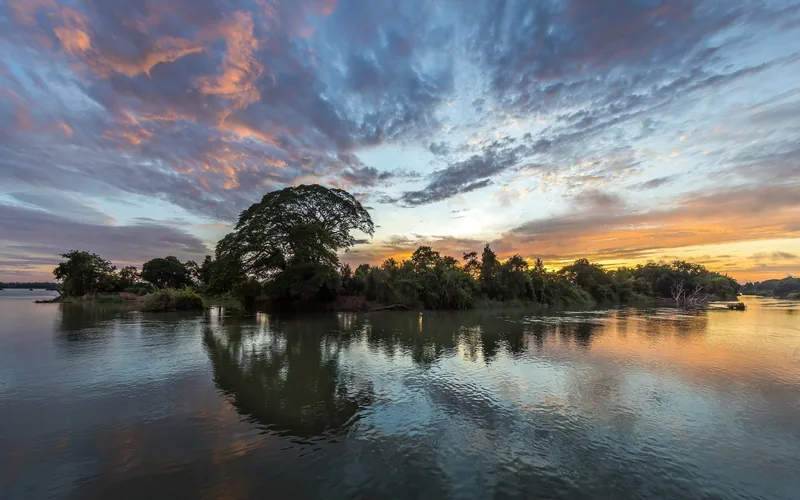
Example itinerary — fully customizable
Cambodia & Laos
Twelve days, one river, and the region’s least-used border.
View journey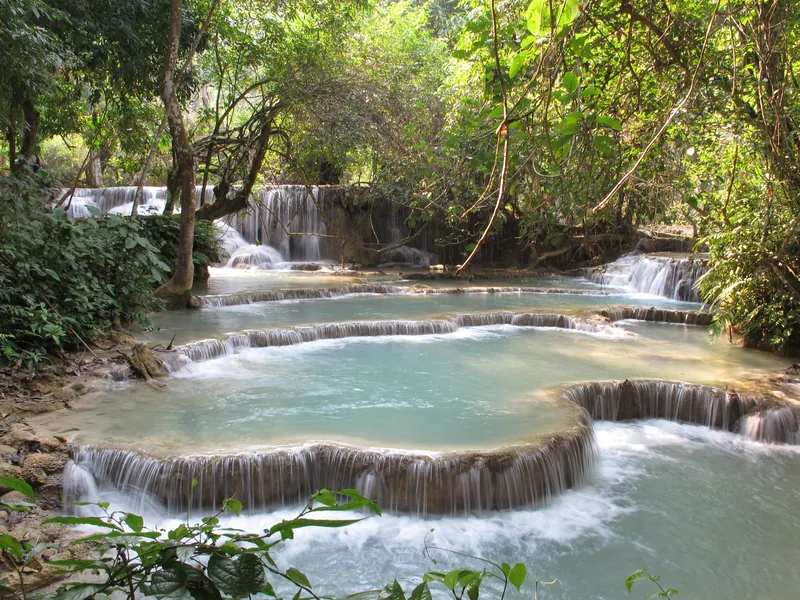
Destinations
Laos
The slow boat, the northern valleys, and the nine ports the e-visa covers.
View journeyStart planning
Let’s plan your journey
Five quick questions. Your coordinator will take it from there.
Prefer to talk? WhatsApp or call+84 904 511 319